The President of the Republic, Nana Addo Dankwa Akufo-Addo, has urged the Ghanaian people to reject the former President of the Republic and 2024 NDC presidential candidate, John Dramani Mahama, in the 2024 elections.
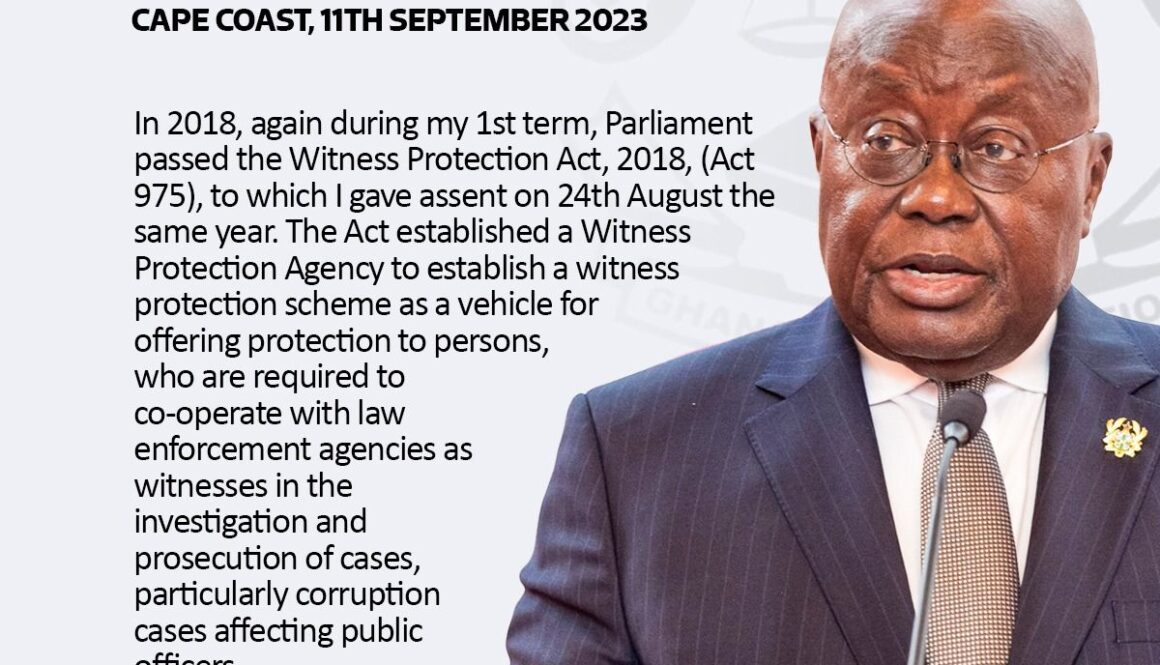
Speaking at the 2023 Bar Conference of the Ghana Bar Association on Monday, 11th September 2023, the President stated that in some common law countries, particularly in the United States of America, the political colour of judges is a legitimate topic of public discourse.
“Indeed, judges at the District and State levels, within the federal structure of the American Government, are elected officials, and, even though judges at the federal level, including those of the Federal Court of Appeals and the US Supreme Court, are appointed by the President, with the consent of the Senate, their political colouring is generally well-known and accepted,” he said.
Historically, President Akufo-Addo explained that this has not been the case in Ghana, largely because of the critical, controlling role of the Judicial Council, a non-partisan body chaired by the Chief Justice, in the process of judicial appointments.
“It has meant that judicial appointments are conducted essentially on the basis of professional merit and suitability. Appointments to the lower courts, the High Court and the Court of Appeal are done by the President, exclusively on the advice of the Judicial Council,” he said.
The President continued, “In the case of appointments to the Supreme Court, because of its unique position in our judicial structure, there are the additional requirements of the consultation of the Council of State and the approval of Parliament. In the overwhelming number of cases of justices-designate to the Supreme Court, that approval has been given on a bi-partisan basis. You can count on the fingers of a hand the number of justices-designate whose approval met less than unanimous consent.”
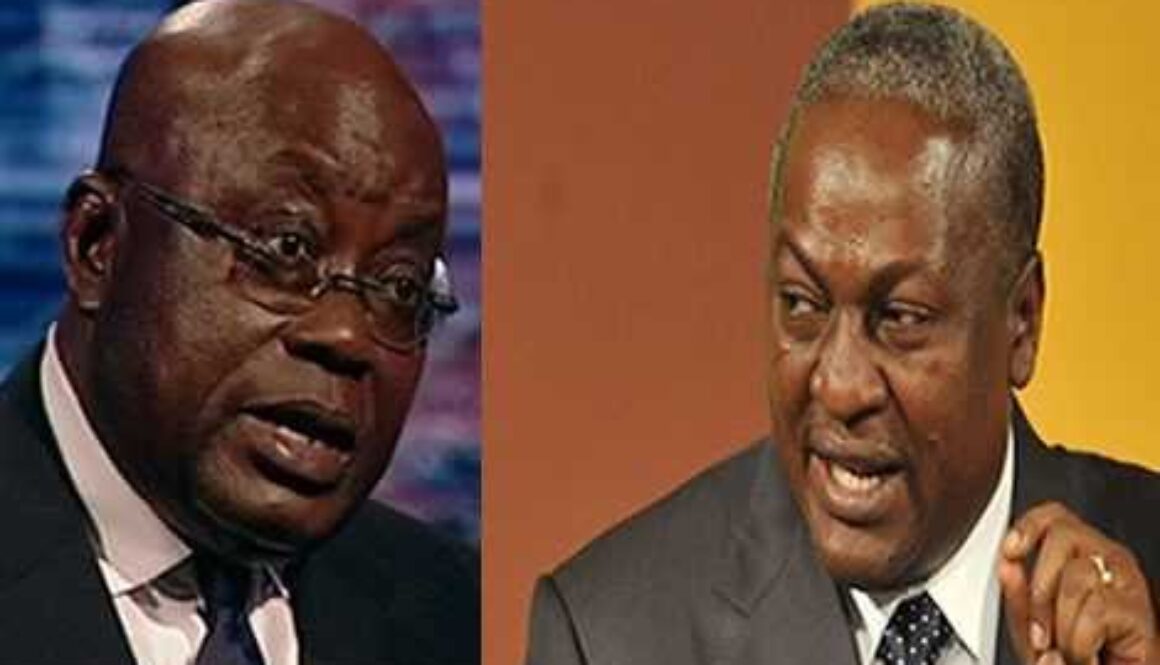
Nana Akufo-Addo and Ex-Pres.John Mahama
The President indicated that he had to go into the matter in some detail because of a new concept that has been recently introduced into our public discourse by no less a public figure than the 4th President of the 4th Republic, the perennial NDC presidential candidate, John Dramani Mahama.
It will be recalled that the former President, at a meeting with NDC lawyers, stated that President Akufo-Addo has packed the courts with so-called “NPP judges”, and that one of the key purposes of a putative NDC victory in 2024 will be to enable him balance the courts with so-called “NDC judges”.
“Not only are these concepts of “NPP” and “NDC” judges new in our public discourse, they are also extremely dangerous, and represent the most brazen attack on the independence of the judiciary by any allegedly responsible politician of the 4th Republic.
They provide another reason, if more were needed, why right-thinking citizens should ensure the defeat in 2024 of the man whom the first Special Prosecutor identified as Government Official No.1, in the still unresolved Airbus Bribery Scandal,” he added.
The President of the Republic, Nana Addo Dankwa Akufo-Addo, has stated that all allegations of corruption levelled against his appointees have been investigated by independent bodies, such as CHRAJ, the CID, and, in some cases, by Parliament itself.
According to President Akufo-Addo, “It is not my job to clear or convict any person accused of wrongdoing, or of engaging in acts of corruption. That is the job of the courts and the law enforcement agencies.”
Speaking at the 2023 Bar Conference of the Ghana Bar Association on Monday, 11th September 2023, in Cape Coast, the President told the gathering that “my job is to act on allegations of corruption by referring the issue or issues to the proper investigative agencies for the relevant enquiry and action, including, if necessary, the suspension of the affected official, pending the conclusion of investigations. That is exactly what has been done since I assumed the mantle of leadership on 7th January, 2017.”
He went on to cite a number of instances where allegations of corruption against his appointees have been investigated by independent bodies.
From the allegations against the then Minister-Designate for Energy, Boakye Agyarko, at his parliamentary confirmation hearings in 2017; to that against the former CEO of BOST, Hon. Alfred Obeng; to those against the then two deputy Chiefs of Staff at the Office of the President, Hon. Francis Asenso Boakye and Hon. Samuel Abu Jinapor; to the conflict of interest allegations against the Minister for Finance, Ken Ofori-Atta; to the claims of extortion against the then Trade and Industry Minister-designate, Alan Kyerematen, at his parliamentary confirmation hearings in 2017; to allegations of doubling in visa racketeering against the then deputy Minister for Youth and Sports, Pius Hadzide, and the then Director General of the National Sports Authority, Hon. Robert Sarfo Mensah who, even though exonerated by the CID, later resigned; the Chairperson of the Board of the National Sports Authority, Hon. Kwadwo Baah Agyemang ; to the allegations of bribery levelled against the Secretary to the Inter-Ministerial Committee on Illegal Mining, Charles Bissue; to those involving the dismissed acting CEO of the Public Procurement Authority (PPA), A. B Adjei; and the dismissed CEO of the National Youth Authority, Emmanuel Asigiri – President Akufo-Addo stated that they have all been investigated and, in most cases, cleared by the authorised institutions of our state, and not by President Akufo-Addo.
“The latest episode involving the former Minister for Sanitation and Water Resources, Hon. Cecilia Abena Dapaah, is evident for all to see. I am not aware of any government in the 4th Republic subjecting so many of its officials to such investigations and inquiries,” he said.
At the same time, President Akufo-Addo noted that several officials of the previous Mahama administration, such as William Matthew Tetteh Tevie, Alhaji Salifu Mimina Osman and Eugene Baffoe-Bonnie, in the infamous $4 million NCA scandal, have been tried and convicted of various corruption-related offences, adding that “several others, including Dr. Stephen Opuni, the former CEO of COCOBOD, and Hon. Cassiel Ato Forson, the Minority Leader in Parliament, are standing trial as we speak.”
None of the accountability institutions of state, including the new Office of Special Prosecutor, he said, have ever indicated any pressure from the Executive over their investigations.
“There are some who refuse to accept my method of proceeding, and have characterised me as a ‘clearing agent’, because, for them, the mere allegation without more is enough to merit condemnation of the public official. For my part, I will not set aside due process in the fight against corruption, no matter how much opprobrium this incurs for me,” the President said.
The New School Selection System Guidelines For Candidates and Parents have been made public by the Ghana Education Service (GES).
According to information provided by GES, the selection process for the new school will begin on September 11, 2023.
Candidates must select up to 11 schools under the New School Selection System, which will be included in Selections 1 and 2, each of which will include six and five options, respectively.
There are 86 Category A schools, 259 Category B schools, and 573 Category C schools, according to the new classification of schools.
The schools in the catchment region fall under Category D. Every school in Category D is a day school that can be found in one of Categories A, B, or C.
Guidelines for CSSPS 2023 First Placement School Selection
In consultation with their parents/guardians and the school administration, applicants who intend to enrol in SHS/TVET programmes must:
a) Choose six (6) schools and rank them in order of preference, with the first option being the top pick.
b) Select programmes and residential status for each choice of school.
c) Select a compulsory day school as the 6th choice within 16km of the JHS attended or choose a boarding school from the list of schools in Appendix 3.
d) Select 5 schools (1 Category A, 2 Category B and at least 2 Category C schools) from Appendix “4” for a consideration of 2 and placement if you miss out on all your initial six (6) choices.
Guidelines for CSSPS 2023 Second Placement School Selection
a)Candidates must select ‘5 schools from Appendix “4” (1 Category A school, 2 Category B schools, and at least 2 Category C schools).
b)Candidates must not repeat a school from the initial six (6) choices on this cluster form
Note: In the event a candidate misses out on all initial six (6) choices, the candidate may be placed in any of the schools in the selected cluster as indicated below:
Candidates who do not get placed in any of the 11 schools selected may have to use the Self Placement Module if the GES permits them.
PARENTS/GUARDIANS AND HEADTEACHERS ARE TO NOTE THAT:
a) Cannot choose more than one (1) School from Category A
b) Cannot select more than two (2) schools from Category B
c) May select five (5) schools from Category C and One (1) from Category D (Day) or Appendix 3 (Special Boarding).
d) Lastly, candidates who wish to offer purely TVET or STEM Programmes must select all six (6) Institutes/Schools from CATEGORY A, B, and C as Day or Boarding.
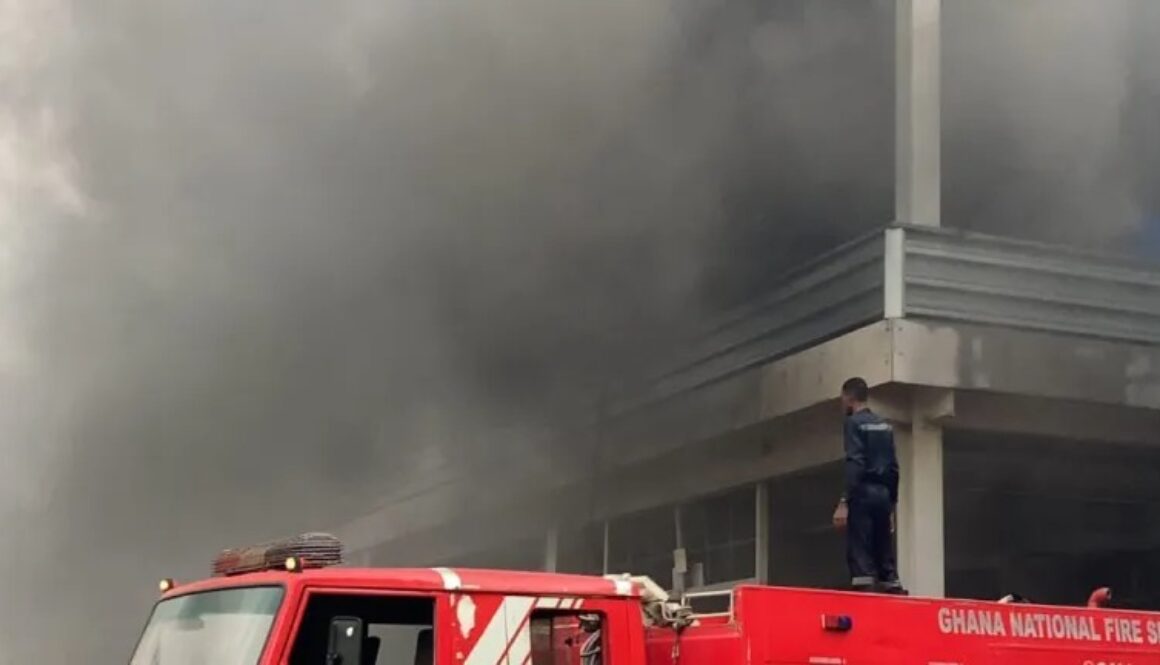
It has been six months since a devastating fire tore through the Kejetia market in the Ashanti regional capital, Kumasi the second largest City of Ghana with over 7,203 shops. Unfortunately 33 trading shops were affected.
At the moment victims and their union leaders are in the dark about the government’s plans for rebuilding and restoring the affected area of the market to business.
The affected site remains unattended, with dysfunctional fire hydrants and damaged plumbing causing ongoing water leakage any time it rains in the market.
Frustrated by the lack of action and transparency, traders are now considering holding protests against the government, which owns the property with red flags already lifted around the property.
Filed photo
I hope this harmless article will serve as a plea to the local government Minister, respected Dan Kwaku Botwe Ashanti dear brother, to take immediate action and address the pertinent issues at hand.
The neglected aftermath:
Since the committee was constituted on Wednesday, March 15, 2023, to investigate the cause of the fire, there has been no progress or updates regarding its findings. This lack of information has left the traders and their union leaders clueless about the government’s plans for the market’s restoration.
The affected area, which bore the brunt of the fire, has been left unattended, worsening the damage caused by the initial incident. It is unacceptable that six months have passed, and the affected traders continue to suffer due to the lack of action.
Currently, the victims of the fire who ply their trade at the market at home with their family struggling to feed themselves. The market which is responsible for generating income for the country is under the mismanagement of Kumasi City Market limited who have not demonstrated any sign of seriousness to manage the state’s all important market project.
Non-functioning Fire Hydrants and Leaking Plumbing Pipes:
Further exacerbating the situation, the fire hydrants in the market are not functioning, posing a significant risk in case of future emergencies. Additionally, the plumbing pipes damaged by the fire have not been replaced, resulting in water leakage whenever it rains.
This not only affects the livelihoods of the traders but also poses health hazards to both them and the customers who frequent the market. Such negligence is deeply concerning and reflects a lack of commitment on the part of the authorities.
The Traders’ Desperation:
Unable to endure any longer, the traders have declared their intention to hold a series of protests against the government. Their frustration stems from the government’s ownership of the property and their expectation of support and assistance in the aftermath of the devastating fire.
The traders and the victims of the fire are simply seeking answers, assistance, and accountability from the government. It is imperative that the authorities take this matter seriously and address the concerns of these hardworking individuals and the victims.
Call to Action:
In light of the dire situation faced by the traders and victims, it is crucial that the local government minister, Dan Kwaku Botwe MP, take immediate action. Firstly, transparency is of paramount importance. The committee’s report should be made public to ensure that Ghanaians are aware of the findings and recommendations.
Secondly, a comprehensive plan for the market’s restoration must be formulated promptly. This involves repairing the fire hydrants, replacing the damaged plumbing pipes, and providing support to affected traders to rebuild their businesses.
The neglect shown towards the aftermath of the market fire is utterly unacceptable.
The traders, their livelihoods, and the victims of the fire deserve urgent attention and support from the government. Local government minister Dan Botwe must rise to the occasion and take immediate action to address the numerous issues plaguing the market.
The affected individuals deserve transparency, assistance, and accountability from their government. Only then can we restore faith in our country’s ability to protect and support its citizens during challenging times.
Source: Ghana/Starrfm.com.gh/103.5FM/Isaac Justice Bediako
In politics and geopolitics, political scientists often research political ideas, analyze them and present their findings.
Indeed, the record of the study of politics has been very good, with long-term impacts of political science in areas such as the study of elections, the reform of electoral systems, party funding, decentralisation, devolution, constitutional reform, public management reform, and so forth and so on.
It is also an established fact that, dozens of political scientists are limited by their reliance on existing data sets, which is why I find the rantings of Prof Ransford Gyampo and Kobby Mensah relating to Alan Kyeremanten’s decision to step down from the NPP race as very disingenuous.
These two political science lecturers along with a lack of clarity on basic questions and lack of commitment to scientific method have been at it for a while now, churning out misleading propaganda and dishing out half-baked political and dystopian views that Alan Kyeremanten is breaking away from the NPP.
Ernest Kofi Owusu Bempah-Bonsu
Why are they making the claim that Alan Kyeremanten’s decision to step down from the presidential race has anything to do with him going independent?
In my view these two ideologues epitomises the terrible errors that political scientists commonly make about politics. Gyampo and Kobby Mensah demonstrate on a boringly repetitive and regular basis that they are generally ignorant of and have no interest in politcal science in its true sense, except insofar as it is a useful tool with which to bamboozle and frighten their audience.
And while their misdiagnosis of the Alan Kyeremanten’s decision remains a matter of concern, they keep ignoring the fact that political scientists need to examine their failings too.
Shouldn’t there be more to political science than running regression analysis on other people’s datasets ?
Consider the case of Dr Kwabena Duffuor when he stepped out of the NDC nomination race, did we hear the same ugly noises from these two talking heads who pretend they’re experts in political science?
Why didn’t they engage in this same public discorse hooliganism that they are engaging in when Duffuor quit the NDC race?
The selective amnesia, blindness, prejudice and shallow thinking that infects some of these so-called experts is a terrible problem and should be getting treatment like a physiological illness. These so-called academics need a second enlightenment.
Is there, for example, a more deluded and scientifically illiterate political science lecturers than Ransford Gyampo and Kobby Mensah?
I mean, what makes them experts in political science to begin with?
Let’s be clear here that being a university lecturer in political science doesn’t make the Ransford Gyampos and Kobby Mensahs of this world an expert in politics.
In the world of Ransford Gyampo and Kobby Mensah, propaganda always take precedence over the facts. It may have always been thus, but it is still intolerably disgraceful and deceitful.
Their tendency to create controversy, the only purpose of which is to mislead in order to sell their influence, would be regarded as criminal in any other sphere of commerce.
It’s perfectly legitimate to condemn their ramblings as partial, partisan and ignorant.
They give the impression that one can just make up data, as if it were a religion or another superstition.
Over the years, the likes of Ransford Gyampo has failed to develop precision of thought and economy of expression, which means they mostly meander around with jaundiced and disjointed reasoning. These guys are no political scientists but a self opinionated dogmatists with dystopian views.
Their half-baked political views and ideological stances are everything that is wrong with politics. They are mercenaries by any politcal metric, and the worst form of socio-political commentators.
As a matter of fact, Gyampo and Kobby Mensah takes their faith in political science into the realms of totalitarian paranoia.
The facts and evidence are not so just because an authority says so, and even less because some self-important, woolly minded lecturer with a humanities and political science degree says so.
I find it really hard to take seriously any commentator who bandies around mere words and conspiratorial whispers.
It wasn’t for nothing that Aristotle is called the father of political science. He loves to elaborates on the topics and thinking of the political economy.
Wouldn’t it be nice to think these so-called academics gave a moment’s thought to the conventional wisdom?
As a political scientist, you’re oftentimes expected to be the expert and to speak with authority. And your responsibility is to tell the truth backed by data and analytics, and that means providing the public with all the facts you discover.
Can we say the same of Ransford Gyampo and Kobby Mensah?
When we were young, we used to listen to the wisdom of Prof Bafour Agyemang Duah, Prof Gyimah-Boadi, Prof Mike Oquaye and the likes, These are real political scientists.
And now, looking at the likes of Ransford Gyampo and Kobby Mensah in the gutters, I wonder if there’s ever going to be a saving grace.
It’s even a dismal state of affairs when you consider the fact that these two individuals with staggeringly overt flaws are lecturers in an institution of higher learning.
Well, the truth is Alan Kyeremanten’s decision has nothing to do with him breaking away from the NPP. Alan is a bona-fide party member whose loyalty to the NPP remains infliching.
As for the Gyampos and Kobby Mensahs of our world, it would serve them better to disengage from sheepishly throwing their professional credibility and intelligence away for the proverbial swines to trample upon, than to continue threading on that slippery road.
Signed:
Ernest Kofi Owusu-Bempah Bonsu
Deputy Director of Communications, NPP
The Sagyimase Presbyterian Primary School, located in the Eastern Region of Ghana, has demonstrated the country’s potential to produce its own citronella (onion) locally.
Currently, Ghana spends millions of dollars to import onions from Niger, causing significant strain on the nation’s economy.
However, the efforts of these enterprising students have debunked prevailing notions, proving that Ghana has the capability to reduce or even halt this costly importation.
This article calls upon the Ghanaian government to either engage in state onion production or empower local farmers to take up this essential crop.
Furthermore, it emphasizes the urgent need for the Ministry of Food and Agriculture to establish a comprehensive onion production plan, which could potentially stabilize the local currency against the US dollar.
Ghana’s heavy reliance on imported onions from Niger has significantly impacted its economy. Weekly, the country spends at least $2 million on this import from Niger route alone, a figure that could be significantly reduced through local production.
Niger is the key exporter of dry onions in the West Africa region, responsible for almost two-thirds of total exports in 2021, according to market intelligence platform, Indexbox.
Figures from the Observatory of Economic Complexity (OEC) show that in 2021, Niger exported onions worth $23.4m, making it the world’s 31st largest exporter of onions.
In the same year, onions were the sixth-most exported product for Niger. The main destinations of onion exports from Niger were Ghana ($21.7m), Ivory Coast ($1.15m), Benin ($451,000), Togo ($84,500) and Nigeria ($35,100).
Fortunately, the Sagyimase Presbyterian Primary School has emerged as a beacon of hope, showcasing the country’s untapped potential for onion farming.
Sagyimase Presbyterian Primary School – Setting an Example
Located in the Eastern Region of Ghana, the Sagyimase Presbyterian Primary School has taken the lead in proving that Ghana the gate way to West Africa can successfully grow and harvest its own onions.
By cultivating citronella on school premises (School Farm), the students have demonstrated their commitment to showcasing Ghana’s agricultural capabilities and challenging dependence on onion imports.
Their success has prompted the need for broad-based action in both the government and agricultural sectors.
Government Intervention and Empowering Local Farmers
Given the potential shown by the Sagyimase Presbyterian Primary School, the Ghanaian government should take immediate action to either embark on state onion production or empower local farmers to step up.
This could be achieved through the allocation of funding and resources to support onion cultivation across the country.
Additionally, incentives such as increased access to loans, subsidized fertilizers, and technical assistance should be offered to local farmers to encourage mass production.
Development of a Workable Onion Production Plan
The Ministry of Food and Agriculture lead by industrious Bryan Acheampong has a crucial role to play in overcoming Ghana’s onion import dependency. The ministry must develop a comprehensive and practical onion production plan that takes into account soil suitability, climate conditions, and the latest farming techniques.
By providing guidance and support to local farmers interested in onion cultivation, the ministry can improve local production and bolster Ghana’s self-sufficiency.
Strengthening the Local Currency
Reducing onion imports would not only enhance Ghana’s economy but also mitigate the impact of currency fluctuations. By producing onions locally, the country would lessen its reliance on foreign markets and stabilize the Ghanaian cedi against the US dollar. This would bring about economic stability, fostering growth and development across various sectors.
Conclusion
The Sagyimase Presbyterian Primary School in Ghana’s Eastern Region has highlighted the untapped potential for onion production in the country.
By successfully cultivating citronella locally, these students have proved that Ghana is more than capable of reducing or even eliminating onion imports. It is imperative that the Ghanaian government takes decisive action by either engaging in state onion production or empowering local farmers.
Additionally, the Ministry of Food and Agriculture should develop a comprehensive onion production plan, which will not only enhance the country’s self-sufficiency but also contribute to economic stability. By addressing this issue, Ghana can embark on a path towards agricultural independence and sustainable development.
Credit: Isaac Justice Bediako broadcast Journalist (EIB-NETWORK)
The President of the Republic, Nana Addo Dankwa Akufo-Addo, on Saturday, announced GH¢1,308 the new producer price per bag of cocoa at an event in Tepa, in the Ashanti Region.
Speaking at the event, President Akufo-Addo stated that, until recently, international prices of cocoa had remained very low, and made worse by COVID-19, adding that, in spite of this, COCOBOD and Government have been taking the very hard decision of increasing producer price of cocoa.
Nana Akufo-Addo
“Cocoa prices have increased from seven thousand, six hundred cedis (GH¢7,600) per tonne in 2016, to twelve thousand, eight hundred cedis (GH¢12,800) per tonne in 2022, a significant increase of sixty-eight percent (68%). This has had an adverse impact on COCOBOD’s financial performance,” he said.
Eric Nana Agyemang Prempeh,NADMO boss interacting with Tepamanhene
Acknowledging that the sustainability of the entire cocoa industry hinges on a well remunerated producer, who is willing to invest in business only with the certainty that Government will pay the appropriate price, the President stated that Government, in keeping with its promise to cocoa farmers has increased the producer price.
According to President Akufo-Addo, Government has “increased cocoa prices from twelve thousand, eight hundred cedis (GH¢12,800) per ton, to twenty thousand, nine hundred and forty-three cedis (GH¢20,943) per ton, or one thousand, three hundred and eight cedis (GH¢1,308) per bag. That price is seventy-point-five percent (70.5%) of the Gross FoB price, and is equivalent to one thousand, eight hundred and twenty-one dollars ($1,821) per ton.”
This, the President indicated,” is the highest price to be paid to cocoa farmers across West Africa in some fifty (50) years. With the predicted stable prices above two thousand, six hundred United States dollars (US$2,600) threshold, Government will continue to honour our famers with good prices in the years ahead. Indeed, better days are ahead.”
Unprecedented Transformation
Describing the cocoa landscape as witnessing an unprecedented transformation under his government, President Akufo-Addo noted that the productivity enhancement programmes being implemented by COCOBOD are having a positive impact on productivity, incomes and climate resilience.
COCOBOD, the President said, continues to undertake the rehabilitation of diseased farms free of charge through the programme, explaining that the programme entails a one-off payment of compensation to both the land owner and the tenant farmer, and involves cutting, treatment and replanting of the affected farm, and the maintenance of the farm for a period of two (2) years before it is handed over to the farmer.
“In addition to the payment of compensation of one thousand cedis (GH¢1000) per hectare, paid separately to both land owner and tenant, COCOBOD bears the entire cost of the cutting, treating, replanting and maintenance for two (2) years before it is handed over to the farmer. Compensation paid to both landlords and famers stands at one hundred and twelve million six hundred and eight-six thousand, and forty cedis (GH¢112,686,040) as at September 2022,” he said.
COCOBOD, the President noted, has also rolled out a Contributory Scheme, under the new Three-Tier Pension Scheme for cocoa farmers. Enrolment has started, and will continue, and will, thus, make way for contributions from farmers and COCOBOD in the coming season.
COCOBOD, he said, is expected to contribute some seventy-four point five million cedis (GH¢74.5million) to the fund this year.
“The Scheme will enable cocoa farmers also to save towards their retirement, so as to guarantee income security, improved living standards in their old age, and motivate the youth to venture into cocoa farming,” he stated.
President Akufo-Addo continued, “This is the first successful attempt to give effect to section 26(1) of the Ghana Cocoa Board Act, 1984, PNDCL 84, which provides for the setting up of the Scheme. This has been made possible because of the implementation of the cocoa management system, which has provided the needed data and digital foundation for the Scheme to be successful.”
Co-operation between Ghana and Cote d’Ivoire, in the cocoa industry, he stated, has already yielded good results for the industry, following the adoption and implementation of the Living Income Differential (LID).
“The LID is an additional amount of four hundred United States dollars ($400) per ton on the price of cocoa, paid on every ton of cocoa purchased from Ghana and Cote d’Ivoire. The LID is paid fully to the farmers, as a cushion to adverse effects of low international prices of cocoa. The LID has increased the average farmers’ income by seven hundred United States dollars ($700) per ton. It is the first successful attempt by producer countries to influence incomes of cocoa famers through an international pricing mechanism,” he added.
Government, the President stated, has also rolled out a digitisation programme to digitize all operations of the sector, enhance traceability and efficient management of the domestic supply chain, through a comprehensive, integrated digital database that captures farm and farmer information, including the physical conditions of farms and farmer household characteristics.
Under the industrialisation drive, he indicated that “value addition in the cocoa industry has increased significantly, from thirty percent (30%) of annual output in 2016 to forty-eight percent (48%) in 2022. The target of processing fifty percent (50%) of the production locally is within immediate reach.”
He continued, “The promotion of domestic consumption is also beginning to yield results. Domestic enterprises have emerged strongly under the 1D1F initiative for the processing and manufacturing of various cocoa based products across the Districts. COCOBOD has taken a giant step to support small scale and artisanal chocolate manufacturing with business-friendly guidelines that provide access to premium Ghanaian beans, even at the district level.”
Through these innovations, President Akufo-Addo noted that some one hundred and thirty thousand (130,000) jobs have been created, reiterating that “Government will, through COCOBOD, continue to adopt innovations aimed at improving the welfare of the Ghanaian farmer through the implementation of productivity enhancement programmes and remunerative producer pricing.”
The President of the Republic, Nana Addo Dankwa Akufo-Addo, on Saturday, 9th September 2023, commissioned five (5) boats for the Ghana Navy Fleet and an oil spill response vessel for the Ghana Maritime Authority.
This is the second time President Akufo-Addo has presented vessels to the Navy, following the presentation of four (4) offshore security vessels for use by the Navy in February 2022.
Amongst the vessels commissioned into service on Saturday by the President are two 27-metre boats, that would be used for patrolling the country’s maritime borders to the East and West.
It will be recalled that Ghana’s western maritime boundary with Cote d’Ivoire was delimited by the Special Chamber of the International Tribunal for the Law of the Sea (ITLOS) in September 2017, and there are ongoing efforts to delimit Ghana’s eastern maritime boundary with Togo
According to President Akufo-Addo, “As we protect these maritime territories, there is a need to maintain significant Naval presence, so as to prevent criminals from exploiting any contested areas. The classification of these boats as Boundary Class Ships of the Ghana Navy is fitting, and their names apt.”
The President was happy to note that Ghana Navy Ships HALF ASSINI and AFLAO are products of the co-operation between the governments of Ghana and the United States.
“We are grateful for the benevolence of the government and people of the United States. The United States has supported Ghana’s military revitalization programme through capacity building and enhancement of our capabilities, with the support of the Navy’s Special Boat Squadron and other initiatives with the Army and Air Force,” he said.
President Akufo-Addo continued, “The current 5-year United States, Denmark and Ghana Trilateral Agreement is set to make the Navy’s Special Boat Squadron a tier-one Special Operations Force by 2026. The donation of these two 12-metre Defender Class Boats would greatly enhance the operations of the Navy in dealing with sophisticated operations when the need arises. It is refreshing to see the Navy serving as a glue that is cementing international and local partnerships towards securing our interests at sea.”
He was particularly glad that the Navy and the Ghana Maritime Authority are working together to operate the new flex-fighter, which has been procured for oil spill response.
“As you can see, different players with different expertise, need to come together to work at sea, unlike in other domains. The Petroleum Commission and Ghana National Petroleum Company, both under the Ministry of Energy, are regulator and national operator, respectively, in our upstream oil and gas industry, yet it is the Ghana Maritime Authority operating under the Ministry of Transport that has procured a vessel for oil spill response to be operated with the Navy,” he said.
Having launched the National Integrated Maritime Strategy last week, President Akufo-Addo applauded the team from the Ghana Navy who have built Ghana’s first indigenous landing craft.
“The NAVDOCK 1, which measures 11.5 metres in length, is designed to carry thirty (30) personnel and one (1) ton of cargo. Their effort embodies the ingenuity, determination and can-do spirit of the Ghanaian people. I have been reliably informed that the Ministry of Fisheries and the Naval Shipyard are partnering with some private actors to replace the wooden canoes, used for fishing, with improved aluminium boats,” he added.
He was hopeful that, in time, such collaboration will help develop the country’s shipbuilding industry, and offer jobs to the youth of this country, while mitigating the environmental impact of wooden canoes.
“I charge you to collaborate with our academic institutions and the private sector so that this innovation is developed further to include other platforms for the safe transportation of passengers and goods on the Volta Lake and along our coasts,” he added.
President Akufo-Addo, in conclusion, reminded Ghanaians of the arduous task ahead and the need to work together to guard the country’s maritime frontiers, and protect its interests.
“These vessels symbolise our resolve to safeguard our maritime sovereignty, and I have, thus, no doubt that the crew would live up to the high standards and professionalism that the Ghana Navy embodies.
I acknowledge the sacrifices of the families of our servicemen and women who make certain that these gallant sailors have the peace of mind to be at sea to ply their trade,” he added.
A special Remembrance Day service has been held by the National Service Scheme in honour of service personnel who passed away in their line of duty since the inception of the Scheme.
The event which took place last Thursday involved a flag-raising ceremony, wreath laying and a Remembrance Day service at the headquarters of the Scheme in Accra.
The Remembrance Day which is an annual event was part of activities marking the 50th anniversary of the establishment of the Scheme.
Rev. John Ntim Fordjour, a Deputy Minister of Education, praised the former and present leadership of the Scheme for its role towards the development of the nation’s economy.
Hon.Osei Assibey Antwi-Executive Director NSS
He described the role played by the Scheme as very critical in the areas of agriculture, education, health, transportation and other essential sectors of the economy and called for more support for the Scheme to move on.
“The relevance of the Scheme is un-comparing and if there is any institution in the country that needs to be promoted, protected or enhanced, then it is the NSS, it should be strengthened to deliver its mandate”. he said.
The Deputy Minister said, “We are remembering the toil and sacrifices made by our forebearers who taught of the importance of establishing this scheme. Setting aside this day to remember our heroes is worth marking. They sacrificed their lives to serve this nation in notable ways”
Again Rev. Ntim Fordjour stated “We are today hoisting the flag of this country together with a sense of patriotism recognizing what they have done, charting a path for us and it is time to do our best on the path charted. Although their names cannot be found on any wall, they are the men and women who sacrificed to serve this nation”.
The Executive Director of NSS, Mr Osei Assibey Antwi, said the day was not only to remember their dedication and sacrifices but also to renew their commitment to the ideals for which they stood.
“We must remind ourselves that the work they began is far from finished and their legacy depends on us to carry it forward with renewed vigour and dedication”, he said.
He urged all national service personnel to re-dedicate themselves to service, unity and progress to ensure that their sacrifices were not in vain.
He advised all to remember those who laid the foundation and acts and added that “it is by their work and feat that has a sustainable scheme; indeed they deserve to be remembered”.
The President of the Ghana Journalist Association (GJA), Mr Albert Dwumfour, pledged support of the GJA towards all operations and activities of the Scheme.
Rev.Nti Fordjour,Dep.Education Minister
He praised the Scheme for the pivotal role it has played over the years and urged them to continue showing more dedication towards the development of the country.
The Director-General of State Interests and Governance Authority (SIGA), Edward Boateng, also recounted how the NSS had played a pivotal role towards bridging the gap between academia and young graduates by instilling in them a sense of national duty and work.
He noted that the secretariat had not only been a launching platform for young graduates but a source of invaluable support for the numerous private and public organisations across the country.













 Ghana’s heavy reliance on imported onions from Niger has significantly impacted its economy. Weekly, the country spends at least $2 million on this import from Niger route alone, a figure that could be significantly reduced through local production.