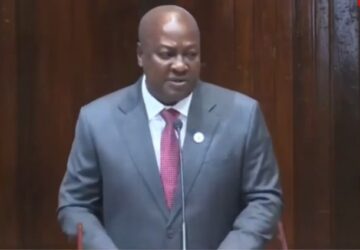
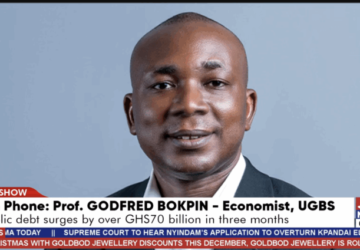
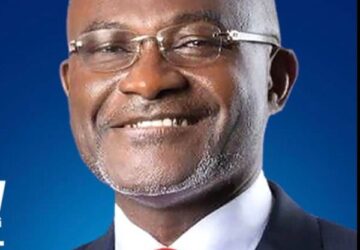
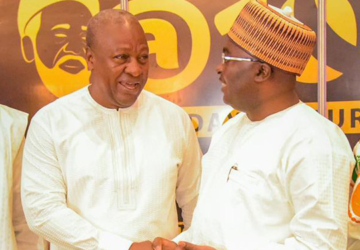
Economist and Finance Professor at the University of Ghana, Professor Godfred Bokpin, has stated that the New Patriotic Party (NPP) deserves partial credit for the current stability of the Ghanaian cedi.
He cited improved macroeconomic indicators and the continuity of certain policies as factors contributing to the cedi’s resilience.
Speaking in an interview on Citi FM on Wednesday, 21 May, Professor Bokpin acknowledged that while multiple elements are responsible for the cedi’s performance, the previous NPP government’s post-election economic management had a significant impact.
Professor Godfred Bokpin
“To some extent, the NPP should be given some credit. If you look at the data after December 2024, after the election under the IMF programme, we missed practically all the indicators, except for two,” he explained.
“One was GDP growth, which was higher than the programme’s target. We ended the year with 5.7%, and the other was our international reserves.”
He pointed out that the former government’s efforts, particularly through the Gold-for-Reserves programme, helped shore up foreign reserves — a move that created a foundation for the current administration to build upon.
He emphasised that this foundation has played a role in stabilising the foreign exchange market.
Professor Bokpin concluded that the relative currency stability being experienced is not the result of a single government’s action but rather a continuation of prudent policies.
“Such policy continuity, especially in the management of foreign reserves, has contributed to the relative stability observed in the foreign exchange market,” he noted.Source: Myjoyonline.com
The Bank of Ghana says it will intensify key reforms to consolidate recent gains made by the cedi which has appreciated by nearly 19 percent year-to-date.Ghanaian food recipes
The rally of the local currency has been largely driven by coordinated fiscal discipline and tight monetary policy measures.
Dr. Johnson Asiamah
Governor of the Bank of Ghana, Dr. Johnson Asiamah believes the next phase of reforms will focus on sustaining foreign exchange inflows and tightening regulatory oversight in the forex market.
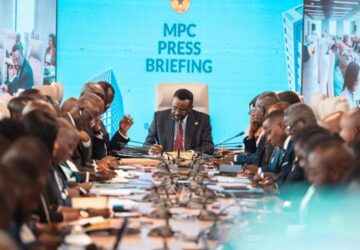
He was speaking at the opening of the Bank’s 124th Monetary Policy Committee meeting on Wednesday at the Bank Square.
Ghanaian food recipes
“Importantly, the cedi has appreciated sharply by nearly 19 percent between April and May, helping to ease imported inflation pressures and restore public confidence. The appreciation reflects a combination of factors, including prudent monetary policy, improved market sentiment and external sector gains, he said.
But the Governor quickly added that underlying economic challenges persist despite the improving outlook.
“However, significant challenges persist. The inflation outlook, while improving, remains vulnerable to second-round effects, food supply constraints, especially from northern Ghana and the Sahel and external price shocks, particularly given volatile global commodity markets.”
“Geopolitical tensions and evolving global trade dynamics, including the recent US-led tariff disputes, have heightened market uncertainty and could affect commodity prices, exchange rates, and financial flows in emerging markets like ours”, he added.Ghanaian food recipes
The MPC is being held at a time of sustained cedi strength against the US dollar and ongoing efforts to rein in inflation.
At its last meeting in March, the Committee raised the policy rate by 100 basis points to 28%, a move the Governor Dr. Johnson Asiama said was necessary to anchor inflation expectations. Source:Nii Lartey
The first 120 days of John Mahama’s second term in office,has seen some significant achievements in the areas of fiscal and monetary policies including the much talked about of the recent appreciation of the Cedi against US dollar and other major international trading currencies.
However, it is worthy to let Ghanaians know the key contributions of Akufo-Addo’s government to the performance of Mahama’s government within the 120 days as follows:
1. Cedi Appreciation: Bearing Fruits of NPP “Gold for Forex” Initiatives & other Interventions
The CEO of GoldBod, Sammy Gyamfi, has been demanding answers to the two questions below:
1. Accumulating physical gold reserves, with a dollar to cedi exchange rate of GHS 16? or
2. Accumulating adequate forex liquidity through unprecedented gold exports, with a dollar to Cedi exchange rate of GHS 12.2?
Dr.Razak KoJo Opoku
First and foremost, any well-read learned lawyer would rather argue from the standpoint of tonnes accumulated over a period of time, not the value of exchange rate since several factors affect the appreciation and depreciation of Currency.
The CEO of GoldBod unfortunately, is rushing above his gold-economics intelligence. Respectfully, the CEO of GoldBod should appreciate the fact that, the physical gold reserves left behind by the NPP Government is largely responsible and part of the unprecedented gold exports executed by Mahama’s government to accumulate the adequate forex liquidity at the exchange rate of GHS 12.2.
The Bank of Ghana Gold Reserves hit 31.37 tonnes at the end of April 2025. Out of this figure, what has been the contribution of GoldBod to the 31.37 tonnes of Gold and under which Budget utilization from January to April 2025?
A robust physical gold reserve position enhances the resilience of Ghana’s balance of payments, ensuring adequate buffer against external economic shocks, and strengthening the monetary policy decisions of Bank of Ghana.
Even, President John Mahama, speaking at the opening ceremony of Ghana-EU Business Forum held in Accra, admitted and acknowledged the undeniable fact that, Akufo-Addo’s government left behind $8.98 billion reserves, creating positive significant impact on the Cedi against the US Dollar and other trading currencies. The NPP’s $8.98 billion has significantly supported forex inflows, improved trade balancing as well as growing investor’s confidence in Mahama’s government.
According to John Mahama, “our gross international reserves have improved further from $8.98 billion in December 2024 to $10.6 billion by April 2025”. Mathematically, the inference is that between January-April 2025, John Mahama’s government has added only $1.62 billion to the Reserves of Ghana, even largely underpinning by the revenue mobilization strategies of NPP’s Mini-Budget for the 1st quarter of 2025 approved by Parliament on 3rd January 2025.
Until and unless Mahama’s government through the GoldBod is able to add more gold to the Reserves exceeding $8.98 billion left behind by the NPP government, the NDC has absolutely no moral or legal or ethical or economic rights to take full 100% credit for the recent appreciation of the Cedi against the US Dollar and other trading currencies.
The Domestic Gold Purchase Programme(DGPP) and “Gold for Oil”Policy so far have done greater good to the Cedi than Mahama’s GoldBod though we cannot completely also ignore the fact that the monopolistic GoldBod has played its role in the recent appreciation of the Cedi.
Categorically, Akufo-Addo’s government is responsible for about 80-90% of gold reserves of Ghana from 2021-April 2025, with the greater credit to the Bank of Ghana under the leadership of Governor Ernest Addison.
John Mahama’s government has been lucky enough to have inherited an already recovering economy from Akufo-Addo’s government.
Also, the admission and acknowledgement of $8.98 billion reserves by John Mahama sincerely indicates that John Mahama and the NDC LIED to the good people of Ghana that NPP criminally managed the economy.
Dr. Ato Forson authoritatively indicated in Section 104, page 24 of the 2025 Budget Speech that, “Mr. Speaker, provisional 2024 GDP Statistics published by Ghana Statistical Service(GSS) on 10th March 2025 shows that overall real GDP grew by 5.7% in 2024 compared to the growth rate of 3.1% recorded in 2023, and non-oil GDP grew by 6% in 2024 compared with a growth rate of 3.6% recorded in 2023(Section 105, Page 24 of 2025 Budget Speech). In fact, this is a solid economic recovery foundation left behind by Akufo-Addo’s government to John Mahama’s government.
Sammy Gyamfi should NOT also forget that before the operations of GoldBod on 2nd April 2025, there were functionality and operationalization of:
1. Precious Minerals Marketing Company(PMMC), later amended to the current GoldBod, headed by Sammy Gyamfi. Mr. Gyamfi was initially appointed as CEO for PMMC, not GoldBod, and actually started working with the architecture of PMMC for three(3) months until the Ghana Gold Board Act, 2025(Act 1140) was passed in March 2025 and assented into law on 2nd April 2025.
Domestic Gold Purchase Programme which began in 2021, with special credit to Akufo-Addo’s government.
The Domestic Gold Purchase Programme(DGPP),and Gold for Oil Policy implemented under the guidance of Akufo-Addo’s government seriously underpins Ghana’s “Gold for Forex” intervention for the appreciation of the Cedi.
Minerals Income Investment Fund(MIIF) envisioned by former President Akufo-Addo, and implemented by Ken Ofori-Atta, former Minister of Finance.
Due to the viability and relevance of Minerals Income Investment Fund(MIIF), in accordance with Section 135 of the 2025 Budget Speech presented to Parliament by Dr. Ato Forson, Minister of Finance, the Mahama’s government would amend the Minerals Income Investment Fund Act to ensure that, 80% of Mineral Royalties originally maintained by MIIF is transferred to the Consolidated Fund for infrastructure development and strengthen social protection initiatives of Mahama’s government(Pages 37-38 of the 2025 Budget Speech).
Ghana-IMF Programme started by Akufo-Addo’s government until 2026. John Mahama’s government inherited a $3 billion Extended Credit Facility from NPP government, with $370 million tranche hitting the account of Bank Ghana very soon.
The current Ghana-IMF programme has really created fiscal discipline and macro-stability for the Ghanaian economy, thereby boosting investor’s confidence in the economy.
The existence of the IMF programme has largely prevented Mahama’s government from reckless expenditures.
We would patiently wait to see the outcome of Ghana’s economy under Mahama’s government after the IMF Fiscal Discipline Programme with Ghana comes to an end in 2026.
2. Mini-Budget for 1st Quarter of 2025 Presented to Parliament by Akufo-Addo’s Government
It is without any argument and doubt that, Ghana was governed by John Mahama within the 120 days using Akufo-Addo’s Mini-Budget for 1st Quarter of 2025 passed by Parliament on 3rd January 2025.
Until Hon. Dr. Ato Forson presented the Budget on the 11th March 2025, John Mahama’s Administration was operating with Akufo-Addo’s Mini-Budget for 1st
quarter of 2025 in accordance with the relevant laws of the Country.
The Mini-Budget delivered by Hon. Dr. Mohammed Amin Adam on behalf of Akufo-Addo’s government was responsible for funding government operations for the 1st quarter of 2025, pending the substantive budget presentation by Mahama’s government.
The allocations of Akufo-Addo’s Mini-Budget focused on critical government functions including GHS 2.37 billion tax refunds, healthcare, education, public service costs, and infrastructure development across the country.
Akufo-Addo’s Mini-Budget helped Mahama’s government to sustain essential services, address pressing fiscal & monetary needs of Ghana, ensuring the sustainability of economic stability, as well as revenue mobilization strategies.
Dr.Ato Gordon, Finance Minister and President John Mahama
The Akufo-Addo’s 68.13 billion Ghana Cedis Mini-Budget for 1st Quarter of 2025 has the following deliverables:
1. GHS 16.46 billion for payment of employees salaries.
2. GHS 3.12 billion for payment of goods and services.
3. GHS 20.69 billion for interest payments, including obligations to Independent Power Producers(IPPs), and the Energy Sector Levy Account(ESLA).
4. GHS 45.50 million for subsidies.
5. GHS 9.19 billion allocated to government agencies.
6. and several other components not mentioned here.
3. Payment of Domestic Bondholders by Mahama’s Government
It is undeniable fact that, John Mahama’s government was able to honour the following payment interventions in February 2025 largely influenced by the Mini-Budget of Akufo-Addo’s government:
1. Payment-in-Cash(PIC) coupon of GHS 6.081 billion to all Domestic Debt Exchange Programme(DDEP) bondholders.
2. Payment-in-Kind(PIK) portion of GHS 3.46 billion, deposited into the respective bondholders’ securities accounts in line with the DDEP Memorandum secured by Akufo-Addo’s government.
3. Payment of GHS 9.7 billion into the Debt Service Recovery Cedi Account(Sinking Fund) as a buffer for the 5th DDEP coupon due in July and August, 2025.
The Debt Exchange Programme was a necessary evil intervention taken by Akufo-Addo’s government, attracted the hatred of Ghanaians but now serving as a blessing and breathing room to John Mahama’s government.
The 2025 Budget Statement of Mahama’s government indicates that, “Mr. Speaker, you may recall that the government(Akufo-Addo’s government) commenced the debt restructuring programme in 2022 to RESTORE DEBT SUSTAINABILITY and ECONOMIC STABILITY. Mr. Speaker, as of now, the restructuring process is approximately 93% completed. The remaining 7% relates to debt of $2.7 billion owed to commercial creditors. We are committed to completing the remaining debt restructuring as soon as possible”(Sections 101, 102 and 103: Pages 23-24 of 2025 Budget Speech delivered on 11th March 2025).
Additionally, Dr. Ato Forson admitted in Section 100 of the Budget Speech as follows, “Mr. Speaker, the reduction in debt -to-GDP ratio and the dollar component of our debt stock is as a result of the 37% haircut on the principal of the Eurobond debt under the debt restructuring programme” (Page 23 of 2025 Budget Speech), with greater credit to Ken Ofori-Atta and Dr. Mohammed Amin Adam, two former Ministers of Finance Akufo-Addo’s government.
Now, my question to Sammy Gyamfi, CEO of GoldBod and NDC Members are as follows:
(a). What would have been the current situation of the Cedi and the economy of Ghana if NPP government (with greater credit to Ken Ofori-Atta and Dr. Mohammed Amin Adam) was unable to successfully restructured 93% of Ghana’s debt caused by successive governments?
(b). How do you(NDC members) take full 100% credit for Cedi Appreciation when your efforts to Ghana’s debt restructuring is just 7%? This would certainly be an unreasonable and unjustifiable glory.
…. Signed….
Razak Kojo Opoku(PhD)
Founding President, UP Tradition Institute
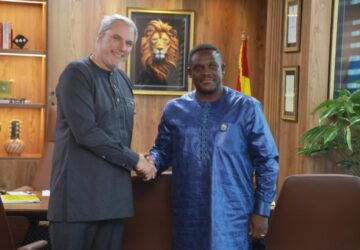
May 21, 2025 Stephen Blewett, the Chief Executive Officer of MTN Ghana, says MTN’s Fiber to the Home (FTTH) services, will expand internet access to households across major communities in the country for various purposes.
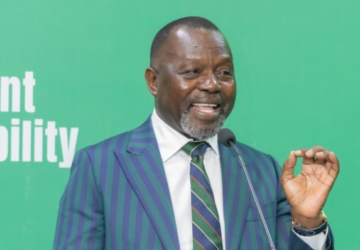
Stephen Blewett in a Pose with Journalists from Northern Region
In his keynote address during a media and stakeholder forum held in the northern regional capital Tamale, Mr. Blewett emphasized that the FTTH solution was developed in response to the growing reliance of Ghanaian homes on internet connectivity. He said, “We have tailored our FTTH solutions to meet the diverse needs of our customers.
CEO Stephen Blewett Interacts with a Vendor in Tamale Market
Our FTTH service offers high-speed internet connectivity, reliable and stable connections, low latency for seamless online experiences, and flexible plans to suit various needs and budgets.” He added, “This initiative aligns with our overarching digital agenda aimed at bridging the digital divide and empowering individuals, businesses, and communities across Ghana.”
MTN CEO Stephen Blewett interacting with customers in the Market
Mr. Blewett also highlighted that network expansion and capital investment are critical to MTN’s business growth and customer experience. He stressed the importance of expanding MTN’s digital infrastructure to enhance connectivity and drive economic growth.
MTN is enhancing its 4G capacity to ensure future-proof connectivity by upgrading its infrastructure and investing in the foundation of digital communication. In 2025, approximately 130 kilometers of fiber infrastructure will be relocated to improve network resilience and significantly expand capacity. This initiative will pave the way for next-generation services and applications that will empower individuals and businesses nationwide.
During his visit to the Northern region of Ghana, MTN CEO Stephen Blewett engaged with several stakeholder groups. He paid a courtesy call on the Northern Regional Minister, Hon. Ali Adolf John, and held discussions with media representatives from the Upper East, North East, Savannah, and Northern regions. Additionally, the CEO met with staff, toured the Tamale market, and engaged in conversations with the company’s trade partners.He was accompanied by some of the company’s executives and other management team members.
MTN organizes annual regional outreach programs to gather feedback on its operations and provide updates on product and service innovations.
End.
Media Contacts:
Adwoa Wiafe
Chief Corporate Services and Sustainability Officer
Despite growing buzz on social media about a drop in cement prices—particularly GHACEM 32R—retail checks across the market tell a different story.
Traders say the recent appreciation of the Ghana cedi has not translated into lower prices at the counter. GHACEM 32R is still retailing at around 120 cedis per bag.
Ghanaian food recipes
At a time when the cedi is enjoying one of its strongest runs in years, expectations are high that the cost of goods—especially imported and other critical products like cement—will follow suit.
But traders in parts of Accra have dismissed the claims making the rounds online, saying cement prices have not only held steady, but in some cases, seen slight increases over the last two quarters.
As of February 2025, cement prices had surged by 9 cedis to sell at GHS 120.
“There hasn’t been any price reduction. I even placed an order at 105 cedis per bag, and I’m yet to receive it—so all those reports are just hearsay,” Atta Boafo- a retailer opined.

David Nartey another retailer rejected the social media claims stating that:”I received my goods today and the factory price is GHS 120 and I retail it at GHS 130.”
They argue that factors such as high transport costs, rising input prices, and supply chain constraints continue to weigh on pricing—making it difficult for recent currency gains to reflect immediately at the retail level.
“We understand clinker is in short supply, so if there’s enough of it—and that combines with the stable exchange rate—it could push prices down and offer some relief,” another retailer added.
For most of the traders they impressed on the government to help address the issue of clinker shortages before consumers can think of any price reduction.By:Emmanuel Oppong
The Ghana Private Road Transport Union (GPRTU) has announced a 15% reduction in transport fares, effective Saturday, May 25, 2025.
This decision follows a meeting between the Union’s National Executive and the Minister of Transport.
The Public Relations Officer of the GPRTU, Abbas Ibrahim Moro, confirmed the development in an interview with 3news.
“We just had a meeting with the Minister of Transport and we have agreed that effective Saturday, May 25, transport fares must be reduced by 15%,” he disclosed.
According to him, the fare adjustment is a direct response to an 18% drop in fuel prices.
He explained that although the Union typically applies a third of the fuel price decrease, they have opted for a 15% cut this time to ease the burden on passengers.
“We normally use one-third of the fuel price reduction to adjust fares, but we opted for 15% this time to reflect the fuel price trend. We also expect our counterparts in the spare parts industry to follow suit and reduce their prices,” he noted.
He added, “We want to place on record that we did not wait for the other components of our cost build-up to reduce before the 15% reduction.”
He also warned that GPRTU members who refuse to implement the fare cut will face consequences, adding that “If your Union has decided, you have no option but to comply.”Source: MyJoyOnline.com
The Minority Caucus on Parliament’s Finance Committee has raised concerns over what it describes as a conflict of interest involving the Committee’s Chairman, Isaac Adongo, who also serves as a board member of the Bank of Ghana (BoG).
Ghanaian food recipes
In a press statement dated May 16 and signed by the Member of Parliament for Nhyiaeso, Dr. Stephen Amoah, the group questioned both the legality and ethical implications of the Bolgatanga MP occupying the two roles concurrently.
Isaac Adongo,
Citing Standing Order 228(2) of Parliament, the caucus noted that the Finance Committee is mandated to monitor the central bank’s foreign exchange receipts and payments and report to Parliament every six months.
“The law provides that the Bank of Ghana must report to the Finance Committee. How can a board member of the same BoG chair that committee?” the statement questioned, referencing a potential breach of the principle of natural justice — nemo judex in causa sua — which means no one should be a judge in their own cause.
Ghanaian food recipes
The statement also referenced Article 184(1) of the 1992 Constitution, which assigns oversight of foreign exchange transactions to the Finance Committee.
According to the Minority, Isaac Adongo’s dual role compromises the committee’s independence and
constitutes a structural conflict of interest.
While the Minority acknowledged the financial rationale behind some of Hon. Adongo’s recent public remarks — particularly those regarding the withdrawal of foreign exchange — they stressed that his current role as a non-executive board member limits his scope of authority.
“Even if the statement is financially prudent, his prescribed responsibility as a non-executive board member is being overstepped,” the statement said.Source:William Narh