Business
Kessben Group of Companies supports Adum fire victims with GH¢100,000
By: Isaac Amoah (Email: isaacamoah73@yahoo.com)
The Kessben Group of Companies, led by Mr. Kwabena Kesse, has donated GH¢100,000 to the Adum Blue Light fire victims.
The group has also pledged to donate 500 bags of cement when the reconstruction of the market starts.


Mr. Sammy Adu Boakye, Head of Programmes at Kessben TV & radio, who led a powerful delegation, made the donation on Wednesday, 2nd April 2025.
He expressed the deepest sympathy of the Chief Executive Officer of the group, Mr. Kesse, to the affected traders, some of whom are loyal viewers and listeners of various media outlets.
Mr Sammy Adu Boakye making presentation to the United traders leadership
Other affected traders are customers of Multi Credit, Kessben Travel & Tours, among others.
Mr. Boakye said the donation was to demonstrate their concerns to the affected traders. He, therefore, urged other media organisations and institutions to also follow their footsteps to alleviate the plight of the victims.
The leadership of the victims expressed their profound appreciation to Kessben Group of Companies, especially the CEO,Mr.Kwavena Kesse for the timely support.. They prayed for him for showing kindness to them.
Okaikoi Central MP surprises Adum fire victims with Ghc 100K donation
By:Isaac Amoah (Email: isaacamoah73@yahoo.com)
The Member of Parliament (MP) for Okaikoi Central in the Greater Accra Region, Mr. Patrick Yaw Boamah, has surprised the victims with a donation of GH¢100,000.
The MP, who traces his root from the Ashanti Region, was led by Lawyer Obiri Yeboah, the MP for Subin.
Lawyer Obiri Yeboah and Mr Patrick Yaw Boamah
Mr Patrick Yaw Boamah also presented GH¢50,000 cash to the leadership of the traders and pledged to add the remaining GH¢50,000 in due course.
Besides, he pledged to support the traders with 200 bags of cement as part of his support to the over 10,000 victims.
Mr Patrick Yaw Boamah addressing the traders
The Okaikoi Central MP used the opportunity to commend his colleague Subin MP for lobbying support for the victims in a committed manner.
It is on record that since the incident happened almost two weeks ago, many leading members of the NPP, including Dr. Mahamudu Bawumia, the former Vice- President, have made various donations in addition to donations from the Ashanti Regional Minister, Dr. Frank Amoakohene, leadership of NADMO and some businessmen.
The leadership of the victims expressed their profound appreciation to Mr Patrick Yaw Boamah for his timely support.. They prayed for him for showing kindness to them.They,also encouraged other MPs to emulate his example and come to their aid.
Prez Mahama signs Bills to abolish E-Levy, Emissions Tax, others
President John Dramani Mahama ,has assented to a series of legislative bills meant to abolish several taxes, including the Electronic Transfer Levy (E-Levy), Betting Tax, and Emissions Tax.
This move aligns with the National Democratic Congress’s (NDC) commitment to alleviating the financial burden on Ghanaians.
President John Mahama signing the bills
On March 13, 2025, Finance Minister Dr. Cassiel Ato Forson presented eight bills to Parliament, targeting the repeal and amendment of various taxes and levies. These bills included the Electronic Transfer Levy (Repeal) Bill, 2025; Emissions Levy (Repeal) Bill, 2025; Income Tax (Amendment) Bill, 2025; and the Earmarked Funds Capping and Realignment (Amendment) Bill, 2025, among others.
The E-Levy, introduced in 2022, imposed a 1% charge on electronic transactions, including mobile money transfers and online payments. Its implementation faced widespread public resistance due to its perceived impact on disposable incomes. The Betting Tax, which levied a 10% charge on gross winnings from gambling activities, also faced criticism from stakeholders in the gaming industry.
Ahead of the 2024 general elections, then-flagbearer of the National Democratic Congress (NDC), John Dramani Mahama, pledged to abolish these taxes within his first 120 days in office if elected. With his recent approval of the amended tax bills, his administration has fulfilled that campaign promise.
Source:William Narh
Y’ELLO LADIES NETWORK: EMPOWERING WOMEN TO REACH NEW HEIGHTS AT MTN GHANA.
MEDIA RELEASE
Accra, April 2, 2025 – MTN Ghana has officially launched the Y’ello Ladies Network, an all-female employee group aimed at promoting career development, professional growth, and empowerment among women within the organization. The network is open to all female employees, regardless of their role, designation, tenure, or function.
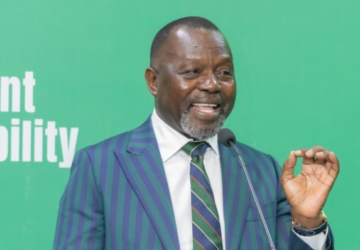
Stephen Blewett, MTN Ghana’s Chief Executive Officer, emphasized the company’s commitment to gender equality and the advancement of women in the corporate sector. He stated, “We must grow our women; it’s not only beneficial for individuals but also for the business. Studies have shown that companies with at least 30% female representation are better equipped to face the challenges of a rapidly changing business environment.”
While praising the network as an inspiring initiative, he urged members to use it to make a positive impact in the community. “Remember that it is not only about us; it also includes those we touch or impact with our activities here,” he added.
The network is founded on four key pillars: empowerment, inspiration, guidance, and coaching.
Antoinette Kwofie, MTN Ghana’s Chief Finance Officer, highlighted the importance of the Y’ello Ladies Network in promoting women’s leadership and career advancement during her remarks at the launch. She said, “The objective of the network is to create an inclusive environment that supports career development, empowers women to attain leadership roles, and encourages diversity and inclusivity within the workplace. It will also provide a sustainable platform to enhance the visibility of women and facilitate the exchange of experiences”.
At the launch, Presidential Advisor and Special Guest of Honour, Joyce Bawah Mogtari, emphasized the significant role that networking plays in career advancement and success. Drawing from her personal experiences, she encouraged the women to be intentional about building meaningful connections urging them to “Never underestimate the value of a strong network”. “True success comes when you build an entire ecosystem and create opportunities for others to thrive. That is what today is about,” she said.
Two female Board Members of MTN Ghana, NanaAma Botchway and Rosie Ebe-Arthur, also addressed the women, encouraging them to have confidence in their abilities.
Janet Sunkwa-Mills, a board member of the Executive Women Network and Keynote Speaker for the occasion, highlighted the benefits of deliberate investments in professional networks. She noted that sustaining a thriving network requires effort and commitment. “For a network to thrive, members must be intentional about their contributions and support for one another,” she stated.
On the topic of coaching, Dzigbordi Dosoo, CEO of DCG Consulting Group, stressed the importance of self-development as a foundation for guiding others. She urged the women to view coaching as a tool for navigating both professional and personal challenges. “Coaching is about strengthening yourself so that you can uplift others” she noted.
Focusing on the inspiration pillar, Taaka Awori, CEO of Busara Africa, encouraged the women at MTN to seek motivation from within rather than relying solely on external validation observing that “Too often, women look outside for inspiration when they should be looking inward. We need to cultivate self-love and confidence”
Sika Twum, CEO of Self Search Ghana, emphasised the importance of guidance by highlighting the need for unity and innovation within the network. She encouraged women to support one another and provide clear direction in times of uncertainty. “In moments of confusion, having a strong sense of direction is crucial. By committing to guide and uplift one another, we can achieve excellence together,” she noted.
On the topic of empowerment, Audrey Abakah, SME Lead at Absa Bank, stressed the necessity for women to take ownership of their personal growth. She pointed out that while organizations like MTN Ghana can offer support, it is essential for individuals to be proactive in seizing opportunities. “For true empowerment to be realized, women must be equipped and enabled” she added.
The event was attended by MTN Executives, Female Employees of MTN Ghana, Diversity and Inclusion committee members of MTN Ghana, Leaders of various women’s associations, and other guests.
End.
Media Contacts:
Adwoa Wiafe
Chief Corporate Services and Sustainability Officer
Georgina Asare Fiagbenu
Corporate Communications Senior Manager
Email: MTNGhana.MediaOffice@mtn.com
Napo mobbed…as he makes donation to victims of Adum fire disaster
By: Isaac Amoah (, Email: isaacamoah73@yahoo.com)
Dr. Matthew Opoku Prempeh, the 2024 Running Mate to the Flagbearer of the New Patriotic Party (NPP), Dr. Mahamudu Bawumia, was mobbed before he made donation to the victims of the Adum fire disaster.
Some scenes from the ceremony
The former Member of Parliament (MP) for the Manhyia South Constituency in the Ashanti Region, who is popularly known as Napo in the political space, made a personal donation of GH¢50,000 plus 500 bags of cement aside from GH¢100,000 from his share of MP’s common fund.
Besides, the incumbent MP for Manhyia South, Lawyer Baffour Awuah, made a personal donation of 100 bags of cement to the affected traders.
In all, Napo and his entourage donated GH¢150,000 and 600 bags of cement to the victims.
The former Energy and Education Minister cautioned the traders against division, reminding them that unity is strength.
He also urged the Ashanti Regional Minister, Dr. Frank Amoakohene, to work hand in hand with the affected traders to find the needed support for them devoid of discrimination.
The donations were made on Wednesday, 2nd April 2025, and they were received by the leadership of the United Traders of Adum Blue Light.
Dr. Opoku Prempeh expressed his deepest sympathy to the affected traders, advising them to unite and push for the needed support.
He appealed to them to liaise with the MPs within the Greater Kumasi metropolis and the Ashanti Regional Minister, so as to ensure that every affected trader gets back his or her shop.
The leadership of the victims expressed their profound appreciation to Napo. They prayed for him for showing kindness to them.
They used the opportunity to renew their appeal to government to allow them to reconstruct their shops.
Napo urged them to liaise with the MPs to lead them to inform Otumfuo Osei Tutu II, the Overlord of Asanteman, as well.
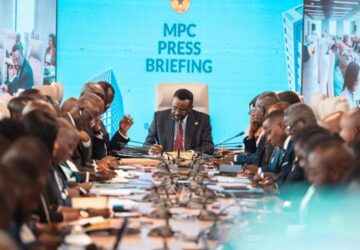
Full text:BANK OF GHANA MONETARY POLICY COMMITTEE (MPC)PRESS RELEASE
PUBLIC BANK OF GHANA MONETARY POLICY COMMITTEE (MPC)PRESS RELEASE March 28, 2025

Good afternoon, ladies and gentlemen of the press.
1. Thank you for joining us today for this press briefing following the conclusion of
the 123rd regular meeting of the Monetary Policy Committee (MPC) held this week
to assess recent economic developments and risks to the inflation outlook. As part
of our continued commitment to transparency and accountability, this briefing
provides an overview of the key discussions on recent macroeconomic developments
and the decision taken by the Committee on the monetary policy stance.
A. Global Economic Developments
Dr.Johnson Asiama, Governor of BOG
- The global economy was resilient through 2024 supported by strong real income
growth and a less restrictive monetary policy stance relative to 2023. In the first
few months of 2025, trade frictions arising from an emerging tariff war, elevated
global interest rates, and geopolitical tensions have heightened uncertainty about the
global growth outlook. These uncertainties have weighed negatively on consumer
and business confidence, softened investor sentiment, and increased downside risks
to growth. -
The disinflation path has stalled in some Advanced Economies, on the back of
persistence in services inflation, resurgence in goods inflation, and the recent
tariff actions by the U.S. The imposition of additional tariffs by the U.S. and
retaliatory responses have pushed up long-term inflation expectations in some
Emerging Market Economies. In addition, the process of disinflation, which was
expected to be supported by a decline in crude oil prices, could be partly offset by
the effect of the tariff increases. Against this backdrop, global inflation is expected
to remain high in the near-term. -
Global financial conditions remain broadly restrictive. This is driven by high
monetary policy rates, rising long-term bond yields, declining capital flows to
Emerging Market and Developing Economies, and volatile equity markets. The
Federal Reserve, Bank of Japan, and Bank of England all kept their policy rates
unchanged in March 2025 on account of rising trade and economic uncertainty, while
the European Central Bank cut its policy rate to boost growth in the Euro Area.
Expectations of higher-for-longer policy rates and rising uncertainty kept long-term bond yields high, while equity markets remained cautious due to concerns about the effects of tariffs.
B. Domestic Macroeconomic Conditions
5. On the domestic front, growth continued to rebound, exceeding initial
expectations. Provisional data from the Ghana Statistical Service estimated real
GDP growth at 5.7 percent in 2024, higher than the programmed growth rate of 4.0
percent for 2024, and the 3.1 percent recorded in 2023. Non-oil GDP grew at 6.0
percent compared with 3.6 percent recorded in 2023. The growth outturn in 2024
was driven by activities in the industry and services sectors. However, growth in the
agricultural sector was slower, driven by lower crop yield due to adverse weather
conditions, among other factors.
6. The Bank’s real sector indicators point to a sustained improvement in economic
activity, amid significantly improved business and consumer sentiments. The
updated Composite Index of Economic Activity (CIEA) rose by 5.7 percent year
on-year in January 2025, relative to 3.5 percent in the same period of 2024, driven
by increased consumption, international trade activities, and private sector credit
growth. The confidence surveys conducted in February 2025 also showed significant

improvement in both consumer and business sentiments, buoyed by expectations for
an improved macroeconomic environment.
7. Inflation remained high in 2024 and sticky around 23 percent, significantly
higher than expectation. The latest data released by the Ghana Statistical Service
indicates that headline inflation eased marginally from 23.8 percent in December
2024 to 23.1 percent in February 2025, due to easing but still high non-food inflation.
Food inflation has remained elevated on account of unfavourable climatic conditions
and other constraints.
8. The Bank’s main core measure of inflation eased marginally in the first two
months of 2025. Inflation, excluding energy and utility items from the consumer
basket, eased from 23.1 percent in December 2024 to 22.4 percent in February 2025,
and compared with 24.0 percent in the same period last year. This notwithstanding,
latest inflation expectations, as derived from the Bank’s model, the yield curve, and
9. Private sector credit is beginning to show signs of recovery. In February 2025,
private sector credit recorded 26.9 percent annual growth, compared with 5.1 percent
in February 2024. In real terms, credit growth was 3.1 percent, compared with a
decline of 14.7 percent in February 2024.
10.The banking sector performance continued to improve. Total bank assets
recorded 34.0 percent growth at the end of February 2025 relative to 12.1 percent

growth, in the same period last year. With regulatory reliefs, the banking industry’s
Capital Adequacy Ratio (CAR) was higher at 14.4 percent compared to 13.6 percent
in the same period last year. Without reliefs, CAR was 12.1 percent. The industry’s
Non-Performing Loan (NPL) ratio declined to 22.6 percent in February 2025 from

24.6 percent in February 2024. Excluding the loans in the loss category, which are
fully provisioned, the NPL ratio as at end-February 2025 was 8.9 percent. Overall,
the Financial Soundness Indicators showed broad improvements in asset growth,
solvency, liquidity, efficiency, and profitability.
11.The fiscal policy stance was more expansionary than expected in 2024. The 2024
fiscal deficit, on commitment basis, was 7.9 percent of GDP against a target of 3.8
percent of GDP, on the back of higher expenditures than target. This
notwithstanding, early indications from banking sector data suggest some
improvements in fiscal performance in early 2025. This, along with the commitment
to fiscal consolidation presented in the 2025 budget, should support the fiscal
outlook. Also, the ratio of public debt declined supported by the debt restructuring.
12.Prices of Ghana’s major export commodities traded mixed on the international
commodities market in early 2025. Gold prices crossed the US$3,000 per fine
ounce on March 14, 2025, on account of heightened economic uncertainty triggered
by the trade and geopolitical tensions, persistent inflation, and weakening US dollar.
In February 2025, gold prices averaged US$2,897.3 per fine ounce, indicating a
year-on-year growth of 9.7 percent. Similarly, crude oil prices recorded a marginal
annual growth of 2.4 percent to settle at an average price of US$74.95 per barrel.
Cocoa prices, however, declined by 8.5 percent driven by improving supply outlook
for the current 2024/25 season.
13.The strong external sector performance in 2024 continued in early 2025,
indicating a significant improvement in the accumulation of reserves. In the first
two months of 2025, the trade account recorded a surplus due to higher export
receipts relative to imports. Total exports posted 50.0 percent annual growth to reach sector credit growth is recovering. These developments suggest a positive outlook
for the economy.
18.The external sector outlook remains strong. This is against the backdrop of
increases in gold exports driven by sustained implementation of the Gold-for
Reserve programme, continued growth in remittance inflows, and commitment to
the implementation of policies and reforms under the IMF programme. In the
outlook, the continued buildup of reserve buffers is expected to support the stability
of the currency.
19.The banking sector has remained broadly stable. Credit risks within the banking
sector, however, remain elevated, as underscored by increased non-performing loan
ratios. The Bank’s latest macroprudential risk assessment indicates some moderation
in systemic risks on the back of improved solvency, liquidity, efficiency, and
profitability. Going forward, the Bank will continue to closely monitor
undercapitalised banks to safeguard the stability and soundness of the banking
sector.
20.The Committee observed that the fiscal stance was expansionary in 2024. This
has created significant fiscal impulses, and a liquidity overhang that needs to be
carefully managed. The strong liquidity conditions could spill over into other
segments of the economy and derail the disinflation path. While the government has
signalled a strong commitment to fiscal consolidation, monetary policy restraint is
required.
21.While headline inflation has declined marginally, it remains a concern. Both
food and non-food inflation are significantly above expectation, and core inflation
remains elevated. While food inflation was driven largely by supply side factors,
preventing second-round effects from such increases will be essential. The persistent
inflation dynamics over the past year, partly driven by both fiscal and monetary
policy missteps, will require a policy reset to re-anchor the disinflation process. To
restore price stability going forward will require a tight monetary policy stance,
strong liquidity management, and commitment to the 2025 budget which seeks to
reset the fiscal consolidation process.
D. Monetary Policy Decision
22.Under the circumstances, the Committee, by a majority decision, decided to raise the Monetary Policy Rate by 100 basis points to 28.0 percent to re-anchor the disinflation process. As inflation becomes firmly anchored, the Committee will
reassess the scope for a gradual easing in the policy stance.
Additional Operational Measures
23.In addition to the adjustment in the policy rate, the Bank is implementing
complementary measures to strengthen liquidity management and enhance monetary
policy transmission. In this regard, the Bank will:
• Introduce a 273-day instrument to augment the existing sterilization toolkit.
• Intensify the monitoring of banks’ Net Open Positions (NOPs) to ensure
compliance.
• Review the current structure of the Cash Reserve Ratio (CRR) to assess its
GJA reschedules 2015 AGM to April 2
Source:, tntnewspapergh.com
RESCHEDULING OF ANNUAL GENERAL MEETING 2025
His Excellency, the President of the Republic of Ghana, has, by Executive Instrument (EI), in accordance with Section 2 of the Public Holidays and Commemorative Days Act, 2001 (Act 601), declared Monday, March 31, 2025 and Tuesday, April 1, 2025 as public holidays.
Consequently, the National Executive of the Ghana Journalists Association (GJA) has postponed this year’s Annual General Meeting (AGM) of the Association from the originally scheduled date on Monday, March 31, 2025 to a new date on Wednesday, April 2, 2025. The time and venue remain the same – at 11:00am at the Ghana International Press Centre in Accra.
The AGM, which is the highest decision-making body of the Association, is scheduled pursuant to articles 34(f) and 34(a)(ii) of the GJA Constitution 2004, and will address the following agenda:
To discuss the General Secretary’s Annual Report;
To discuss the audited accounts of the Association to be presented by the National Treasurer;
To discuss regional reports, and
AOB
All members in good standing as of December 31, 2024, are entitled to attend the AGM. Members in good standing, with the exception of honorary and student members, shall have the right to vote at the AGM.
SIGNED:
Kofi Yeboah
(General Secretary)