Business
USE COOPERATIVE SYSTEM TO SUPPORT CONSTITUENTS TO BECOME ENTERPRENEURS FOR 4TH INDUSTRIAL REVOLUTION IN GHANA
By: tntnewspapergh.com
The governing New Patriotic Party (NPP), has been advised to use its constituency delegates and card paying members into a business,and financial model of a Cooperative system.
This, according to an Energy Law Consultant and Researcher in Renewable Energy Transition in Ghana,Mr.JK Owusu Boakye,who doubles as top broadcast Journalist,could enable them leverage on financial system support and create a digital financial and gender inclusion to promote the socio-economic welfare of its teeming supporters in the country.

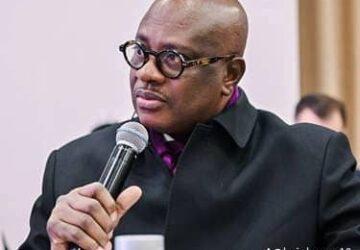
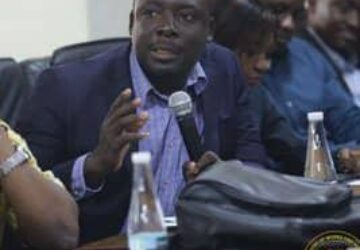
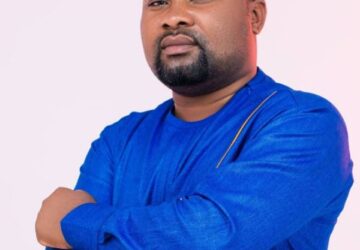
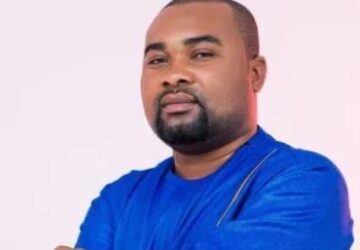
JK Owusu Boakye
According to JK Owusu Boakye, the over 6 million voters in NPP at various constituencies can change their welfare status into a sustainable financial model which can be an insurance and enterprising initiative for jobs creation and economic development.
He said most often, “our politics,has been described as ‘ moneycracy’ and our fiscal space, as a country,has seen expenditure overruns and affected proper economic management as s country.
The time,he said has come for the country to adopt an equity financing model to bring in inclusive participation of the political actors ( electorates ), who can build sustainable financial independence based on creating cooperative systems for them to leverage on benefits like ,life insurance, consumer credit ,hire purchase and business development and capacity building to help SMEs ,as well as ,use consortia bonds like municipal bonds to finance their own projects and benefit from the gains.
Mr Owusu explained that,”this, socio-economic and political business model,is a home grown alternative to external investor funding of projects which take sizeable part of of repatriation of funds out of Ghana. The model will work with local economic groupings ( in Cooperative) and private sector to enter into equity financing of all projects through Municipal Bonds ( Muni Bonds) with District Assemblies,SOEs and local Financial Institutions and GoG.
This,new system of financing local projects and long-term project in the extractive and mining ,oil industry in Ghana will enable Government policies like Digitalization,DRIP, 1 D1 F ,FSHS/ FCTVET,PFFJ,etc ,etc get the needed Ghanaian ownerships and dividends which translate into overall inclusive financial independence and local economic development and growth in the digital revolution for kob creation and wealth.
He said for example, funding of school projects, energy and other medium to long term projects, will be fully and wholly funded by local investors,like the Despites,Kessben’s,Angels,Kofi Bs ,Joshop,Atarchys,,etc,so that sub-contracting can go to MSMEs to enable them grow into economies of scale.
Ghana can adopt this trend through using their political supporters and kill the corruption associated with huge expenditures which crowd out investments and, also over reliance on foreign corporations and funding for our strategic natural resources?
He said the country,now needs to take control and add value by creating local supply chains and jobs in the 4th industrial revolution.
Mr.Boakye said “Politics is a “bread and butter” issue and it must enured to the benefits of the population!
And the NPP,he argued is in a better position to change the narratives and synchronise it’s manifesto into long term development planning policy for governance.
For example,the Chinese philosopher, said,” if you want to grow rice ,plan for a year,If you want to grow trees plan for ten years , and if you want to invest in education ,plan for life!!!!
So,Free Senior High School ( FSHS) implemented by Nana Akufo-Addo government, is a plan for life for Ghanaians!
He said Ghana is not poor,”we sit on plenty and prosperity,except that politicians lack the political will to take effective ,efficient and pragmatic decisions.It is lack of implementation and adopting a proactive approaches in our natural resources and energy sovereignty that’s is the bane of our retrogression”,he lamented.
Stressing that it is always possible to do the best for Ghana with bold leadership solutions.
Support Women with SME Grants to ensure financial independence in post- COVID 19 recovery and economic growth in Ghana
S
By:J K Owusu Boakye
An Energy Law Consultant and Broadcast Journalist,who is also an economist,has stated that the NPP government can promote economic revival and boost enterprising initiatives which creates jobs and wealth fir the people by supporting women groups and SMEs with targeted grants support to ensure that,they are financial independent in their business activities in an era of global economic recovery process.
JK Owusu-Boakye was speaking to some women associations and SMEs in a fact finding research in Ashanti Region and Greater Accra.

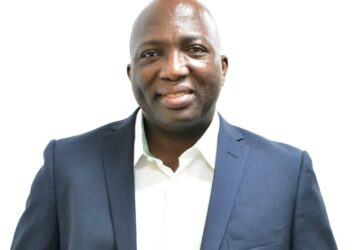
J K Owusu-Boakye
The Indigenous Caterers Association and School Feeding Caterers Association,together with some General Traders in Import and Export businesses where contacted and selected from Mampong,Offinso,Adansi Asokwa,Agogo,Tepa,Asante Akyim central and Dome Kwabenya, Kaneshie,Agbobloshie and Odododiodio ,La and Adenta – Madina constituencies in Ashanti and Greater Accra Regions,respectively.
As part of assessing the energy use and knowledge of energy transition to renewable sources,the study sought to ascertain the use of these SMEs ,mainly women of the level of participation and adoption of clean energy in cooking, manufacturing,household and enterprise use of renewable energy in Ghana.
Their challenges for example of the caterers ( food production and restaurant business,as well as cooking for students under GSFP) ,were mainly on access to capital , market changes as a result of COVID -19 affecting supply chain of goods and services,demand changes,exchange rates volatility( cedi/ dollar rates), operational and compliance risks,and financial and liquidity risks as some of the problems affecting them to grow their businesses in a very hard economic situation globally
They were of the view that government can cut the bureaucracies and make financial support available to them to enable them revive their collapse businesses and precarious financial situation and promote economic recovery and growth.
Most of them are using charcoal in their businesses and indicated that government support in clean cook stoves use will be adopted and solar powered electricity use could be a game changer for transition to green energy and sustain business activities and sustain growth in Ghana
It must be mentioned that SMEs in Ghana ,mainly women employs about 87% of the workforce and contributes significantly to GDP and any attempt to support them financially will provide economic stability and financial inclusion for the sector.
The groups complaint about slow paced support for SMEs in Ghana by GEA and Development partners and pleaded for expeditious grants support.
The writer is an Energy Law Consultant and Researcher in Renewable Energy Transition in Ghana.
MTN Ghana Deepens Regional Connections through Stakeholder Engagements
MTN Ghana recently held a series of events in the Northern region to connect with its stakeholders. During these engagements, they shared updates on how MTN is providing digital solutions to drive Ghana’s progress and discussed the interventions made to support the country’s socio-economic development.
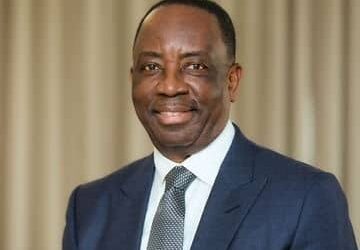
Nii Adotey Mingle
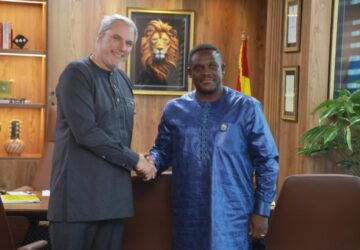
As part of their engagements, MTN paid a courtesy call on the Northern Regional Minister, Hon. Shani Alhassan Shaibu, to update him on MTN’s regional operations and its contribution to the Northern Region.
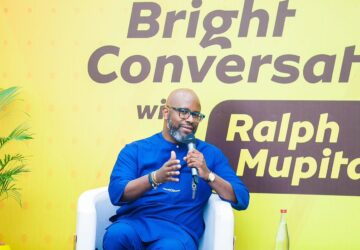
At a forum attended by the media and other stakeholders Nii Adotey Mingle, General Manager for MTN Regional Sales for Northern Ghana, highlighted the solutions introduced by MTN to enhance customer experience and improve the network. He also provided updates on products and services as well as service innovations launched to support small and medium-scale enterprises (SMEs).
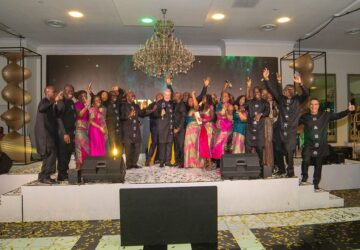
Some scenes from the event
The media and industry partners in the region also gave feedback on MTN’s services, identifying areas where they considered MTN to be doing well and suggesting areas for improvement.
In addition, MTN engaged with communities in the Tolon District, educating stakeholders on MoMo fraud and ways to use technology to improve their livelihoods. They also shared updates on the nationwide network modernization project aimed at enhancing service delivery in the community.
Recognizing the significance of safe internet usage and cybersecurity for youth development, MTN engaged students at the Lamashegu Secondary Technical School in Tamale and the Bolga Girls Secondary School to educate them on effective internet usage in the digital age.
MTN Ghana also collaborated with the Martha Inspires Foundation to host a youth empowerment summit, which brought together close to 3000 students.
The team also visited selected media stakeholders in the Upper East region to hold one on one meetings with selected media houses with the aim of soliciting feedback for business improvement. There were radio interviews held to educate customers about MoMo fraud and other customer issues. Stakeholders in the two regions commended the MTN officials for making time to engage with their customers and key stakeholders in the regions.
Source: MTN GHANA
MTN GHANA FOUNDATION TO LAUNCH SEASON 7 OF MTN HEROES OF CHANGE
The MTN Ghana Foundation has announced that it will launch Season 7 of its flagship MTN Heroes of Change programme on 4th September 2024 at the MTN House in Accra.
MTN Heroes of Change program identifies and recognizes selfless people who continue to sacrifice their time and resources to improve their communities and brighten lives. Individuals and institutions who make significant impact in the three focus areas of the MTN Ghana Foundation, that is, Health, Education and Economic Empowerment are rewarded through the MTN Heroes of Change programme for their contributions to the community and national development.
We are happy to announce that from 4th September, members of the public will be invited to nominate people from their communities who through selfless acts of kindness show love and support to humanity in varying forms.
Since its establishment in 2007, the MTN Ghana Foundation has invested 106 million cedis in over 166 major projects in the areas of education, health and economic empowerment which has directly impacted approximately 4.5 million people and several others indirectly.
End
Media Contacts:
Adwoa Afriyie Wiafe
Chief Corporate Services and Sustainability Officer
Email: MTNGhana.MediaOffice@mtn.com
Georgina Asare Fiagbenu
Senior Manager Corporate Communications
Email: MTNGhana.MediaOffice@mtn.com
Sustainability of National Development Requires Upgrade, Reset, Restore & Restructurin- Razak Kojo Opoku
By:Razak Kojo Opoku
The current State of Ghana requires a combination of an Upgrade, Reset, Restore and Restructuring of all the sectors of the economy including majority of unprofitable, counterproductive and redundant policies and programmes.
Comprehensive sustainability of national development is achieved through continuous improvement of good policies coupled with Upgrade, Review, Reset and discontinue of policies.
Some policies and programmes such as Free SHS Policy, One District One Factory, One Constituency One Ambulance, Digital Economy (Digitization & Digitalization), Roads & Infrastructure etc. called for an UPGRADE of such policies and programmes.
Cronyism (appointment of large number of family & friends to serve in government), nepotism, favouritism, winner-takes-it-all, unnecessary undermining of private businesspersons, corruption, nuisance taxes (including E-levy), galamsey (illegal mining), youth unemployment, National Cathedral construction, Unprecedented National Debt, Domestic Debt Exchange Programme, activities of the Bank of Ghana, Downgrade of Ghana’s Credit Ratings etc. called for RESETTING.
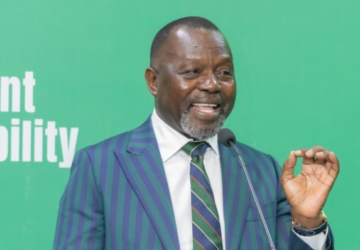
Razak Kojo Opoku
Good governance, accountability, proper Rule of Law, Discipline, Non-interference of State Institutions, Integrity of the judiciary, good moral values, fundamental human rights, tolerance of divergent views, Absolute Independence of the Media etc. called for RESTORATION.
The economic architecture or structure of Ghana seriously called for RESTRUCTURING aimed at addressing the fundamentals of the economy including the macroeconomic, microeconomic, fiscal and monetary policies of the Government. The fast depreciation of the Cedi coupled with high interest rates, unstable inflation rates and higher debt-to-GDP ratio called for Restructuring of the economy of Ghana.
Where Ghana has reached, we cannot use upgrade alone or reset alone to further develop the country for the greater good of all or greater majority of the citizens.
We cannot upgrade the bad policies and programmes of Akufo-Addo’s government and that of the previous governments, especially Mahama’s administration.
We cannot also reset all the excellent policies and programmes of Akufo-Addo’s government and that of the previous governments, especially Mahama’s administration.
There is the need to upgrade & restore the good policies/programmes, and reset & restructure the bad policies/programmes of the current and previous governments.
For instance, in June 2020, the World Economic Forum(WEF) launched the GREAT RESET INITIATIVE aimed at facilitating the rebuilding from the global COVID-19 crisis in a way that prioritizes Sustainable Development. The Great Reset Initiative covered three major objectives namely:
1. creating conditions for a “stakeholder economy”.
2. building in a more “resilient, equitable and sustainable” way, utilizing environmental, social and governance(ESG) metrics.
3. Harnessing the innovations of the 4th Industrial Revolution.
It is quite challenging pinpointing exactly the POLICY ANCHORS of NDC’s ‘Resetting Ghana’ agenda.
How do we reset Ghana without policy anchors and economic framework enshrined in your Manifesto?
24-hour economy is good for an upgrade of economy not resetting economy.
How do we upgrade Ghana without first of all paying the necessary attention to the restructuring of the economy?
How do you wholistically upgrade Ghana without making Ghanaians know your concrete & detail policy-synergies of Macro-Model of Corporate Entrepreneurship & innovations and Micro Model Enterprises?
How do you implement the Great Transformational Plan without an Upgrade, Reset, Restore and Restructuring? The 10 Pillars of Great Transformational Plan(GTP) is not detailed enough to address the multi-demensional problems of the national and local economies of Ghana.
As for the smaller parties and over 20 independent presidential candidates, almost all of them do not have any superior intellectual policy document for the socioeconomic transformation of Ghana. They are only behaving as “attacking dogs” and acting as interest-driven pressure groups in our democracy.
Not every policy or programme needs RESET.
Not every policy or programme requires UPGRADE.
Some policies and programmes in fact need OUTRIGHT DELETIONS or DISCONTINUATION with immediate effect from 8th January, 2025.
Mahama’s Manifesto declaration:I’ll scrap e-levy, COVID levy, other taxes within 100 days in office
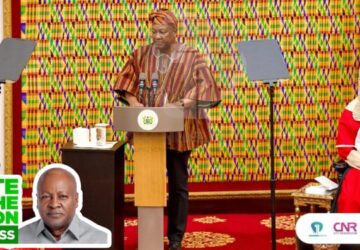
The Presidential Candidate of the National Democratic Congress (NDC), John Dramani Mahama, has promised to scrap draconian taxes within his first 100 days in office if elected in the upcoming 2024 general elections.
The taxes earmarked for elimination within the first 100 days of his administration, include the contentious e-levy, COVID levy, 10% levy on bet winnings, and the emissions levy.
Mahama explained that this decision would alleviate hardships and reduce the high cost of doing business in the country.
At the launch of the NDC’s 2024 Manifesto in Winneba, Central Region, on Saturday, August 24, Mahama pledged, “We will scrap the following draconian taxes within our first 100 days in office to alleviate hardships and ease the high cost of doing business: E-levy, COVID levy, 10% levy on bet winnings, Emissions levy.”
Furthermore, the NDC flagbearer committed to scrapping import duties on vehicles and equipment imported into the country for industrial and agricultural purposes.
“[I’ll] Scrap import duty on vehicles and equipment imported into the country for industrial and agricultural purposes.”
To further alleviate consumer hardships, Mahama also pledged to apply the Price Stabilization and Recovery Levy on fuel to stabilize prices and rationalize fees at ports to reduce the burden on importers.
Additionally, he promised to undertake a comprehensive reform of Ghana’s VAT regime to provide relief for households by reversing the VAT flat rate regime, which has been a significant burden on many households and businesses.
“To further ease hardships, we will: Apply the Price Stabilization and Recovery Levy on fuel to
cushion consumers. Rationalise fees at our ports to reduce the burden on importers and Ghanaians.”
“Undertake a comprehensive reform of Ghana’s VAT regime to provide relief for households and businesses. This will include reversing the decoupling of GETFund and NHIL from VAT, reversing the VAT flat rate regime, upwardly adjusting the VAT registration threshold to exempt micro and small businesses and repealing the law imposing VAT on domestic electricity consumption.”Source:
Leticia Osei