By;Isaac Amoah
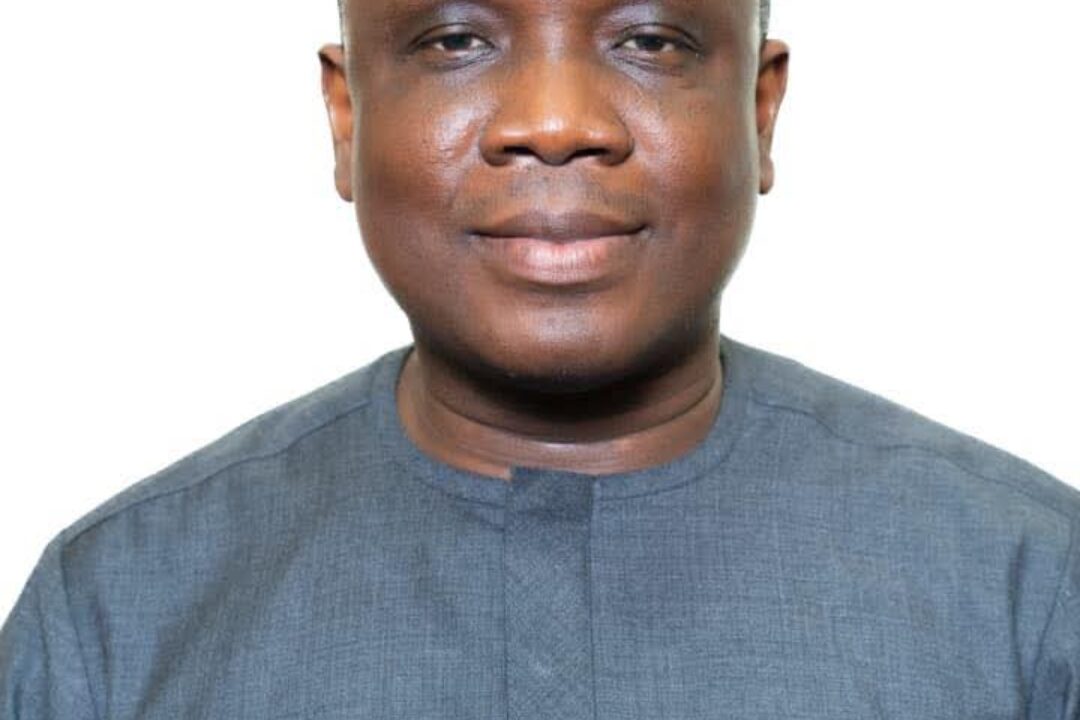
Professor Berchie Asiedu, the Acting Deputy Executive Director (Technical, Fisheries Commission) and Member of the National Blue Economy Strategy Technical Committee and National Committee on Aquaculture,has revealed that the Ministry of Fisheries & Aquaculture (MoFA) is developing legislative instruments for the Fisheries and Aquaculture Act 2025 (Act 1146) to provide stiffer penalties for marine habitat destruction and to give the Fisheries Commission more autonomy in enforcing conservation mandates.


Participants in a group photograph
He said the ministry is spearheading mangrove restoration projects across our lagoons, recognising these as vital carbon sinks and nurseries for the fish Ghana depends on. ‘We are exploring ‘blue bonds’ and debt-for-nature swaps to ensure that Ghana’s 30 × 30 targets are sustainably funded without overstretching the national budget.’Professor Berchie announced these at the day’s specialised training for effective coverage on marine issues held on Monday, 2nd March, 2026, at Kings Villagio Hotel at Atinga junction, Ahodwo, Kumasi.

Professor Berchie Asiedu

Professor Berchie Asiedu, a full professor of fisheries science and aquaculture with the Department of Fisheries and Water Resources of the University of Energy and Natural Resources, who delivered the keynote address on “efforts by the Ghanaian government to protect the marine environment and meet 30×30 targets”, explained that the “30×30” goal is four years away.
“We can not reach it in silos. I call upon our journalists and media practitioners to continue their technical support and upon our coastal communities to remain our strongest allies.Protecting our marine environment is not a choice between “fish or no fish”; it is a choice between a legacy of abundance or a legacy of empty nets.”
Professor Berchie Asiedu said, “As we look toward 2030, let it be said that Ghana did not just witness the decline of the oceans but led the West African sub-region in its restoration.
Through the Ministry’s policy and the Commission’s action, we will ensure that our “Blue Frontier” remains a source of wealth and health for generations to come.God bless our fishers, God bless our journalists, and God bless our homeland Ghana.”He said,
‘The Blue Heart of Ghana’. Our nation’s identity is inevitably linked to the Atlantic Ocean. From the active shores of Keta to the vibrant landing beaches of Half Assini (about 550 km coastal length), the ocean is not merely a resource.
“It is our lifeblood. It provides food security for millions, sustains over 14,000 fishing vessels, and supports the livelihoods of approximately 10% of our population.”
However, our marine environment faces unprecedented “tripartite threats”: climate change, plastic pollution, and illegal, unreported, and unregulated (IUU) fishing. Professor Okaysaid today, “I stand before you to outline how the Ministry of Fisheries and Aquaculture (MoFA) and the Fisheries Commission are leading the charge to protect this heritage and meet the ambitious “30×30” global target.
The 30×30 Commitment:From Vision to Reality, Ghana proudly committed to the Kunming-Montreal Global Biodiversity Framework during the fifteenth meeting of the Conference of the Parties (COP 15) from 7th to 19th December 2022 in Montreal, Canada, which mandates the protection of 30% of our lands and oceans by 2030.
For a maritime nation like ours, this is more than a pledge; it is a survival strategy.