Skip to content
Menu
Menu

Regional Fora on model law & CRC proposals on curbing money in politics held in Kumasi


By:Isaac Amoah

A day’s regional forum to discuss the model law and Constitutional Review Committee’s (CRC) proposals on curbing money in politics has been held in the Ashanti regional capital, Kumasi.

The Ghana Center for Democratic Development (CDD-Ghana), in collaboration with the National Commission for Civil Education (NCCE) with the support of the Foreign, Commonwealth and Development Office (FCDO), CDD-Ghana is organising 10 Regional Fora across the country between 23rd February and 13th March. 2026.


tntnewspapergh.com


The Ashanti Regional version of the Fora was held on Monday, 2nd March, 2026, at Presby Conference Hall, Adum, in Kumasi.

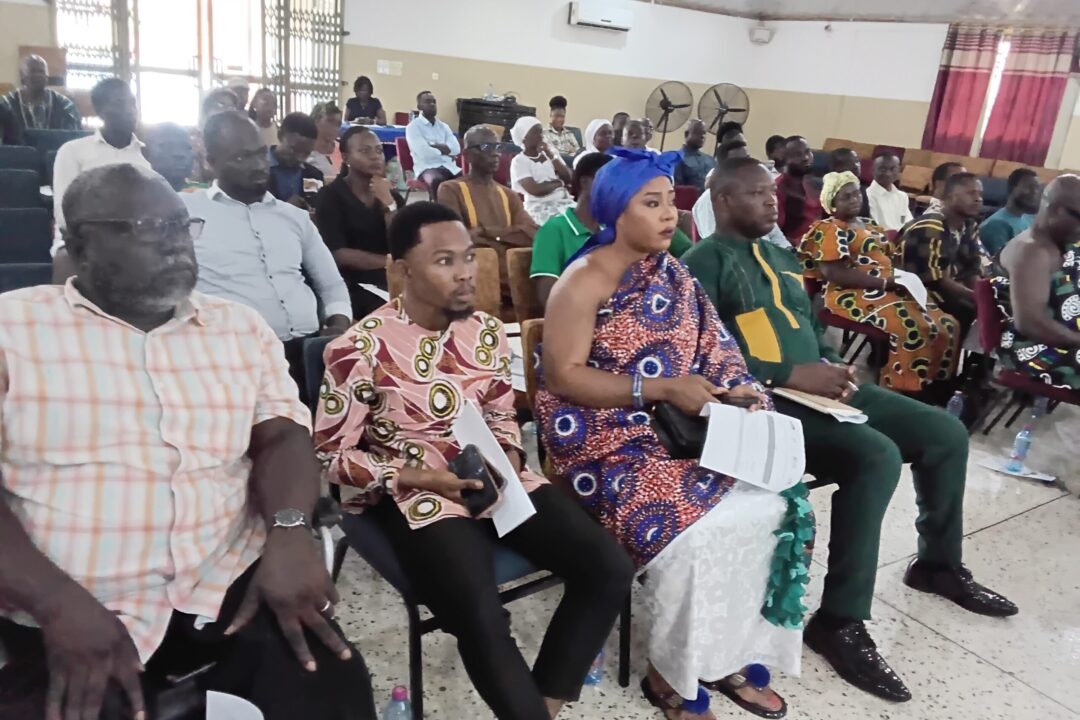
The Fora, which drew stakeholders from various sectors, including nananom, market women, students, political party representatives, media, and the clergy, among other professional bodies, was intended to engage citizens and key stakeholders on the draft model political bill developed by CDD-Ghana to address the growing influence of money in Ghana’s electoral processes.


Participants

Specifically, the Regional Fora aim to promote public understanding of the proposed legislation and highlight its key provisions and solicit citizens’ feedback to inform further refinement of the draft.

The majority of participants who spoke condemned monetisation in Ghana’s political landscape and excessive demands from citizens from their political leaders.

They therefore cautioned against demands by citizens from their political leaders, especially MPs.Besides, they added their voice to the recommendations for Ghana to get timeliness for campaigning periods, transparency in political parties’ financing, etc..

Madam Kathleen Addy,Ag Director of NCCE

Mr Adu Gyamfi of CDD-Ghana made a powerful presentation on “State of Political Finance in Ghana” and the provisions of the draft model law to address the challenge.”He remarks that “assuming that political parties are not using state resources, why is it that when they are in power, they charge lower filling fees from potential parliamentary & presidential candidates?

And whenever they’re in opposition, they charge high filling fees?

According to him, it has been identified that political parties and candidates benefit from illicit funding, receive donations from institutions leading to kickbacks, and engage in corruption.The impact or the effects of vote-buying and monetisation lead to the exclusion of women, youth, and persons with disabilities.

Mr.Adu Gyamfi of CDD-Ghana making a presentation

Mr Gyamfi therefore cautioned against citizens’ or constituents’ constant demands from their Members of Parliament (MPs) or political leaders.Adding that “the more citizens keep on demanding, the more politicians will continue to find all means to the money to meet their demands.”

For instance, an MP reveals he spent Ghc 30,000 every month on funerals alone, and how does and will he get money to continue with this if the constituents do not stop the demands?

He said gaps and challenges in Ghana’s political finance architecture include no election campaign financing regulation, no defined campaign period, and no ceiling/limits on contributions. No spending limits. Other gaps and challenges are ;No required verification of identity of donors or disclosure of donors,no prohibition on abuse of incumbent, etc. challenges with enforcement and sanctions regime and no mixed model of state and private funding.

To this end, before the CRC came out with recommendations on the regulations of political parties’ financing besides the consensus from the various political parties, CDD-Ghana had already done some work on it.

CDD-Ghana has recommended the following as antidotes to gaps in Ghana’s political financing: define a campaign period in legislation and require candidates to submit a financial report detailing contributions/donations received towards the electoral campaign.

The centre also proposed to the state a ceiling on how much an individual or an organisation can contribute to address potential state capture.
CDD-Ghana also recommends strengthening the EMB or replacing it with a new independent organisation to effectively regulate political finance, campaign financing, and candidates. Consider a mix model of private and state funding and condition state funding on promoting state objectives to increase participation of marginalised groups (women, youth, persons with disabilities).

Mr Adu Gyamfi announced that consensus on reform and action from the Constitutional Review Committee (CRC) also calls for the establishment of an independent registrar and regulator of political parties, sanctions powers, criminalising vote buying, etc.The CRC also calls for restricting campaign receipts and expenditure and regulating filling by candidates in intraparty and national elections.

Besides, CRC recommends that there should be an external audit of party and candidate funding and sources of funding and sanctions for abuse of incumbency, including criminal prosecution, and establish a democracy fund for public funding as well as parties to allow members in good standing to elect a Parliamentary Candidate (PC) and Flagbearer.


Regional Fora on model law & CRC proposals on curbing money in politics held in Kumasi


By:Isaac Amoah

A day’s regional forum to discuss the model law and Constitutional Review Committee’s (CRC) proposals on curbing money in politics has been held in the Ashanti regional capital, Kumasi.

The Ghana Center for Democratic Development (CDD-Ghana), in collaboration with the National Commission for Civil Education (NCCE) with the support of the Foreign, Commonwealth and Development Office (FCDO), CDD-Ghana is organising 10 Regional Fora across the country between 23rd February and 13th March. 2026.


tntnewspapergh.com


The Ashanti Regional version of the Fora was held on Monday, 2nd March, 2026, at Presby Conference Hall, Adum, in Kumasi.

The Fora, which drew stakeholders from various sectors, including nananom, market women, students, political party representatives, media, and the clergy, among other professional bodies, was intended to engage citizens and key stakeholders on the draft model political bill developed by CDD-Ghana to address the growing influence of money in Ghana’s electoral processes.


Participants

Specifically, the Regional Fora aim to promote public understanding of the proposed legislation and highlight its key provisions and solicit citizens’ feedback to inform further refinement of the draft.

The majority of participants who spoke condemned monetisation in Ghana’s political landscape and excessive demands from citizens from their political leaders.

They therefore cautioned against demands by citizens from their political leaders, especially MPs.Besides, they added their voice to the recommendations for Ghana to get timeliness for campaigning periods, transparency in political parties’ financing, etc..

Madam Kathleen Addy,Ag Director of NCCE

Mr Adu Gyamfi of CDD-Ghana made a powerful presentation on “State of Political Finance in Ghana” and the provisions of the draft model law to address the challenge.”He remarks that “assuming that political parties are not using state resources, why is it that when they are in power, they charge lower filling fees from potential parliamentary & presidential candidates?

And whenever they’re in opposition, they charge high filling fees?

According to him, it has been identified that political parties and candidates benefit from illicit funding, receive donations from institutions leading to kickbacks, and engage in corruption.The impact or the effects of vote-buying and monetisation lead to the exclusion of women, youth, and persons with disabilities.

Mr.Adu Gyamfi of CDD-Ghana making a presentation

Mr Gyamfi therefore cautioned against citizens’ or constituents’ constant demands from their Members of Parliament (MPs) or political leaders.Adding that “the more citizens keep on demanding, the more politicians will continue to find all means to the money to meet their demands.”

For instance, an MP reveals he spent Ghc 30,000 every month on funerals alone, and how does and will he get money to continue with this if the constituents do not stop the demands?

He said gaps and challenges in Ghana’s political finance architecture include no election campaign financing regulation, no defined campaign period, and no ceiling/limits on contributions. No spending limits. Other gaps and challenges are ;No required verification of identity of donors or disclosure of donors,no prohibition on abuse of incumbent, etc. challenges with enforcement and sanctions regime and no mixed model of state and private funding.

To this end, before the CRC came out with recommendations on the regulations of political parties’ financing besides the consensus from the various political parties, CDD-Ghana had already done some work on it.

CDD-Ghana has recommended the following as antidotes to gaps in Ghana’s political financing: define a campaign period in legislation and require candidates to submit a financial report detailing contributions/donations received towards the electoral campaign.

The centre also proposed to the state a ceiling on how much an individual or an organisation can contribute to address potential state capture.
CDD-Ghana also recommends strengthening the EMB or replacing it with a new independent organisation to effectively regulate political finance, campaign financing, and candidates. Consider a mix model of private and state funding and condition state funding on promoting state objectives to increase participation of marginalised groups (women, youth, persons with disabilities).

Mr Adu Gyamfi announced that consensus on reform and action from the Constitutional Review Committee (CRC) also calls for the establishment of an independent registrar and regulator of political parties, sanctions powers, criminalising vote buying, etc.The CRC also calls for restricting campaign receipts and expenditure and regulating filling by candidates in intraparty and national elections.

Besides, CRC recommends that there should be an external audit of party and candidate funding and sources of funding and sanctions for abuse of incumbency, including criminal prosecution, and establish a democracy fund for public funding as well as parties to allow members in good standing to elect a Parliamentary Candidate (PC) and Flagbearer.




Related Stories
Popular Stories