Source:tntnewspaprgh.com
The Ashanti Regional Organiser for the New Patriotic Party (NPP), who doubles as the Dean of all Regional Organisers, Dr Francis Adomako, has stated that former President John Agyekum Kufuor and Nana Addo Dankwa Akufo-Addo both deserve commendation for the various roles they played in surely winning for Africa after the United Nations adopted a resolution to recognise the enslavement of Africans as a crime against humanity.
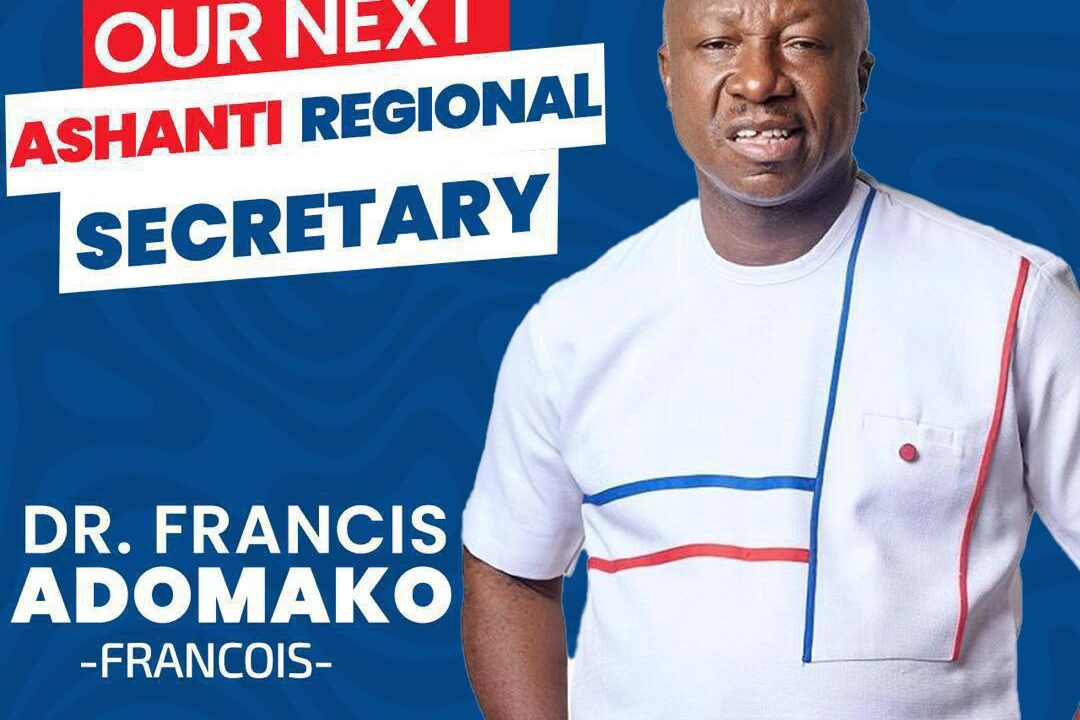
According to Dr Adomako, who’s affectionately called ‘Francois’ in the political space, Ghana’s strong place in this conversation was built over time, especially under former President Akufo-Addo, when Ghana pushed hard on reparations and reparatory justice and helped move this issue from side talk into serious continental and global diplomacy.
Francois’ comments follow the United Nations General Assembly’s adoption of a resolution on Wednesday, 25th March, 2026, recognising chattel enslavement of Africans as a crime against humanity.


Speaking to this paper on Thursday, 26th March, 2026, Francois, who is the Ashanti Regional NPP secretary hopeful, congratulated Ghana for securing this important resolution at the United Nations.”But let us tell the story properly, too. This did not begin today, and it certainly did not begin under the NDC government.Francois recalled that Ghana’s strong place in this conversation was built over time, especially under President Nana Addo Dankwa Akufo-Addo, when Ghana pushed hard on reparations and reparatory justice and helped move this issue from side talk into serious continental and global diplomacy.
According to him, Akufo-Addo’s speech at the 78th Session of the UN General Assembly on 20 September 2023 formated that push. ” Akufo-Addo used that stage to project Ghana’s case on reparations and to place the historic injustice of the slave trade and colonial exploitation before the world in very clear terms. That mattered because before the world moved, somebody must first force the issue onto the table. Akufo-Addo did not stop at speeches. Accra hosted the Advancing Justice: Reparations and Racial Healing Summit from 1 to 4 August 2022.
Then, from 14 to 17 November 2023, Ghana hosted the Accra Reparations Conference under the theme “Building a United Front to Advance the Cause of Justice and the Payment of Reparations to Africans”. The Ashanti Regional NPP secretary hopeful explained that the Accra conference was convened around a shared commitment to addressing the historical injustices and injurious crimes suffered by Africans and people of African descent through transatlantic enslavement, colonisation, and apartheid.Adding that the Accra Proclamation did not just talk about reparations in general terms. “It proposed actual mechanisms for institutionalising the agenda, including the President of Ghana as Champion on Reparations, a Committee of Experts on Reparations, a Reference Group of Legal Experts, a Global Reparations Fund based in Africa, and a transcontinental partnership framework bringing together the AU, CARICOM and the African diaspora.

“It’s against the background; the Ashanti Regional NPP organiser argued that when some people now act as if Ghana’s prominence in this matter just appeared in 2026, that is politics talking, not the record. “The groundwork had already been laid.
The structure had already been proposed. The momentum had already been built. In fact, it was even noted by the AU itself that its theme of the year, 2025, “Justice for Africans and People of African Descent Through Reparations”, came out of the Accra 2023 Reparations Conference.
So, the Accra process did not end in Accra. It fed directly into the continental agenda.That same background helps explain why Ghana is where it is now in this process. President Mahama is now carrying this matter forward in an AU-recognised reparations role as champion for the theme of the year 2025 on reparations.
That prominence did not come from nowhere. It rests in no small part on the work Ghana had already done under Akufo-Addo to push this cause forward.He, however, admitted that President John Mahama has now carried the matter forward, and fair enough, he has not dropped the baton on this issue.
But continuation is not a foundation. Carrying something on is not the same as building the platform on which it now stands. “The adoption of the resolution should be seen properly. It is not an isolated miracle, and it is not the end of the struggle. It is part of the same wider reparatory justice journey that Ghana had already helped to build and internationalise.Francois noted that the resolution is a strategic step towards reparations. He, however, pointed out that it does not mean reparations will now come easily or automatically. “Nothing of this nature comes on a silver platter, and nobody should think a vote at the UN means cheques will now start flying around. The countries with the power, the money, and the influence are not going to hand anything over just because a resolution has been passed.
That much should be obvious. But that still does not make this resolution empty,” he cautioned. He said the resolution is to strengthen the platform for the next phase. It gives Ghana, the AU and CARICOM, stronger language, stronger recognition, and stronger diplomatic footing to keep pressing the case. First, secure firmer recognition of the gravity of the crime. Then, use that recognition to strengthen the push for repair. That is the strategy.The repair being sought is not only about cash.
It can take different forms, including formal apologies, return of stolen artefacts, compensation, trade concessions, historical recognition, and other practical measures of redress. So the struggle is wider than money, even though money will remain part of the conversation.He stressed that that is how these things often move in international politics. First comes recognition.
Then comes stronger norm-setting. Then comes pressure. UN resolutions may be non-binding, yes, but they can still help shape the growing sense among states that a principle carries legal and moral weight, and they can strengthen the platform for future claims.Francois added again that the vote does not mean reparations money will now start flying around. But neither is it empty.
“This will be a pyrrhic victory only if Ghana treats today as the destination instead of using it as leverage for the harder phase ahead.This is why the resolution should not be reduced to just a news headline It should be seen as part of a larger strategy. A strategic step. A platform for the next demands. A way of opening the avenue for reparations by first strengthening international recognition of the crime itself.So yes, congratulations to Ghana. Kudos to Nana Addo Dankwa Akufo-Addo and his government for helping to put Ghana at the centre of this reparations and reparatory justice push and for laying groundwork that is clearly still bearing fruit. And yes, credit too to the current government for not abandoning the baton on this particular matter.”