Isaac Amoah
Posts by Isaac Amoah:
2026 Budget: Boosting agriculture key to Ghana’s growth – Ekumfi MP
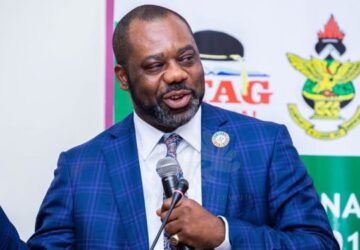
Member of Parliament for Ekumfi, Dr. Othniel Ekow Kwainoe, has called for increased investment in the agricultural sector, emphasising its critical role in Ghana’s economy and the livelihoods of citizens.
Speaking on Channel One Newsroom on Saturday, November 15, Dr. Kwainoe highlighted government initiatives such as the Farmer Service Centres, the retooling of farmers, and the Big Push programme, which will target roads, as positive steps.
Citinewsroom – Comprehensive News in Ghana
2026 Budget: Boosting agriculture key to Ghana’s growth – Ekumfi MP
Juliana Odame AsarebyJuliana Odame Asare November 16, 2025Reading Time: 1 min readGhana travel guide
Member of Parliament for Ekumfi, Dr. Othniel Ekow Kwainoe, has called for increased investment in the agricultural sector, emphasising its critical role in Ghana’s economy and the livelihoods of citizens.

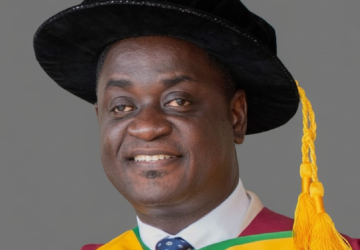
Dr. Othniel Ekow Kwainoe,
Speaking on Channel One Newsroom on Saturday, November 15, Dr. Kwainoe highlighted government initiatives such as the Farmer Service Centres, the retooling of farmers, and the Big Push programme, which will target roads, as positive steps.
However, he stressed that more investment is needed to fully harness the sector’s potential.
He noted that enhanced support for agriculture would create jobs, particularly for the youth, and strengthen socio-economic development across constituencies like Ekumfi.
“The decisions the government has taken, especially in the agricultural sector, give me a lot of comfort. Looking at my constituency, farming remains a very important factor in our socio-economic lives, so if the government is doing that for us, it is one thing I am really going to commend the government for.
“I believe that there should be more investment into the agricultural sector because today, it has been a big influence on our inflation, exchange rate and literally the producer price of everything in Ghana. For me the agricultural side is key,” he stated.
By:Juliana Odame Asare
65% of adult Ghanaians cannot afford healthy diets
Up to 65 per cent of adult Ghanaians are unable to afford a healthy diet daily.
The recommended healthy diets consist of half a plate of vegetables and fruit, a quarter of a plate of carbohydrates, and another quarter of protein.
Prof. Anna Lartey, a Professor of Nutrition at the University of Ghana, made this known at a sensitisation workshop in Accra, dubbed “Beyond the dialogues, Tracking Ghana’s Commitments to Transform its food systems”.
The workshop was organised by the University of Ghana School of Public Health, with support from the National Development Planning Commission (NDPC), the Ministry of Food and Agriculture, and the Ghana Statistical Services (GSS), as part of a project to track the country’s food systems transformation commitments adopted in 2021.
Healthy, junk foods
Prof. Lartey explained that healthy foods were more expensive than “junk” foods, which made people opt for them.
For example, she said, fruits and vegetables were far more expensive than the sugar-laced drinks and fast foods.
She explained that these unhealthy foods were common on almost every street corner, and, therefore, came in handy.
Unhealthy eating habits came with dire consequences, she further explained.
The academic said such unhealthy foods were a primary cause of the many non-communicable diseases (NCDs) and other ailments in the country.
She, therefore, advised people to make significant changes to their diets to help reduce preventable deaths.
Prof. Lartey said 15 million deaths worldwide could be prevented if society adopted healthy diets, and called for a transformational change in “our food systems”.
The renowned nutritionist encouraged people to take personal responsibility for their diet.
Food environment
According to Prof. Lartey, who is the Project Co-Principal Investigator, food systems were influenced by the environment, and today’s food environment did not enable healthy choices.
She added that “Ghana made a number of commitments in terms of how to address the country’s food systems to make sure that it delivers on the health that we want.
So, this project is saying that we have held the dialogues, we have talked, now let us look at action.
What steps are we putting in place to ensure that the commitments we made are being achieved?”
The project’s Principal Investigator, Prof. Amos Laar of the University of Ghana’s School of Public Health, giving an overview of the project, said it was to track and monitor Ghana’s commitments.
He said the project aimed to use a science-based approach to track the implementation of the country’s commitments to transform its food systems.
He added that it also aimed at promoting the country’s food system and creating a safe food system environment.
Workshop
Over 160 United Nations Member States and representatives of regional blocs in 2021 committed to transforming their food systems by 2030 at the UN Food Systems Summit with the goal of ensuring sustainable, healthy diets for all.
Ghana, at the time, committed to 17 Food System transformation commitment goals by 2025, including increasing the percentage of early initiation of breastfeeding within one hour from 52 per cent in 2017 to 80 per cent, and increasing exclusive breastfeeding for six months from 42.9 per cent in 2017 to 62 per cent.
The workshop brought together stakeholders in the country’s food systems, such as civil society organisations, ministries, departments and agencies.Source: Graphic Online
HEPA Plus Founder’s Medicinal plant farm draws international recognition
Source: tntnewspapergh.com
Founder of HEPA Plus, Dr. Ebenezer Agyemang, has received high praise from a visiting Malawian delegation for spearheading what they describe as a “revolutionary contribution” to Ghana’s herbal medicine sector through the establishment of a 20-acre organic medicinal plant farm.
Dr. Ebenezer Agyemang(1st from left) in a group photograph with the delegation
The delegation, from the Kamuzu University of Health Sciences (KUHeS) in Malawi, said Dr. Agyemang’s decision to cultivate his own medicinal plants—free from pesticides, synthetic fertilizers, and environmental contaminants—sets a new benchmark for herbal medicine production across Africa.
Dr. John Mponda, leader of the delegation who is a pharmacist and a lecturer said the team was impressed by the level of discipline, investment, and scientific rigor applied on the farm, which supplies raw materials for HEPA Plus, Plasmox, and Pavi.
“We are witnessing a true model of how herbal medicine should be developed—from clean cultivation to quality manufacturing,” Dr. Mponda said. “This is a shining example for Africa. Dr. Agyemang has shown that quality begins at the farm.”
The Malawian delegation, in Ghana to study herbal medicine training and regulation, also toured the production facilities of Ebenage Herbal Productions and Consult (Hepa Plus, Pavi and plasmox) where they observed adherence to Good Manufacturing Practices (GMP).
Dr. Agyemang explained that his shift toward controlled cultivation began in 2020, after repeated challenges with contaminated herbs sourced from areas affected by illegal mining and agrochemical use. He noted that the health concerns often associated with herbal products stem not from the plants themselves but from toxins absorbed from polluted environments.
“Medicinal plants must be grown like medicine, not like ordinary crops,” he emphasized. “We rely on manual weeding, organic soil enrichment, and strict monitoring to ensure purity. This is how we protect consumers.”
Head of the Herbal Medicine Department at KNUST, Dr. Kofi Turkson, who accompanied the visitors, commended the HEPA Plus founder for taking a bold step that many producers have not been able to sustain due to cost and labour demands.
“At a time when galamsey is destroying raw materials and making plant harvesting dangerous, this farm is a lifeline for the industry,” Dr. Turkson said. “It guarantees clean raw materials, supports research, and creates training opportunities for students.”
The Malawian team described Dr. Agyemang’s initiative as a vital blueprint for Africa’s herbal future, adding that such investments are necessary to elevate herbal medicine to international health standards.
They expressed commitment to deepen collaboration with Ghanaian institutions, including KNUST and Ebenage Herbal Production and consult (producers of HEPA Plus, Plasmox and Pavi), as Malawi works toward strengthening its own traditional medicine framework.
THE NUMBERS DON’T MATCH THE SUFFERING:Appiah-Kubi tears into Mahama’s budget narrative
Source: tntnewspapergh.com
Isaac Appiah-Kubi, chairman of the NPP-UK West London Chapter, has sharply criticised President Mahama’s latest national budget, describing it as “a beautifully written illusion that hides the true suffering of Ghanaians.”
In his hard-hitting analysis, Appiah-Kubi questioned the government’s claim of a dramatic debt reduction, stating that the so-called achievement is built on defaulting on creditors, haircuts on domestic investors, and heavy dependence on IMF restructuring — not sound economic management.
Isaac Appiah-Kubi
“This is not fiscal discipline. It is simply decorating a crisis,” he stressed.
Appiah-Kubi argues that while the budget paints a polished picture of recovery, the reality on the ground tells a different story.
Dr.Ato Forson, Finance Minister
He highlights ongoing hardship marked by:
Rising cost of living
Persistent unemployment
Low business confidence
Weak purchasing power among ordinary citizens
He insists that the numbers in the budget do not reflect the real struggles faced by market women, traders, drivers, students and households across the nation.
According to him, the budget plays more like a public relations document than a credible roadmap for national recovery.
“Ghanaians are not feeling what the government claims. The suffering is real, and no colourful budget statement can hide that pain.”
Appiah-Kubi concluded with a firm call for the government to confront the economic crisis with honesty, boldness, and practical solutions — not polished speeches.
Economic witch-hunting & the price of progress: The Story of Alex Apau Dadey—The visionary who dared to build beyond politics
By Nana Kofi Barfour | nbobonsu@gmail.com
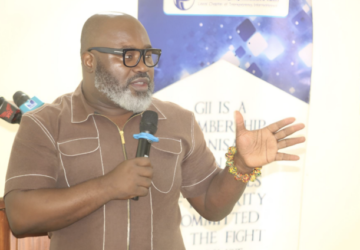
In an age when nations rise on the backs of visionaries, Ghana seems caught in a paradox: the celebration of mediocrity has become a value. While that is not enough, we are silentlydismantling its makers. Few stories capture this paradox better than that of Alex Apau Dadey, the Executive Chairman of KGL Group, a man whose vision, enterprise, and philanthropic spirit have reshaped parts of Ghana’s economic and social landscape, yet whose journey mirrors the silent betrayal of the very builders driving the nation forward.
“In Ghana, the cost of building often exceeds the profit of dreaming.”
Mr.Alex Dadey
The Story—The Man Behind the Vision
Alex Apau Dadey is not your conventional tycoon. His story is not written in political privilege but in persistence, purpose, and patriotism. As the Executive Chairman of KGL Group, he has built one of Ghana’s most dynamic technology-driven conglomerates, touching sectors from fintech and gaming to logistics, e-commerce, and social development.
It is not his business acumen that sets him apart, but his belief that Ghana can progress on the strength of its own innovation. Under his stewardship, KGL Group has become a central player in Ghana’s digitalized economy, revolutionizing systems that have enhanced transparency, accountability, and financial inclusion.
Those who know him speak of a man both visionary and vulnerable, human in his flaws, yet unwavering in his pursuit of progress. One can only say that his quiet strength lies in seeing opportunity where others see obstacles and in building solutions that serve both profit and purpose.
“For Alex Apau Dadey, enterprise is not about power; it’s about people. Not about profit, but progress.”
The Impact—Transforming Vision into Tangible Change
Under Dadey’s leadership, KGL Group has transformed itself into more than a business; it has under Dadey’s leadership KGL Group has transformed itself into more than a business; it has
The Group’s KGL Technology Limited has digitized key activities within the National LotteryAuthority (NLA), resulting in increased efficiency, accountability, and state revenue collection. The company’s digital technologies have greatly increased government revenue from gaming operations, directing hundreds of millions of cedis into the Consolidated Fund to support public initiatives.
Beyond gaming, KGL’s investments in fintech, mobile payments, and digital distribution, through businesses such as KGL Payments and Digital Distribution Hub, have increased thousands of Ghanaians’ access to financial services. The company’s position in modernizing payment systems directly helps Ghana’s digital economy strategy, which is championed by initiatives such as Digital Ghana.
Corporate Social Responsibility & Human Development
But Mr. Dadey’s vision stretches far beyond boardrooms and servers. Through the KGL Foundation, he has redefined corporate social responsibility as a moral and national duty.
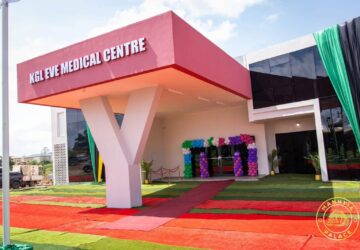
In education, KGL funds scholarships for brilliant but underprivileged students, builds ICT centers, and supports school feeding initiatives while partnering with hospitals and NGOs to improve maternal and child healthcare through the group’s foundation, especially in rural communities in health. In sports, KGL is a major sponsor of the Ghana Football Association (GFA) and grassroots sporting activities, ensuring the next generation of athletes have both opportunity and hope.
These interventions align directly with the UN Sustainable Development Goals (SDGs), promoting education, health, employment, and innovation. Under Dadey’s leadership, KGL is not only generating revenue but also building social infrastructure for Ghana’s future.
“He builds in silence, gives without cameras, and transforms without applause.”
The Challenges—When Vision Meets Resistance
Yet behind the glow of progress lies a darker truth: vision in Ghana often attracts suspicion. Despite KGL Group’s undeniable contributions to revenue mobilization and social development, the company has not been spared the murky undercurrents of politics and institutional hostility.
In recent years, the Group has found itself navigating a maze of regulatory hurdles, delayed approvals, and bureaucratic resistance from state agencies that once praised its work. What should be partnerships for progress have too often become contests of power and perception.Within business circles, this phenomenon has earned a name, “Economic Witch-Hunting is a quiet but corrosive culture where successful enterprises are viewed not as allies in development but as rivals in influence.
From stalled policy approvals to strategic attempts to curtail KGL’s dominance in digital operations, it is seen by industry players and many others as evidence of a broader pattern, what some call “Strategic Crippling.” In such an environment, success becomes a liability.
The irony is glaring. The same digital initiatives that improved government revenue and employment opportunities are now being met with skepticism, fueled by political insecurities rather than economic logic. Instead of applauding homegrown innovation, certain public actors have chosen to distrust and dismantle it, all in the name of “regulation.”
For Alex Apau Daddy, these challenges have been both personal and institutional. Navigating through the maze of unspoken political allegiances and administrative sabotage, he has had to balance corporate diplomacy with moral conviction. Yet, through it all, he remains steadfast, believing that time, truth, and tangible impact will outlive propaganda.
The implications for Ghana’s economy are chilling. When institutions turn innovation into intimidation, investors, both local and foreign, lose confidence, and progress grinds to a halt.It is a self-inflicted wound, a betrayal not of one man or company, but of Ghana’s own development aspirations.
The greater tragedy, however, lies not in his trials but in what they say about Ghana’s development climate. How can a nation claim to seek economic transformation while sabotaging the very visionaries driving it?
“We cannot build a digital nation while digitally disabling our visionaries.”
Reflective Thoughts—When Greatness Goes Uncelebrated
At its core, the story of Alex Apau Dadey is not just about business; it is a mirror reflecting Ghana’s uneasy relationship with success. We praise visionaries until their light shines too brightly. We celebrate entrepreneurs until they start changing systems. Then we see them as a threat and call them dangerous. His journey mirrors this national paradox.
We glorify politics and ignore production; we exalt rhetoric and silence results. And yet, Mr. Dadey’s journey stands as a reminder that true patriotism is not spoken; it is built. He continues to invest, to employ, to empower, and to believe in a Ghana that sometimes fails to believe in him. Here is a man who has generated employment, supported national revenue, and contributed to social development, yet remains more scrutinized than celebrated.
His story raises uncomfortable questions about Ghana’s relationship with success: Why do we treat excellence as suspicion? Why do we measure patriotism by politics, not productivity?And why do we allow institutional pettiness to cripple innovation
If Ghana truly wants sustainable development, it must start by protecting, not persecuting, its visionaries. Because nations don’t rise by accident. They rise because men and women like Alex Apau Dadey dare to build when others are busy tearing down.
“When history is written, it will not remember those who spoke the loudest; it will remember those who built the longest.”
Sidebar: The KGL Footprint in National Development
• Revenue Mobilization: Digitization partnership with NLA generating hundreds of millions in state revenue.
• Employment Creation: Thousands of direct and indirect jobs across technology, finance, logistics, and customer support sectors.
• Education Support: Scholarships and ICT training through KGL Foundation.
• Sports Development: Key sponsor of GFA and youth football programs.
• Health Initiatives: Rural clinic support and health campaigns under SDG alignment.
Final Reflection
So here lies the irony: A man whose vision modernized systems, funded education, and supported communities is still viewed with suspicion by the very state that benefits from his success. How many more visionaries like Alex Apau Dadey must Ghana quietly crucify before realizing they are its greatest national treasures?
By Nana Kofi Barfour
Contact: nbobonsu@gmail.com
El-Wak Stampede: Govt to offer automatic slots for family members of killed potential recruits-Deputy Defence Minister announces
The government has directed that families of the six applicants who died in Wednesday’s El‑Wak Stadium stampede submit names of qualified relatives for recruitment into the Ghana Armed Forces (GAF), officials announced.
The tragic incident occurred during a recruitment exercise when hundreds of hopeful applicants surged into the stadium for documentation and body selection, leading to a deadly rush that claimed six lives and injured many others.
During a visit to one of the bereaved families at Eyan Maim in the Central Region, Deputy Defence Minister Ernest Brogya Genfi said that President John Dramani Mahama has instructed that each affected family be given an automatic slot.
Ernest Brogya Genfi
“Due to what happened, the recruitment in Accra has been suspended by the President, so that we will ensure that measures are put in place to avoid a repeat of such incidents.”
“The President has sent us to inform you that the State will stand with the families in the burial and funeral arrangements for the families. The President has also asked us to inform you that all those who wanted to wear the military uniform but died in the process, their families should present a replacement for those people to be absorbed into the military. So, the authorities representing the government in the region will engage you in that regard for the family to decide on who can be enrolled into the military.”
Meanwhile, the Minister of Gender, Children and Social Protection, Agnes Naa Momo Lartey, described the incident as deeply heartbreaking and affirmed that the state will ensure all six victims receive befitting burials in honour of their service.
“The government wants you to know that you’re not in this alone; the whole nation is affected. Your children also belong to the State. The President wants you to know that he’s standing with you in this period of mourning. You’re not alone. His Excellency John Mahama stands with you through this painful period.”
The arrangements in place for the deceased and the injured ones, the President says, he’s standing with all of them. Those who require a befitting burial, he will stand with the support of the family to give them a befitting burial. And those who are also recovering at 37 Military Hospital, the government is bearing all the cost until such time that they fully recover.”
The GAF preliminary inquiry indicates that the stampede was triggered when applicants breached security protocols and rushed through gates ahead of schedule.
The government’s gesture seeks to honour the memories of those who died in pursuit of serving their country and to reassure families of its commitment to their welfare.Source: Myjoyonline
Minority labels 2026 budget as “growthless, jobless, and minimalist”
The Minority in Parliament has described the 2026 Budget as “growthless, jobless, and minimalist,” saying it falls short of addressing Ghana’s urgent economic challenges.
Speaking to the press on Friday, November 14, on behalf of the caucus, former Finance Minister and Member of Parliament, Amin Adam, criticised the budget for lacking substance and for offering only “cosmetic rhetoric” from what he called a “crawling government.”
“Ghana needs a better budget that strengthens revenue realism, expands productive investment, protects fiscal credibility, and enables the private sector to lead job creation. We can therefore describe the 2026 budget, the Galamsey budget, as growthless, jobless, and minimalist,” he said.
Dr.Amin Adam
He further said that the budget structure does not reflect a major shift towards job creation, productivity, or economic transformation.
“Investment levels remain low, revenue projections are overly optimistic, and borrowing pressures are high. Key fiscal risks are under-discussed. Flagship programmes lack transparency and clear budget commitment,” he said.
He warned that the government’s approach of shrinking expenditure to create the appearance of fiscal prudence could backfire.
“The lower GDP base and revenue shortfalls mechanically raise the debt-to-GDP ratio, even if the cash deficit is narrow. Sustainability requires sustained growth and credible revenue mobilisation, not austerity that undermines both,” he explained.
The Minority also highlighted hidden fiscal risks, including uncovered government auctions, unattractive short-term debt maturities, and unquantified liabilities of state-owned enterprises beyond cocoa and energy. Climate and disaster risks, he said, are not sufficiently integrated into the macro-fiscal framework.
“Without addressing these risks, fiscal stability could be short-lived. Policies without clear budget risk are becoming slogans rather than deliverable programmes,” he added.
The Minority criticised the government’s broader economic management, saying, “The state of the economy cannot be as good as the minister wants us to believe. It is associated with empty pockets, vanishing customers, sophisticated investors avoiding government auctions, and ministries struggling to function due to lack of basic resources.”
He said the need for “genuine economic leadership rather than broken promises, real fiscal discipline rather than opportunistic austerity, and a government that delivers results rather than excuses.”
“What we need is economic transformation, which Ghanaians were promised. But what we see now is economic stagnation masquerading as progress. The 2026 budget does not offer the hope needed to take us out of this,” he added.Source: Kareen Tei
EPA/NAIMOS Clashes:Over 300 Dadwene, Hwidiem residents remanded for 2 weeks; families allege wrong arrests
More than 300 people have been remanded into prison custody for two weeks following an alleged attack on members of the National Anti-Illegal Mining Operations Secretariat (NAIMOS), officials of the Environmental Protection Authority (EPA), and journalists.
The individuals—residents of Dadwene and Anwona in the Ashanti Region, as well as Hwidiem, Kenyase, Goaso, and Marhani in the Ahafo Region—were arrested in a joint military-police swoop.
At dawn on Wednesday, 12th November 2025, the armed forces and police carried out simultaneous raids in the Ashanti and Ahafo regions, as well as an additional operation at Ehi in the Volta Region.Videos circulating on social media show the arrested persons, mostly men, lined up on the streets and subjected to physical exercises, many of them visibly distressed and unaware of the charges against them.
Residents claim the security team mistakenly stormed the wrong Dadwene community. They say the operation targeted Dadwene on the Kumasi–Obuasi stretch instead of the Dadwene community along the Obuasi–Dunkwa road, where some illegal miners had allegedly attacked an EPA team.
The suspects from both regions were later transported to Kumasi and arraigned before the court, where they were all remanded into prison custody for two weeks.
At the Kumasi Central Prisons, emotional scenes unfolded as families and relatives queued outside, hoping to visit their loved ones and secure bail.
They are expected to reappear in court on Thursday, 27th November 2025.Some eyewitnesses allege that despite presenting evidence of innocence, security officers ignored their pleas.
“My husband even showed them his ID card that he works as an electrician for AGA, but the police didn’t heed and sent him away. They ransacked our room. They didn’t explain to us what wrong my husband had done,” said Kukuaa Amissah, a wife of one of the arrested residents.
Residents and some Members of Parliament, including Tano North MP Gideon Boako, have condemned the mass arrests, insisting that many innocent people were swept up in the operation.
They are calling for the immediate release of those wrongly detained and urging the military to conduct a more targeted and precise operation.Source: Emmanuel Bright Quaicoe
Govt will enforce local food purchases across state institutions-Deputy Finance Minister declares
Deputy Minister for Finance, Thomas Nyarko Ampem, says he will recommend a nationwide directive compelling all state institutions, not just schools, to procure locally produced rice and other food items as part of efforts to support farmers and curb post-harvest losses.
Speaking on Joy FM’s Super Morning Show on Friday, November 14, he said the original directive targeted schools and education-related agencies, but it should clearly apply to every government body involved in food procurement.
“Even though the directive specifically mentioned state institutions like schools, it doesn’t mean non-schools can go ahead and procure foreign goods. It is implied. But now that you are mentioning it, I’ll draw the attention of my minister… we should write to all state agencies that that directive applies to them as well,” he explained.
He argued that it would be illogical for schools to buy local produce while other state bodies continue to purchase imported items. “It won’t make sense to only focus on schools when other state institutions are buying sultana, rice, and others.”
Mr Ampem noted that the move is part of a broader strategy to prevent food waste and support local farmers following this year’s surplus harvest. According to him, the President has already directed the Finance Ministry to release funds to address the situation.
“The President directed us to make available 200 million cedis immediately to purchase this food glut all over… by next week to Buffer Stock to go and mop up all these food excess that we have and store,” he said.
He welcomed the accompanying instruction requiring schools and government institutions to prioritise local produce. “All schools, all government institutions that are buying food must buy from the Buffer Stock store, buy locally. And we expect the Minister for Education and Director General for GES to implement this strictly.”
Mr Ampem warned that farmers could scale back production if their harvest continues to go to waste. “If we are not able to do this and farmers’ produce goes to waste, do you think they will be encouraged to produce again next year?”
He stressed that strict enforcement will be essential to making the policy work. “It is about enforcement and cracking the whip when you have to… Everybody has a responsibility to play a role in making sure that all these policies work.”
He urged school heads and other public-sector buyers to understand the rationale behind the local procurement push. “It is important that we let headmasters… appreciate that you are doing this because you are helping the government solve this problem. If we consume made-in-Ghana food, we are keeping farmers in their jobs here.”
He also encouraged the media to highlight any breaches. “If you have cause to suspect that someone is flouting this, bring it to our attention and we’ll crack the whip.”
The Deputy Minister added that boosting demand for local produce will help stabilise prices and support long-term economic growth. “If we are able to bring down food inflation… we will be able to bring down inflation in this country, and the benefits will be there for all of us.”Source: Clara Seshie