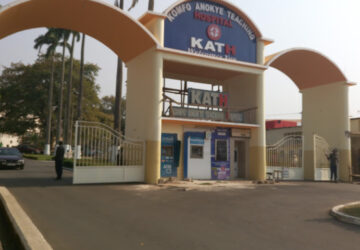
A 29-year-old man who posed as a medical doctor with the Komfo Anokye Teaching Hospital (KATH) has been arrested by the police in the Ashanti Region.
The suspect, William Cyril Cohen was spotted around the hospital premises on Monday (4 September), raising suspicion among some hospital staff who questioned his status at the facility. Sensing danger the suspect attempted to escape but was apprehended by the hospital’s internal security detail.
The Public Relations Officer of the hospital Mr Kwame Frimpong who confirmed the incident to Asaase News said the suspect has been handed over to the police CID to assist in investigations.
file photo
“Our Director of Nursing Services was going around and there is a lane between the accident Chest Clinic and Accident and Emergency Unit, and he had seen him with a backpack and a stethoscope. So, she wanted to know who he was, but he started walking away from her. And when it became apparent that he was trying to escape interrogation those who were there gave him a hot chase and he was arrested and has since been handed over to the police.”
“We are not sure that could be his name… He was found on our premises and not inside the hospital or any of our facilities. We want to sound a note of caution that this hospital is not for such characters if you come here our robust systems will fish you out and the law would deal with you”.The suspect is currently at the Ashanti Central Police Command assisting police investigations.Source:dailymailgh.com
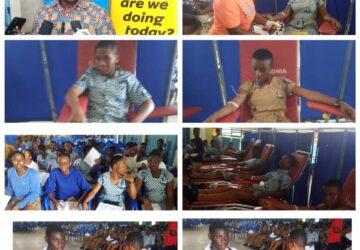
Janai Empowerment Foundation, a Non-governmental Organization (NGO) headquarters in the Ashanti regional capital, Kumasi in collaboration with the Kumasi Metropolitan Assembly (KMA) and other stakeholders organized a massive clean-up exercise .
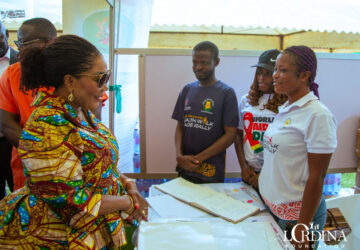
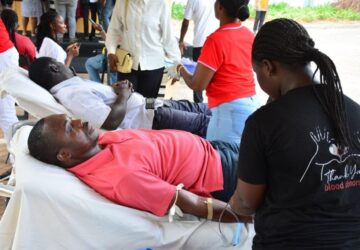
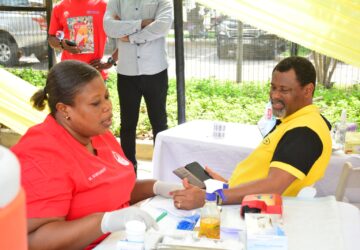
The Foundation with the support of Ghana Health Service subsequently conducted a massive free health screening exercise for market women within the Central Business District (CBD) especially Adum and KEJETIA in Kumasi.
Speaking at the ceremony,Madam Lydia Owusu Ansah,the non-communicable disease coordinator of Ghana health service, Ashanti region has urged Ghanaians especially traders who are always busy at work to take much care about their health status.
She said, some communicable diseases like Diabetes, hypertension, and cancers are now leading in major causes of deaths in the country hence the need for individuals to always visit nearby health centers to check their health status to help prevent premature death.
She stressed that Prevention is better than cure and cautioned all Ghanaians to take good care of their lifestyles.
The Executive director of JANAI EMPOWERMENT FOUNDATION, Faustina Mensah said the foundation places much important about the lives of the people especially those in market centres.
According to her,to ensure clean environment and quality heath care all hands should be on deck devoid of indiscriminate littering of refuse.
The assembly member for Adum Nsuoase electoral area, Hon Patrick Yebaoh during the clean-up exercise advised Ghanaians to stay away from dumping refuse into gutters whenever it rains.
Hon Patrick Yebaoh said he was committed to ensure clean environment
Some beneficiaries who took part of the free health screening at New Kejetia market shared their joy over the exercise.
Sixteen staff of the Komfo Anokye Teaching Hospital (KATH) have been sanctioned for various breaches of the hospital’s disciplinary codes, including medical negligence.
While one staff has been dismissed, the remaining 15 have been suspended without salaries as management probes others to instill discipline at the hospital.
The move is part of efforts and commitment to improve healthcare delivery in the Ashanti region and beyond.
Under its 2023 theme “Driving a customer-centric agenda for healthcare delivery, the role of management, staff and stakeholders”, the management of KATH implemented practical measures to improve patient’s experience at the hospital.
The hospital conducted a combination of interventions, including improved staff output and enforcement of discipline which saw the dismissal of some staff.
Chief Executive Officer of KATH, Professor Otchere Addai-Mensah, was speaking at the hospital’s mid-year review meeting.
“Management over the period continued enhanced supervision of staff and clinical services with the maintenance of physical presence at all the operational areas. The sanctions have resulted in better healthcare delivery to patients during the period under review,” he said.
Prof Otchere Addai-Mensah,,KATH CEO
It however improved the staff motivation and welfare packages including an increase in medical packages for each staff and their families by 25 per cent.
“All outstanding promotions were cleared for qualified staff while 13th-month allowances owed to members of the Health Services Workers Union were paid. A payment plan has also been agreed with the unions whose members are entitled to an allowance to clear the 2022 one amounting to GH₵5.2 million by the end of the year,” Prof. Addai-Mensah said.
According to management, the hospital’s infrastructur has received a major facelift in recent months as they work to complete other stalled and ongoing projects.
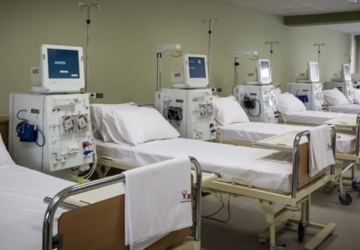
“Key projects such as the Assisted Reproductive Technology (ART) centre, Patients Relative Hostel, expansion and refurbishment of Dialysis Centre and comprehensive renovation and modernization of the main hospital theatre at a cost of GH₵1.5 million, will engage the attention of the management for the rest of the year,” he said.
A recent study conducted on vehicular congestion at the hospital revealed that 64 per cent of cars used the hospital’s precinct as a thoroughfare.
Management says measures have been instituted to curtail the situation which impedes the transportation of critically-ill patients into the hospital.
“Under the upcoming exercise, all motorists with the exception of staff members and emergency vehicles will be expected to exit from the same gate through which they entered the hospital,” Prof. Addai-Mensah noted.
Meanwhile, management is expecting to complete the first phase of renovation works of the old in-patient facilities of the hospital as the Asantehene leads the charge to raise USD10,000 for the project.
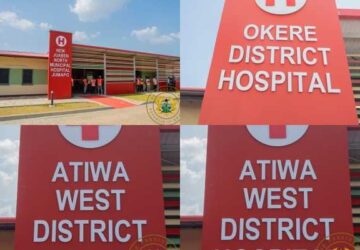
The Asokore Mampong Municipal Assembly has issued final notice to the occupants at Hoarded Area of the portion of land earmarked for the construction of the Agenda 111 Hospital project within the Airport enclave.
The Occupants have up-to 31st August,2023 to remove all their properties from the land and failure to comply will compel the Government to take the necessary steps to demolish them and charge their owners with cost of demolition.
The final notice was contained in a press release dated 21st August, 2023,signed by Hon.Kennedy Kwasi Kankam,the Municipal Chief Executive(MCE) of Asokore Mampong who doubles as Otumfuo Sasamohene Sompahene and copied to all media houses.
Hon.Kennedy Kwasi Kankam,MCE
The full press release reads “We refer to our previous Press Release dated 19th July,2023 to inform you that HOARDING of the portion of the land earmarked for the construction of the Agenda 111 Hospital Project within the Airport enclave is completed.
Occupants within the HOARDED AREA are therefore directed to remove their properties from the land by 31st August,2023 for construction works to begin. Failure to comply will compel the Government to take the necessary steps to demolish them and charge their owners with cost of demolition”.
The Ministry of Sanitation and Water Resources has deployed sanitation guards, nationwide, to check and control the indiscriminate dumping of plastic waste and refuse.
In the interim, the “ununiformed” sanitation guards are spread across some major cities and urban centres including Kumasi, Sekondi-Takoradi, and Tamale.
Those who would be found littering around or throwing plastic waste and polythene bags would be made to pick them up, pay a spot fine, or face prosecution, Dr Freda Prempeh, the Sector Minister, has stated.
The Minister was interacting with the media after she inspected work on the evacuation of 10 refuse dumps in some communities in the Tano North Municipality of the Ahafo Region.
The Ministry, in collaboration with Zoomlion Ghana Limited, a private waste management and sanitation company, is evacuating the refuse dumps, which had been in the communities over the years.
Already, it had evacuated some refuse dumps at Terchire, Nsesreso, Jerusalem and Bourkrurkiwa near Duayaw- Nkwanta, the municipal capital, and constructed some toilet facilities in some of the deprived communities to serve the people.
Dr Prempeh, also the Member of Parliament for Tano North, said the Ministry was engaging relevant institutions and key stakeholders to draft a bill that would support and sustain the nationwide exercise, which sought to promote environmental cleanliness and control the outbreaks of communicable diseases.
Dr.Freda Prempeh in an interaction with some Officials
She expressed disgust about the bad attitude of some Ghanaians towards environmental protection and hoped the exercise would not only keep the environment clean but change the poor attitude of some people towards sanitation practices.
The Ministry was working hard towards the segregation and recycling of waste for other purposes, she said, and thus called on households to desist from keeping plastic and other waste materials together.
She urged the public to cooperate with the Ministry and support the exercise to achieve desirable outcomes in order to channel the huge sums of money the government spent on waste management into other development ventures.
Mr Sampson Akwettey, the Acting Director, Environmental Health and Sanitation at the Ministry, said bad sanitation practices remained a huge problem in the country, which ought to be tackled decisively and proactively.
He said the outbreak of communicable diseases such as cholera and typhoid was due to poor sanitary environment and cautioned the people against indiscriminate waste disposal.
Mr. Edward Ziddah, the Ahafo Regional Coordinator of Zoomlion, told the Ghana News Agency the firm was evacuating 33 refuse dumps in the entire region.
At Nsesreso, Mrs Clara Adu Sarpong, a resident and an opinion leader, expressed appreciation to the Ministry for evacuating the refuse dumps.
Hitherto, she said the refuse dump served as breeding grounds for rodents and snakes while malaria was common because of the mosquitoes.
A close associate to the Member of Parliament for Tano North, Dr. Freda Prempeh, has rebutted claims that residents of Yamfo, a community in the constituency, rejected a toilet facility constructed for them by the MP.
Speaking in an interview with GhanaWeb on the back of the report, Maxwell Ado Agyei, who is also a former first vice chairman of the New Patriotic Party (NPP) at Tano North, stated that this is purely the work of propagandists.
He explained that no such thing happened at Yamfo, and that as a matter of fact, many of the residents have been so relieved by the commissioning of the project so much that the toilet is already being fully patronized.
Explaining the circumstances surrounding the matter, Maxwell Agyei said that the facility at Yamfo is only one of four that Dr. Freda Prempeh, the MP, had been able to lobby for the constituency.
“It is all lies and falsehood being peddled by someone in particular who wants to contest her for the seat. The toilet was opened yesterday and already, there are several people thronging the place to use it. What is happening is all propaganda and it is not the reflection of what is happening in Yamfo. These people only want to tarnish the good image of the MP.
“The truth is that it is the government that is building these toilets across the country. It was the turn of the middle-belt under the 1 constituency 1 toilet project and the MP was able to lobby for 4 for her constituency, when some places didn’t even get one. It was initially not something that was sponsored by her own money until COVID came and made money issues a little difficult,” he explained.
Maxwell Adu Agyei, who also served as Assemblyman for Tano North, added that with the incessant cries of the people and call on the MP to come to their aid, she eventually released her personal money for the project to completed at Yamfo.
He added that he was personally involved in the project and as such, it cannot be true that after they completed it and it was opened on Tuesday, August 8, 2023, the people rejected it.
“There are a lot of people in that area but their toilet had been out of use for a long time so the people kept appealing to the MP. I had to call her to mount pressure on her about the complains of the people until she released her personal money for us to use for the project.
“I had to eventually lead carpenters to break the doors of the toilets for us to continue the work because the contractors refused to come around because they had not been paid. We bought paint and other things and fixed the place because Dr. Freda Prempeh said she could allow for the place to be under lock when her people badly needed it. After it was done, those who even thought that she was the one behind the closure have been showing gratitude to her,” he added.
Dr. Freda Prempeh, the MP for Tano North, was recently appointed as the Minister for Sanitation and Water Resources.
In a very colorful and heartwarming ambiance, US Congresswoman Joyce Beatty has shared a remarkable account of how Ghanaian medical professionals saved the life of the late civil rights icon, Congressman John Lewis during an unexpected medical emergency at the Kotoka International Airport in Accra, Ghana.
Recounting the incident, the congresswoman unveiled the astonishing journey that saw their plane en route to South Africa to attend the funeral of the late South African President, Nelson Mandela, redirected to Ghana, where the country’s dedicated medical professionals provided life-saving treatment for Congressman John Lewis.
As Congressman Lewis health deteriorated mid-flight, he directed the crew to make an emergency landing in Accra, Ghana, for his medical treatment.
The US Congresswoman who shared the testimony about how professional Ghanaian doctors are!
Upon arrival at Kotoka International Airport, the delegation was met with exceptional urgency and medical expertise by Ghanaian doctors, who promptly provided essential care and attention to the civil rights icon and patriot.
Congresswoman Joyce Beatty, who had the privilege of witnessing the doctors’ unwavering commitment firsthand, emphasized that their swift response and expertise saved Congressman Lewis’ life.
She lauded the doctors’ professionalism, dedication, and the invaluable services they provided during this critical time.
She expressed her gratitude at the ‘Akwaaba Night’ held at the Columbus Africentric Early College High School in Columbus, Ohio, as a keynote speaker for the inaugural Ghana Festival Ohio 2023, sponsored by Adonko Beverages.
Hon. Joyce Beatty is the US representative for Ohio’s 3rd Congressional District and the Chair of the Congressional Black Caucus since 2021.
She is a leader and advocate for the issues impacting Black Americans, including voting rights reform, police brutality, financial inequality, diversity and inclusion, healthcare access, and gun violence prevention. Ghana has a special place in her heart.
The Ohio Ghana Festival is a 5-Day festival event focusing on showcasing the rich Ghanaian culture and heritage to the residents of Ohio and the world. This year’s event is under the theme ‘Our culture, our heritage, our tradition, the Columbus way’.
The Mayor of Kumasi, Hon. Sam Pyne, who was a special guest of the event, expressed his appreciation to the impressive display of Ghana’s rich culture while wooing the US business community to further explore the potential business opportunities in Ghana.
The leader and founder of the Caravan of Prayer Outreach Ministry at Gyinyase in the Asokwa Municipality of Ashanti, Apostle Johnson Ackah Braimah says Parliament must reconsider bill recently passed for the cultivation of cannabis for industrial purposes in the country.
Ghana’s Parliament passed Narcotics Control Commission(Amendment Bill,2023) on 12th July,2023 to allow Industrial Production of Cannabis.The Law now empowers the Minister to grant licenses for cannabis cultivation within Ghana.
Aps.Johnson Ackah Braimah
He said people would take advantage of that and supply the product in the system.
He told this paper that, he don’t have any problem growing cannabis in Ghana for industrial purposes but his main concern is that some of the youth in the country would fully take advantage of it.
According to him, it would be better if the government could acquire a land specifically for this purpose and strictly monitor their operations.
Apostle Braimah noted with great concern that already cannabis is impacting negatively on the lives of our youth and if care is not taken, the aim of passing this bill will do more harm than good.
He said the lives of the youth must be seen as very important of every nation as they are the energetic ones to work to improve the socio-economic status of that country.
Mrs.Irene Kyei-Mensah-Bonsu,the wife of Majority Leader of Parliament, has lamented about the alarming teenage Pregnancy figures across the country. She has therefore called on all stakeholders to work hand in hand to create a society that cherishes and uplifts its young people.
According to her,comprehensive sex education, improved access to reproductive health services, and supportive programmes for young parents are essential components of this effort. By leveraging the power of data-driven approaches and fostering a culture of inclusivity and support, “we can pave the way for a brighter future for Ghana’s youth and the nation as a whole”,she added.
Mrs. Irene Kyei-Mensah-Bonsu who is also the Chief Executive Officer (CEO) of Sompahemaa Foundation made the call during maiden edition of the Teenage Pregnancy and violence awareness campaign held on 29th July,2023 at Yaa Asantewaa Senior High School,Kumasi.
The well attended campaign was under the theme “Empowering the Youth to be Better Future Leaders,”.
Sompahemaa said “together, let us empower our youth to be the exceptional leaders we envision – leaders who will shape a more equitable, prosperous, and vibrant future for Ghana. As Franklin D. Roosevelt, the 32nd President of the United States once said, “We cannot always build the future for our youth, but we can build our youth for the future.”
She revealed that according to data by the Ghana Health Service, in 2020, 13 teenage girls in Ghana got pregnant on a daily basis. Again, of all the teenage pregnancies that occurred between 2016 and 2020, over 13,400 involved girls between the ages of 10 and 14.
The statistics further indicate that 102,673 teenagers were reported pregnant in 2022 alone. According to Sompahemaa,these figures are not only disturbing, but are also a critical concern that have life-time ramifications on the lives, health, wealth and well-being of the youth, their children, families, communities, and the country at large.
Mrs.Irene Kyei-Mensah-Bonsu
Part of Sompahemaa’s statement reads“there are a number of contributing factors that lead to teenage pregnancy and births. Among these are: Poverty-It is an indubitable fact that poverty is one of the major causes of teenage pregnancy. The increasing rate of unemployment among many parents has resulted in abject poverty in many deprived areas of the country, forcing them to shirk their responsibility of providing for the needs of their children. Some girls in such areas, in their quest to acquire some money and items to meet their daily needs, are sometimes lured by unscrupulous men into unprotected sex leading to teenage pregnancies and a vicious cycle of poverty.
Lack of information about sexual and reproductive health and rights A number of young people, especially girls in deprived communities, have been deprived access to education on sexual and reproductive health and rights, and this results in a myriad of harmful practices which include teenage pregnancy, early and childhood marriages and gender-based violence.
Broken Homes It has been revealed in a number of studies that divorce has one of the most negative effects on children. Children living in single parent homes are more likely to be pregnant as teenagers, drop out of school and have behavioural issues. In other words, girls who suffer parental neglect or who come from broken homes are more likely to become teenage mothers.
Furthermore, children born to these teenage mothers have a higher chance of giving birth before they reach the age of twenty. This may be due to the lack of proper and adequate training by one or both parents.
Child, early and forced marriage In many societies, girls are under pressure to marry and bear children. As of 2021, the estimated global number of child brides was 650 million: child marriage places girls at increased risk of pregnancy because girls who are married very early typically have limited autonomy to influence decision-making about delaying child-bearing and contraceptive use. Some girls, in many places, choose to become pregnant because they have limited educational and employment prospects. Often in such societies, motherhood – within or outside marriage/union – is valued, and marriage or union and childbearing may be the best of the limited options available to adolescent girls.
Sexual violence
Child sexual abuse increases the risk of unintended pregnancies. A WHO report dated 2020 estimates that 120 million girls aged under 20 years have experienced some form of forced sexual contact.
The serious health, social and economic consequences it poses to individuals, families and communities are dire. The United Nations Population Fund (UNFPA) asserts that many adolescents and young women are prone to several sexual and reproductive health consequences including sexually transmitted infections, repeated pregnancy(ies), sexual and gender-based violence, abuse and exploitation, fistula, and other post-partum reproductive challenges
3.0 Consequences of Teenage Pregnancy
Impact on the education of the girl child Distinguished Guests, as we strive to empower our youth, we cannot overlook the educational disruptions that are caused by teenage pregnancy. According to the Health and Education Resource Centre of UNESCO, up to 30% of the over 102,000 girls who had dropped out of school (as of 2022) was as a result of teenage pregnancy emanating from social and economic factors.� (I am sure that as I speak, some of you know of friends or relatives who have dropped, or are considering dropping out of school because they are pregnant).
This situation limits opportunities for personal and professional growth because the responsibility of parenthood at such a young age may hinder academic progress and limit future employment prospects, thereby perpetuating a cycle of limited financial stability.
3.2 Emotional and Psychological Challenges
Furthermore, teenagers who get pregnant face emotional and psychological challenges, which include increased stress, anxiety, and social stigma. They may encounter feelings of isolation, depression, a loss of adolescence, and struggle to navigate the complexities of parenthood.
They often face the burden of increased responsibilities, including caring for a child, while simultaneously trying to pursue education or establish a career. This juggling act can limit their opportunities and hinder their ability to reach their full potential. In most cases, a teenage mother is forced to drop out of school in order to fend for her child.
This is worsened by the fact that the state of mind of a teenage mother may not be well developed to handle such emotional and psychological strains. Indeed, I must admit that in my line of work, I have come across countless young girls whose ambitions and aspirations have been cut short because they got pregnant along the way.
I remember that as a child, I witnessed numerous occasions when teenage girls who got pregnant were ridiculed by friends and family members, people who should rather have encouraged them and assured them that all was not lost. In fact, some of these girls were beaten by their own parents for bringing “shame” to their families.
It is sad to note that this situation can perpetuate gender inequalities in our society. This is because while these adolescent mothers often face stigma and discrimination, which limits their opportunities for personal and professional growth, their male counterparts (including those who impregnate them) continue to pursue their education and other endeavours without too many obstacles in their path.
That is why I would urge all of us here, especially my fellow ladies, to take very seriously the issues I am raising this afternoon.
3.3 Impact on the health of the mother
Ladies and Gentlemen, one of the most conspicuous challenges associated with teenage pregnancy is the health risks it has on the teenage mother. Teenage mothers face a higher risk of maternal mortality and complications during childbirth, while their babies are more likely to experience adverse health outcomes.
This is because the young bodies of these girls are often not fully developed to bear the physical demands of pregnancy and childbirth, and this can lead to increased health risks for both the mother and the child. Some of the health complications that may arise during pregnancy among teenage girls are higher risk of eclampsia, puerperal endometritis, premature births and low birth weights.� As a professional nurse myself, I have witnessed at first hand the debilitating risks that teenage mother and their babies go through and it is something that I would not want any of us here to experience.
3.4 Impact on the child
The consequences of teenage pregnancy extend beyond the health of the immediate individuals involved. Children born to teenage parents are more likely to face difficulties, including lower academic achievement, increased risk of poverty, and potential behavioural challenges.
Thus, the cycle of teenage pregnancy can affect future generations and can bring about continuous societal challenges. It is not uncommon to find, especially in less-privileged communities, families riddled with a number of teenage mothers whose children also grow up to continue the cycle, thereby condemning an entire generation into a stinking pool of endemic poverty.
3.5 The Economic Impact of Teenage Pregnancy
Teenage pregnancy has economic implications for both the individual and the nation. Ghana loses millions of Cedis annually in potential earnings due to adolescent pregnancy and childbirth.
This then puts enormous strain on the already over-burdened finances of the country.
4.0 The Way Forward
The best way to protect ourselves from teenage pregnancy is abstinence. Staying away from sex and concentrating on our studies is the best way to curb the menace of teenage pregnancy. Several studies have shown that there is a causal relationship between girl child enrolment in school and teenage pregnancy.� In other words, the more girls we have in the classroom, the fewer number of teenage pregnancies we record. What this means is that, if we want to reduce the incidents of teenage pregnancy in the country, all efforts must be made to increase girl child enrolments in schools around the country.
It is, therefore, refreshing to observe that the Free Senior High School Policy introduced by the Government in 2017 has significantly increased enrolment in various senior high schools across the country and I am glad that you are all beneficiaries.
I would also like to urge our educational authorities and parents to provide our teenagers with accurate, age-appropriate, and comprehensive sex education that covers topics such as contraception, sexually transmitted infections, and the emotional aspects of relationships.
Empowering adolescents with the right knowledge to make informed choices and avoid unplanned pregnancies is key in reducing the consequences of the teenage pregnancy.
My fellow ladies, I would like to plead with you to be content with the little that your parents give you for your upkeep. Sometimes, our insatiable desire for things we know we cannot have at this stage of our lives open us up for some unscrupulous men to take advantage of us, and when pregnancy sets in, these same people will reject the pregnancy and continue with their lives.
If you have already found yourself in this situation, do not throw up your hands in despair, but take inspiration from the stories of great women such as Elvina Felix, whose plans of going to the university and having a career in future seemed to have ended when she got pregnant at the young age of 14 while in grade 7.
However, determined not to give up on her career ambitions, she went back to school the following year to continue with her studies. She became an administrator of the Mayor of the Kouga Municipality in South Africa, a pastor and the founder of Project 1000 Women, a non-profit organisation.
In her words to girls who become pregnant:
“It is not the end of the world. You must keep your head up and still follow your dreams, because it is not only your life anymore – it is both your lives on the line. Do better. Be better.”
Abortion should NEVER be an option because, as Elviva said, “It is not the end of the world.” Oprah Winfrey’s mother was just 18 years when gave birth to her amidst extremely excruciating poverty but she did not consider an abortion and today, Oprah Winfrey has, for over two decades, maintained the enviable record of being the one of the most influential TV hosts of all time and also the richest Black woman in the world. Indeed, Oprah herself also got pregnant at the age of 14 but, like her mother, she also did not consider an abortion.
For this to be possible in our communities, we have to ensure that teenagers have access to affordable and confidential reproductive healthcare services and prenatal care. Support programmes that provide counseling, parenting classes, and vocational training to help young parents navigate the challenges they are faced with during the period. By putting these measures in place, we can work towards better healthcare outcomes for both young mothers and their children.
Furthermore, as advocates for girls’ rights, we must challenge the societal norms that discriminate against teenage mothers and create an environment that values and supports all young individuals, irrespective of their past experiences.
When we see friends, colleagues or relatives in this situation, let us get close to them and offer them all the support we can, instead of gossiping and making fun of them.Source:tntnewspapergh.com
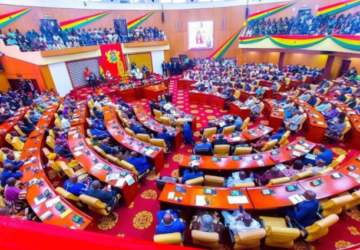
North Tongu Constituency MP, Samuel Okudzeto Ablakwa has expressed his disappointment in the government’s failure to remove taxes on sanitary pads.
According to him, Finance Minister Ken Ofori-Atta’s refusal to remove the taxes on sanitary pads during his presentation of the Mid-Year Budget review in Parliament shows that the government does not care about the human rights of Ghanaians.
Speaking in Parliament on Wednesday during the last debate on the Mid-Year budget, he explained that Ghanaian women had expressed their grievances with the taxes imposed on sanitary pads and were expecting the government to address the issue in the budget.
“Mr. Speaker, I recall that you also spoke emphatically, which was well received by the Ghanaian people, that the Mid-Year review should abolish taxes on sanitary pads.
Samuel Okudzeto Ablakwa
“It is an embarrassment that such a gross human rights issue did not receive attention from the FinanBut the New Patriotic Party MP for Sefwi Akontombra Constituency in the Western Region, Alex Tetteh Djournobuah explained that abolishing taxes on sanitary pads will collapse the local industries.
He further noted that the North Tongu MP was misrepresenting the fact and actual details of the taxes the government has imposed on sanitary pads.
“I want you to recall that there is a report from AGI that government should allow the local companies to produce the sanitary pads in this country.
ce Minister,” Mr Ablakwa said. “Mr. Speaker, if you compare the price from the foreign sanitary pad as I speak, it’s GH₵15 per one. The local companies are preparing or producing this particular sanitary pad at a cost of GH₵11.
To this end, the Deputy Regional Minister for Western North questioned Mr Ablakwa whether the government should allow the local industries to collapse in the country.
Background
The Speaker of Parliament, Alban Sumana Bagbin had called on the government to abolish taxes on sanitary pads.
Mr Bagbin said that the menstrual cycle comes with its own complications, therefore imposing taxes on sanitary pads is unacceptable.
However, the Association of Ghana Industries (AGI) says any policy measure by the government that seeks to remove taxes on imported sanitary pads at the expense of local manufacturers of the same will be very detrimental to the economy.
It said as much as the waiver of duties or taxes on imported sanitary pads for young women to make the pads more affordable may sound good, it would only end up completely wiping out the few local sanitary pad factories left in the country.