Ghana’s unemployment rate averaged 12.8 per cent across the first three quarters of 2025, underscoring persistent labour market pressures despite marginal improvements earlier in the year.
Ghana sports merchandiseThis is according to the latest Labour Statistics report released by the Ghana Statistical Service (GSS).
Data from quarters one to three show unemployment easing slightly from 12.8 per cent in the first quarter to 12.6 per cent in the second quarter, before ticking up to 13.0 per cent in the third quarter, highlighting fragile job recovery.


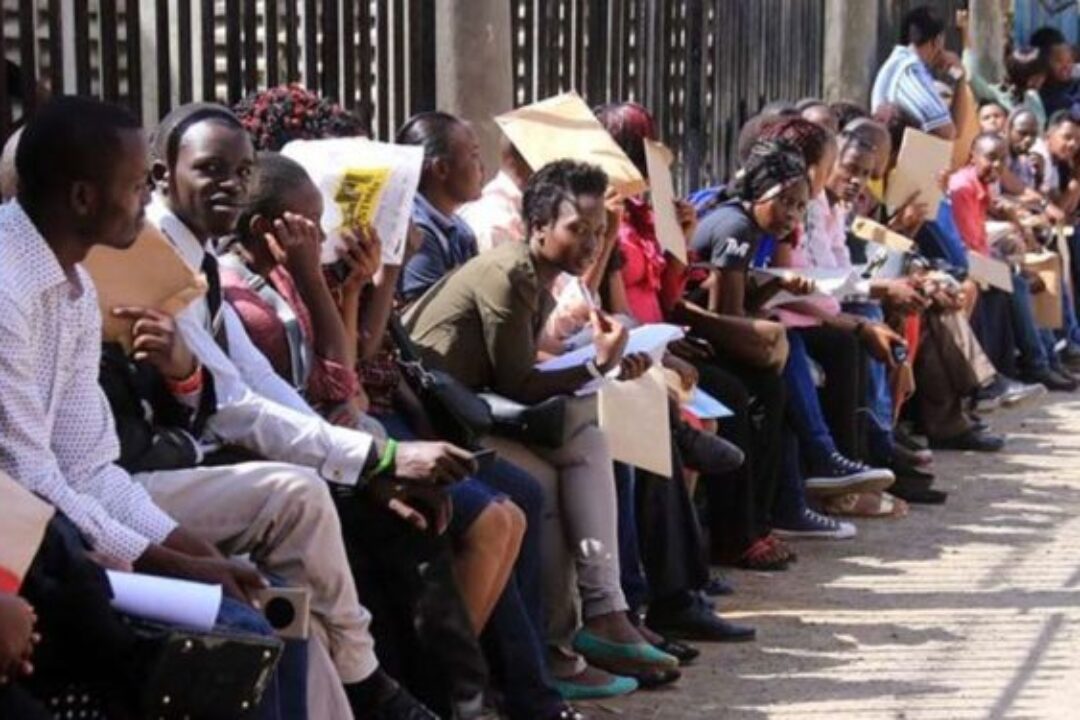
A filed picture of job seekers
The report points to a consistent gender gap, with female unemployment remaining higher than male unemployment throughout the period.On average, the gap stood at 3.7 percentage points, narrowing marginally to 3.6 percentage points in the third quarter of 2025, reinforcing concerns about women’s access to employment opportunities.
Unemployment pressures were significantly more pronounced in urban areas, reflecting intense competition for limited formal-sector jobs.
Urban unemployment averaged 15.1 per cent over the three quarters, compared with 9.6 per cent in rural areas.

The widest gap, 6.2 percentage points was recorded in the second quarter. By the third quarter, urban unemployment stood at 15.4 per cent, against 9.8 per cent in rural communities, leaving a gap of 5.6 percentage points.
Regional disparities also remain stark. Western, Central, Greater Accra and Ashanti regions consistently recorded unemployment rates above the national average across the three quarters.
Notably, in the third quarter when national unemployment stood at 13 per cent, all four regions exceeded this level, underlining structural labour market challenges in Ghana’s most economically active zones.
However, the data show signs of improvement in selected regions between the second and third quarters. Greater Accra’s unemployment rate declined from 20.2 per cent to 19.6 per cent, while Volta Region saw a drop from 11.9 per cent to 11.4 per cent.
Bono Region recorded a reduction from 10.0 per cent to 9.4 per cent, and Northern Region improved from 7.8 per cent to 7.4 per cent.Source:Emmanuel Oppong