Skip to content
Menu
Menu

CAPHA intensifies grassroot mobilisation for healthier food policies in Ghana


Mr. James Mckeown Amoah,Project Coordinator for Ghana Public Health Association (GPHA),has called for all hands to be on deck towards the reduction of Non-Communicable Diseases NCDs in Ghana.

He has therefore urged the media to devote their airtime and spaces to creating more awareness for Ghanaians to embrace the consumption of healthier food devoid of unhealthy foods.


tntnewspapergh.com


Mr.James McKeown Amoah

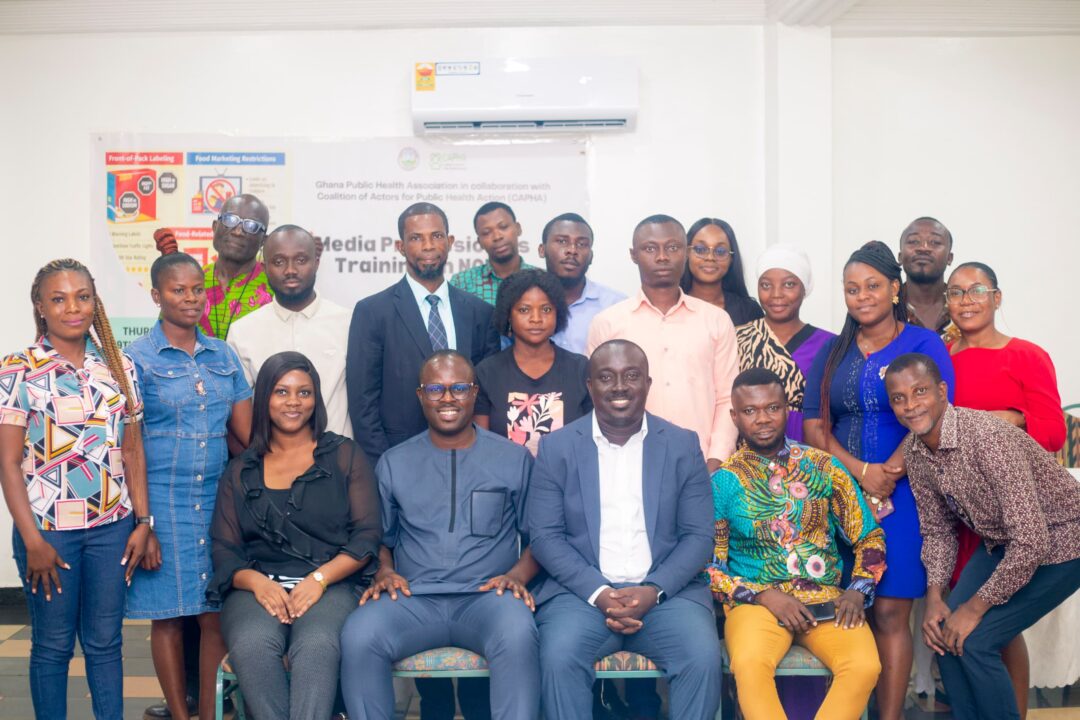
Mr.James McKeown Amoah made the passionate appeal at a day’s media professionals training in Kumasi.The training programme was designed for media professionals in Kumasi on Non-Communicable Diseases (NCDs). Globally, over 70% of all deaths are due to NCDs.

Participants in a group photograph


The situation is not different in Ghana, as about 45% of all deaths are due to NCDs like cancers, hypertension, and diabetes. It was, therefore, the need to get the support of the media professionals to join the crusade in reducing this burden in Ghana. Hence, the training programme.

The full welcome address is reproduced below: “On behalf of the Coalition of Actors for Public Health Advocacy (CAPHA), and as the subproject lead, I am honoured to welcome you to this important media training workshop.

  1. Why This Project in Ghana?Ghana, like many countries in Africa, is experiencing a growing burden of non-communicable diseases (NCDs), including hypertension, diabetes, cardiovascular diseases, and cancers. According to the project document, NCDs account for approximately 43% of all deaths in Ghana.

This is not just a statistic—it represents families affected, productivity lost, and increasing pressure on our health system.While Ghana has demonstrated strong commitment through policies such as the Public Health Act (Act 851) and the National NCD Prevention Policy, there remains a critical gap in food-related regulatory measures, particularly around unhealthy diets and ultra-processed foods.

Unhealthy food environments—characterised by aggressive marketing, easy access to ultraprocessed foods, and limited public awareness—continue to drive poor dietary practices.This project was therefore initiated to strengthen civil society and media advocacy and build acoordinated, evidence-driven movement to promote legal and regulatory reforms that support healthier food environments in Ghana

.2. Main Activities Being Implemented Across the CountryUnder this eight-month sub-project, CAPHA, working with partners including GPHA, GAND, INSLA, Songtaba, and GAYO are implementing several strategic interventions nationwide

.First, we are strengthening coordination and capacity within CAPHA and other CSOs and the media through structured training workshops and quarterly planning meetings to ensure unified advocacy.Second, we are engaging policymakers and regulators through high-level policy roundtables. and dialogues to create an enabling environment for legal and regulatory reforms that promote healthy diets.Third, we are mobilising communities across selected regions—including Greater Accra, Ashanti, Northern, Upper East, Bono East, and Volta Regions—through public forums and durbars to build grassroots support for healthier food policies.

And importantly, we are strengthening media engagement by training journalists and developing a structured media advocacy strategy to ensure sustained, informed, and evidence-based coverage of food policy and NCD issues.3. What Is Expected of Media Persons After This Training?

The media is not merely a messenger in this project—you are strategic partners.After this training, we expect media professionals to:• Report accurately and consistently on issues related to unhealthy food environments and NCD prevention.• Translate complex regulatory and policy discussions into clear, accessible information for the public • Shape public discourse in a way that builds informed public will for healthier food policies.

• Hold policymakers and institutions accountable for commitments made toward NCD prevention.• Sustain momentum beyond this workshop through investigative features, opinion pieces, radio discussions, and digital engagement.The success of this project depends significantly on your ability to elevate these issues from technical policy rooms into national conversations.4. ConclusionColleagues, this project is not just about policy reform—it is about protecting the health of current and future generations.

It is about creating a supportive and sustainable food environment that reduces preventable deaths and promotes healthier lifestyles.CAPHA believes that when civil society is coordinated, policymakers are engaged, and the media is empowered, and transformative change becomes possible.We are grateful to the Ghana Public Health Association for organising this training, our cherished resource persons, and to each of you for your commitment to responsible journalism and public health advocacy.Together, let us create healthier futures for Ghana.Thank you very much. “Source: tntnewspapergh.com


CAPHA intensifies grassroot mobilisation for healthier food policies in Ghana


Mr. James Mckeown Amoah,Project Coordinator for Ghana Public Health Association (GPHA),has called for all hands to be on deck towards the reduction of Non-Communicable Diseases NCDs in Ghana.

He has therefore urged the media to devote their airtime and spaces to creating more awareness for Ghanaians to embrace the consumption of healthier food devoid of unhealthy foods.


tntnewspapergh.com


Mr.James McKeown Amoah

Mr.James McKeown Amoah made the passionate appeal at a day’s media professionals training in Kumasi.The training programme was designed for media professionals in Kumasi on Non-Communicable Diseases (NCDs). Globally, over 70% of all deaths are due to NCDs.

Participants in a group photograph


The situation is not different in Ghana, as about 45% of all deaths are due to NCDs like cancers, hypertension, and diabetes. It was, therefore, the need to get the support of the media professionals to join the crusade in reducing this burden in Ghana. Hence, the training programme.

The full welcome address is reproduced below: “On behalf of the Coalition of Actors for Public Health Advocacy (CAPHA), and as the subproject lead, I am honoured to welcome you to this important media training workshop.

  1. Why This Project in Ghana?Ghana, like many countries in Africa, is experiencing a growing burden of non-communicable diseases (NCDs), including hypertension, diabetes, cardiovascular diseases, and cancers. According to the project document, NCDs account for approximately 43% of all deaths in Ghana.

This is not just a statistic—it represents families affected, productivity lost, and increasing pressure on our health system.While Ghana has demonstrated strong commitment through policies such as the Public Health Act (Act 851) and the National NCD Prevention Policy, there remains a critical gap in food-related regulatory measures, particularly around unhealthy diets and ultra-processed foods.

Unhealthy food environments—characterised by aggressive marketing, easy access to ultraprocessed foods, and limited public awareness—continue to drive poor dietary practices.This project was therefore initiated to strengthen civil society and media advocacy and build acoordinated, evidence-driven movement to promote legal and regulatory reforms that support healthier food environments in Ghana

.2. Main Activities Being Implemented Across the CountryUnder this eight-month sub-project, CAPHA, working with partners including GPHA, GAND, INSLA, Songtaba, and GAYO are implementing several strategic interventions nationwide

.First, we are strengthening coordination and capacity within CAPHA and other CSOs and the media through structured training workshops and quarterly planning meetings to ensure unified advocacy.Second, we are engaging policymakers and regulators through high-level policy roundtables. and dialogues to create an enabling environment for legal and regulatory reforms that promote healthy diets.Third, we are mobilising communities across selected regions—including Greater Accra, Ashanti, Northern, Upper East, Bono East, and Volta Regions—through public forums and durbars to build grassroots support for healthier food policies.

And importantly, we are strengthening media engagement by training journalists and developing a structured media advocacy strategy to ensure sustained, informed, and evidence-based coverage of food policy and NCD issues.3. What Is Expected of Media Persons After This Training?

The media is not merely a messenger in this project—you are strategic partners.After this training, we expect media professionals to:• Report accurately and consistently on issues related to unhealthy food environments and NCD prevention.• Translate complex regulatory and policy discussions into clear, accessible information for the public • Shape public discourse in a way that builds informed public will for healthier food policies.

• Hold policymakers and institutions accountable for commitments made toward NCD prevention.• Sustain momentum beyond this workshop through investigative features, opinion pieces, radio discussions, and digital engagement.The success of this project depends significantly on your ability to elevate these issues from technical policy rooms into national conversations.4. ConclusionColleagues, this project is not just about policy reform—it is about protecting the health of current and future generations.

It is about creating a supportive and sustainable food environment that reduces preventable deaths and promotes healthier lifestyles.CAPHA believes that when civil society is coordinated, policymakers are engaged, and the media is empowered, and transformative change becomes possible.We are grateful to the Ghana Public Health Association for organising this training, our cherished resource persons, and to each of you for your commitment to responsible journalism and public health advocacy.Together, let us create healthier futures for Ghana.Thank you very much. “Source: tntnewspapergh.com




Related Stories
Popular Stories