Skip to content
Menu
Menu

LOST LEATHERBACK SEA TURTLE ASSISTED BACK TO SEA


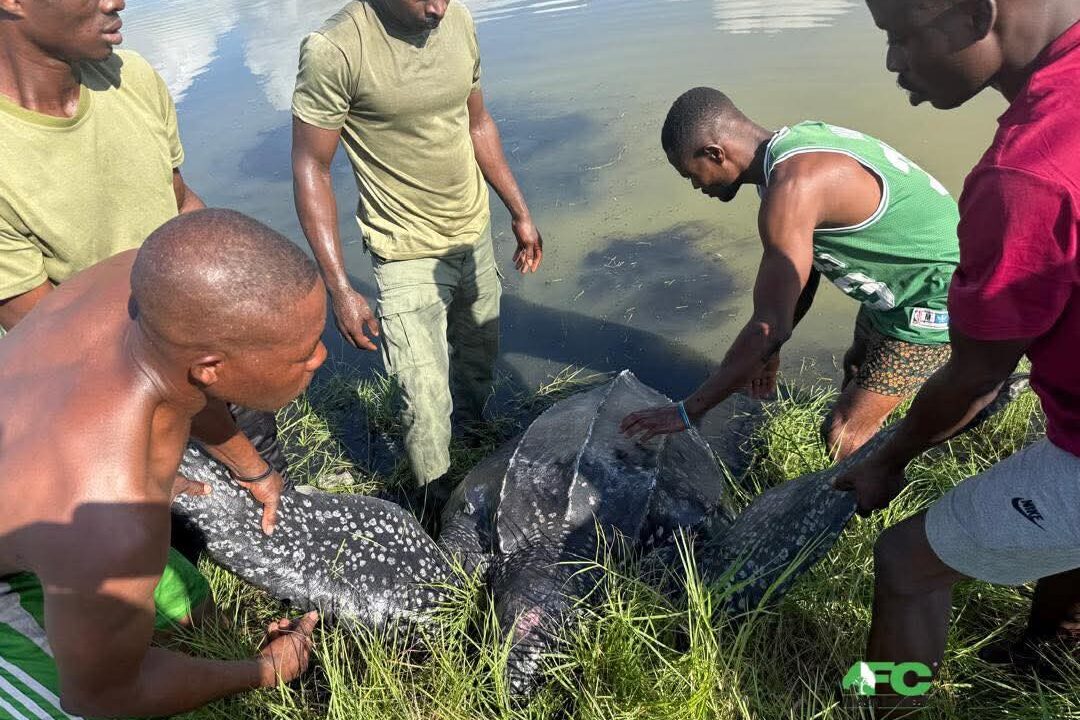
Staff of the Keta Lagoon Complex Ramsar Site, of the Wildlife Division of the Forestry Commission, with support from residents and community members have rescued a leatherback sea turtle that had come ashore to nest at Atorkor, a suburb of Anloga district, Volta Region, and safely guided and assisted it back to the sea.


tntnewspapergh.com


The turtle had lost its way and entered the lagoon opposite the seashore.

This rescue highlights the value of community support in protecting wildlife. Every shared effort helps safeguard these remarkable creatures and the coastal environments they call home.

Leatherbacks are the largest of the world’s seven sea turtle species. Unlike other sea turtles, they have a flexible, leathery shell and can travel vast distances across the ocean.

They also play an important role in marine ecosystems, feeding mainly on jellyfish. Despite their size, these gentle giants face many threats, including plastic pollution, entanglement in fishing gear, and the loss of nesting habitats.


Protecting nesting beaches and keeping our oceans clean can help give leatherback sea turtles and their hatchlings a better chance of ssurvival:Source:




Related Stories
Popular Stories