Sometimes, when I am in Kumasi, my mind wanders back to the history of the political tradition of our New Patriotic Party (NPP: Development in Freedom).
You drive past Kejetia, hear the familiar noise of the city, see traders moving through the morning crowd and taxis jostling for space, and somewhere beneath all that movement lies another Kumasi. A Kumasi of old political meetings, quiet conversations, sacrifice and people prepared to organise around ideas they believed in.
One story has always stayed with me, taking us back to September 1954 and the banks of the Subin River. In the weeks leading up to that moment, men such as Osei Assibey Mensah, Kusi Ampofo and E. Y. Baffoe, together with other young activists and cocoa farmers, had already begun organising around growing political and economic grievances. Then, on 7 September, Baffour Osei Akoto led a large crowd of supporters to the Subin, where a sheep was slaughtered to symbolise the birth of the National Liberation Movement(NLM).


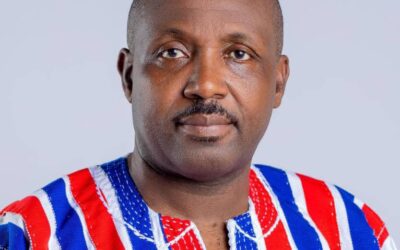
Dr.Mathew Opoku Prempeh aka Napo reflecting back to history
Within a few months, the NLM was already demonstrating its political strength. In time, it would join forces with the Northern People’s Party led by Chief S. D. Dombo and other opposition groups, eventually contributing to the emergence of the United Party under Dr K. A. Busia. That is one of the things I find most remarkable about the history we inherited. Our tradition grew because different parts of Ghana came together.
Kumasi supplied an important stream of that history, but the river became larger because others joined it. The political current that grew around Baffour Osei Akoto in Ashanti stood alongside the tradition of Dombo in the North and political actors from other parts of the country. It was never meant to remain an Ashanti project.

Over the years, our Party has evolved from the NLM, the United Party and the Progress Party, each with its own difficult periods and interruptions. Yet another generation always found a way to rebuild. In 1992, that tradition found renewed expression in the New Patriotic Party. And Kumasi was there through those seasons.
There are old party people in Kumasi who remember when supporting this tradition did not come with the comfort of being in government. They remember meetings organised with very little, journeys made from constituency to constituency, money contributed quietly, homes opened for political discussions and activists who kept the organisation alive simply because they believed it mattered.
That is why I sometimes hesitate when Kumasi and Ashanti Region are described simply as the NPP’s World Bank. It may sound like a colourful expression, but our relationship with this tradition is older and deeper than votes. Kumasi has supplied organisers, thinkers, foot soldiers, parliamentarians and leaders. More importantly, it has repeatedly been a place where tradition found strength in difficult times.
But history also carries a responsibility, and you cannot live forever on what your forebears built. Those who gathered around the Subin organised. Those who built the United Party organised. Those who kept the tradition alive through difficult years organised. Those who founded the NPP built again. And after years of opposition and persistence, President John Agyekum Kufuor eventually led our tradition into government.
Every generation receives both an inheritance and an assignment. Today, as Dr. Mahamudu Bawumia leads our party into its next chapter, Ashanti Region must ask not only what it has contributed to the NPP, but what it is prepared to contribute to its future. We must strengthen our constituencies, reconnect with the grassroots, bring younger people into the tradition, develop new organisers, make room for new ideas and ensure that the strength of Kumasi helps strengthen the NPP across Ghana.
Perhaps that is what the Subin story still whispers to us after all these years. Political traditions survive because every generation decides that what it inherited is worth building upon.
Kumasi has done that before, and our generation must do it again.