Skip to content
Menu
Menu

Ghana secures first African jurisdictional forest carbon credit issuance & expects US$43m

Ghana has secured its first issuance of jurisdictional forest carbon credits under the Architecture for REDD+ Transactions (ART), marking a major milestone in the country’s efforts to attract climate finance through forest conservation.

The issuance of 6.57 million credits is expected to trigger initial payments of approximately US$43 million from international buyers, including the LEAF Coalition.

The announcement was made at the Ghana Pavilion at COP31 in Antalya, Türkiye, where Ghana’s Ambassador to Türkiye, H.E. Abdul Nasiru-Deen, read a statement on behalf of the Minister for Lands and Natural Resources, Emmanuel Armah-Kofi Buah.


tntnewspapergh.com


The Minister described the development as a landmark achievement for Ghana and the African continent, following years of preparation and collaboration among  government institutions, development partners, farmers, traditional authorities and forest-fringe communities.

The credits represent independently verified emission reductions achieved between 2017 and 2021 through efforts to reduce deforestation and forest degradation. With the issuance, Ghana becomes the first country in Africa and the third jurisdiction globally to receive credits under ART’s The REDD+ Environmental Excellence Standard (TREES). The credits are also the first under the standard to receive the Core Carbon Principles-approved label in the ART Registry.

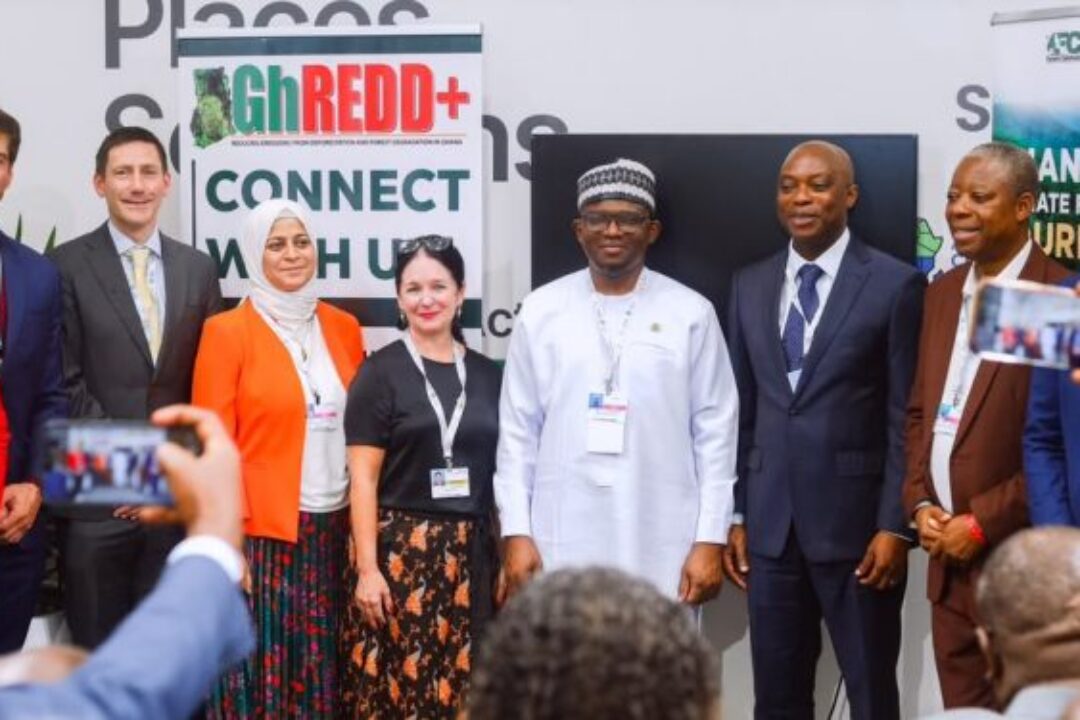
Ghana’s Ambassador to Türkiye, H.E. Abdul Nasiru-Deen in a group photograph with dignitaries


In the statement, Mr Buah said the issuance was expected to trigger initial payments of about US$43 million, linked to the anticipated purchase of approximately four million tonnes of verified emission reductions at prices ranging from US$10 to US$13 per tonne.

He was, however, quick to distinguish the issuance of credits from the actual receipt of payment, explaining that the funds would only be realised after the relevant transactions and payment requirements had been completed.

“Issuance is not payment. The issuance confirms the verified credits, but not the payments,” the statement emphasised.

The Minister said Ghana’s responsibility was to ensure that revenue from the transactions supported forest protection and improved the livelihoods of communities whose participation had helped achieve the emission reductions.

Providing further details on the process, Director of Climate Change at the Forestry Commission, Dr Joseph Appiah Gyapong, traced Ghana’s REDD+ preparations to 2008, when the country began establishing the systems needed to monitor and reduce emissions from deforestation and forest degradation.

He said the credits were not generated by a single project but reflected collective efforts across participating forest landscapes, supported by communities and sustainable forest protection interventions.

Dr Gyapong explained that Ghana relied on its National Forest Monitoring System, satellite observations and independent verification to measure the emission reductions achieved during the reporting period.

“The credits do not represent the carbon stored in Ghana’s forests. They represent verified emission reductions against established benchmarks,” he explained.

He said the verification process also assessed Ghana’s environmental and social safeguards, governance arrangements, stakeholder participation and benefit-sharing systems.

The Minister’s statement further highlighted Ghana’s experience under the Ghana Cocoa Forest REDD+ Programme, through which the country received approximately US$21.8 million in Forest Carbon Partnership Facility payments in 2023 and 2024.

The funds supported forest protection, landscape restoration, farming inputs, boreholes, community health infrastructure and education.

The statement acknowledged the contributions of farmers, forest-fringe communities, traditional authorities and development partners, including the United Kingdom and Norway, whose support helped advance Ghana’s participation in the LEAF Coalition.

The issuance is expected to strengthen Ghana’s position in international forest carbon markets and create further opportunities to mobilise finance for forest conservation. It also places greater attention on how the expected revenue will be managed and translated into tangible benefits for communities involved in protecting the country’s forest resources. Source:Samuel Ackom




Related Stories
Popular Stories