By:Isaac Amoah
Mr Felix Kwakye Ofosu, the Minister for Communications and government spokesperson, has stated unequivocally that effective communication between the government and the media is critical for the prevention of misinformation, disinformation, and malinformation, as well as reducing tension in protecting national peace.
He has, therefore, called for a stronger partnership with the media, especially the Private Newspapers and Online Publishers Association of Ghana (PRINPAG) and the National Security Secretariat, to enhance security and early warning in Ghana.


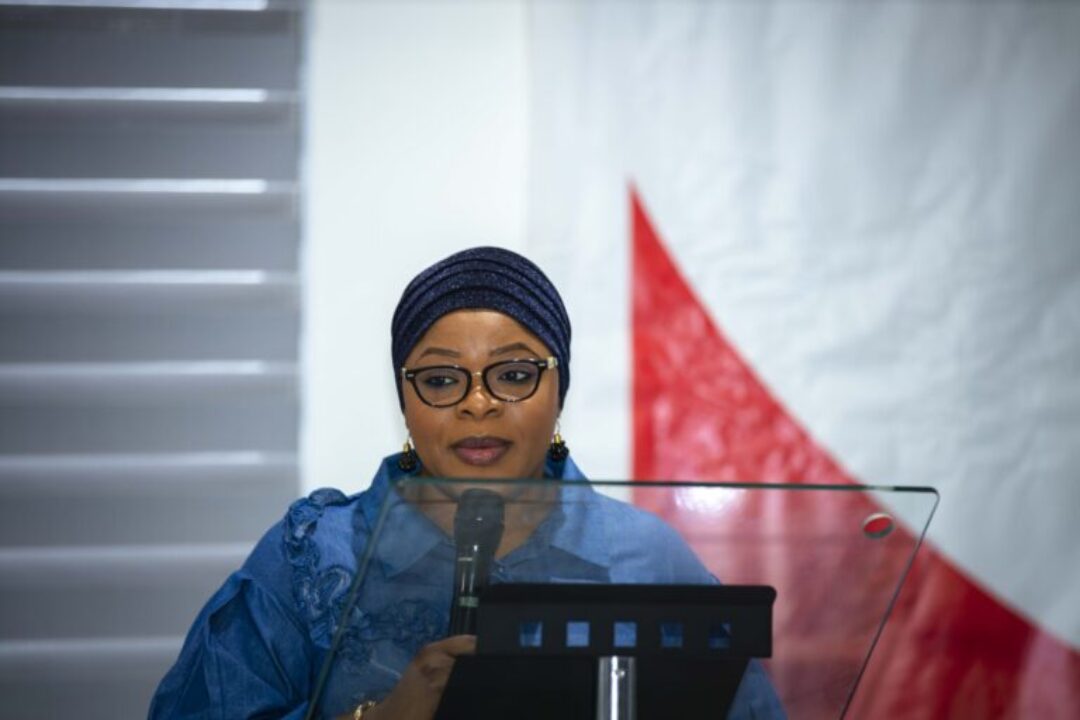
Madam Shamima Muslim speaking at the event
Madam Shamima Muslim, the Deputy Residential spokesperson, made the appeal on behalf of the Minister during an opening ceremony of a 2-day capacity-building workshop on responsible security reporting organised by PRINPAG in collaboration with the National Security Secretariat.
The workshop held at Plantium Bay Hotel, Abokobi, Accra, was under the theme “Media as a strategic partner in preventive security and early warning in Ghana.”The minister observed that whenever accurate information was delayed, it led to speculation and misinformation to fill the vacuum.


COP Abdul-Razak, Shamima Muslim and other officials in a group photograph with participants
According to Mr Kwakye Ofosu, responsible security reporting is not the media’s sole burden, but government as well as security agencies must communicate accurately in a timely and coordinated manner.
He therefore advised that even in situations or circumstances when operational information couldn’t be immediately revealed, security agencies should endeavour to explain the limitations honestly to the media.
He, however, cautioned against conflicting or contradictory statements from security agencies and government, which could erode public confidence, especially during a security crisis.
The Minister for Communications therefore advocated strongly for the establishment of a secure verification channel involving PRINPAG leadership, the National Security apparatus, and the Government Communications Office to facilitate rapid verification of information during security incidents.
He explained that such a mechanism should not amount to censorship but should provide journalists with a reliable avenue to verify sensitive information before publication.
Besides, the minister proposed quarterly security briefings for editors, including off-record engagements, to provide journalists with a better understanding of emerging security threats and the context surrounding sensitive developments.
Mr Felix Kwakye Ofosu also called for support for journalists’ safety and right to information training, as well as the development of a PRINPAG Code for Responsible Security Reporting.
According to him, these measures could go a long way to help strengthen trust between the media and security agencies while ensuring that journalists remained independent in carrying out their watchdog responsibilities.
He maintained that free press was not a threat to national security. Instead, media freedom could contribute significantly to national stability.The minister pointed out that media freedom is a security strategy, not a security threat.
Mr Ofosu stressed the need for government and security institutions to avoid viewing critical journalism as an obstacle to their job.According to him, media and the public scrutiny for accountability were essential components of a healthy democracy.
The minister therefore appealed to journalists and media professionals to always verify sensitive security information before publication and consider whether their reports could expose security personnel, endanger victims, reveal operational details, or inflame ethnic and religious tensions.
He reminded participants that in an era of aArtificial Intelligence (AI), deepfakes, and coordinated misinformation and disinformation – media professionals have an increasingly important role as a trusted source of verified information.
The minister also added his voice to the fast-declining fortunes of the print media, especially private media, which serves as an important repository of Ghana’s national memory.
Mr Felix Kwakye Ofosu observed that even though social media was often quick and faster in breaking information, professional media houses, especially newspapers and credible online platforms, provided verification, context, and a permanent record of national events.
He challenged media,especially private media organisations to adapt to the changing media environment by building trust-based digital products, developing archives, and creating specialised platforms capable of providing credible analysis on security, governance, and other national issues.
He said PRINPAG’s extensive archive of reporting on conflicts and national developments could also serve as an important resource for identifying patterns and supporting early warning efforts.
Mr Kwakye Ofosu said the future of journalism should therefore move beyond simply producing newspapers to becoming trusted knowledge institutions capable of helping society understand emerging threats before they develop into crises.He called on PRINPAG members to embrace the responsibility of becoming strategic partners in national security while maintaining their independence and commitment to truth.
He said the objective was not for the media to protect the government from criticism but for the government, the media, security institutions, and citizens to collectively protect Ghana from falsehood, division, insecurity, and institutional decay.
Mr.Kwakye Ofosu commended PRINPAG and the National Security Secretariat for organising the workshop and expressed the hope that it would deepen cooperation between the independent media and security institutions.
The Minister said the partnership should ultimately help create an information environment where journalists could investigate without intimidation, security institutions could operate without reckless exposure, and citizens.
The participants were taken through topics such as Ghana’s national security architecture, emerging and asymmetric security threats, communal conflicts, and conflict sensitivity.
Other topics include the Security and Intelligence Agencies Act, 2026 (Act 1168), an overview – what is new, media, national security, strategic communication, ethics, national interest, press freedom, cybercrime, digital threats, information warfare, etc.