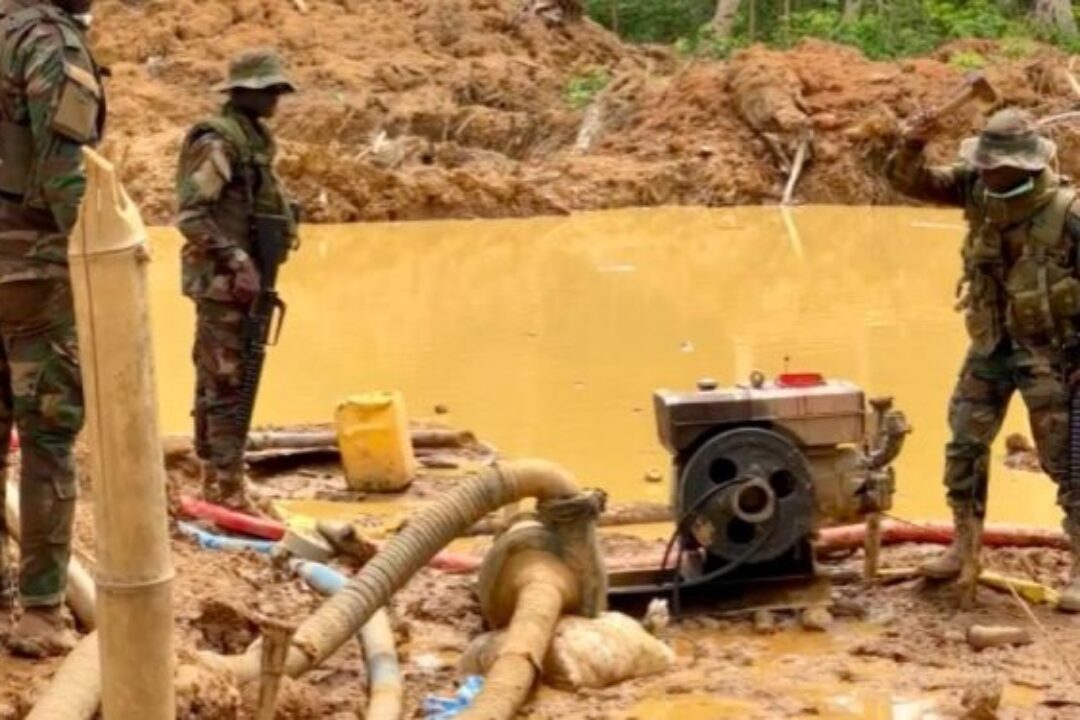
A Professor of Civil and Environmental Engineering at the University of Cape Coast (UCC), Prof. Albert Ebo Duncan, has warned that rivers polluted by illegal mining could take up to 100 years to regain their original purity, while contaminated lands may require as long as 300 years to recover.
He said the scale of pollution caused by galamsey had introduced heavy metals and toxic processing chemicals into Ghana’s water bodies and soils, making natural recovery extremely slow.
Prof. Duncan was speaking at an anti-galamsey public education forum for schoolchildren, miners and media practitioners at Praso in the Twifo Atti-Morkwa District of the Central Region.
“Even if galamsey stops today, contaminated water may take up to 100 years to return to a safe, clean state, while chemically degraded farmlands could remain unsuitable for full ecological and agricultural recovery for roughly 300 years,” he said.


The forum, organised by UCC’s Department of Civil and Environmental Engineering in collaboration with the Canada Fund for Local Initiatives (CFLI), forms part of a two-month house-to-house campaign to educate residents on the dangers of illegal mining.
As part of the campaign, 16 trained young environmental advocates will work in groups to educate residents, particularly their peers, on the dangers of illegal mining. Selected teachers will support the exercise.
The initiative specifically targets pupils and students to promote environmental responsibility, cleanliness and civic consciousness.
The forum also featured drama performances by pupils illustrating how polluted water bodies affect agriculture, human health and national food security.

Prof. Duncan explained that although clean-up and treatment interventions could begin immediately, the natural processes required to remove pollutants from water and break down toxic chemicals in the soil were extremely slow.
He urged young people to stay away from illegal mining and called on the government, traditional authorities, communities and civil society organisations to support efforts to end the practice and protect Ghana’s water bodies and lands. Source:Isaac Appiah-Kubi