Skip to content
Menu
Menu

Spotlight on the man who made Cocoa Ghana’s fortune :Why Nana John Kwame Ayew belongs on the Cedi


Every cedi in a Ghanaian pocket is, in a real sense, cocoa money. For most of the 20th century cocoa paid for Ghana’s harbours, roads, schools and dams, and it financed the independence struggle itself.

Tetteh Quarshie brought the seed to Mampong-Akuapem in 1879. But a seed is not an industry. The man who helped turn it into one, who organised the farmers, traded their beans to England and stood up to the foreign firms that cheated them, was another son of Mampong-Akuapem: Nana John Kwame Ayew.

He is the greatgrandfather of Hon. Dr Nana Ayew Afriye, MP for Effiduase-Asokore. The family line runs: Nana John Kwame Ayew to Emma Apofowaa Ayew to Edmond Afriye Addo to Nana Kwame Ayew Afriye.


tntnewspapergh.com


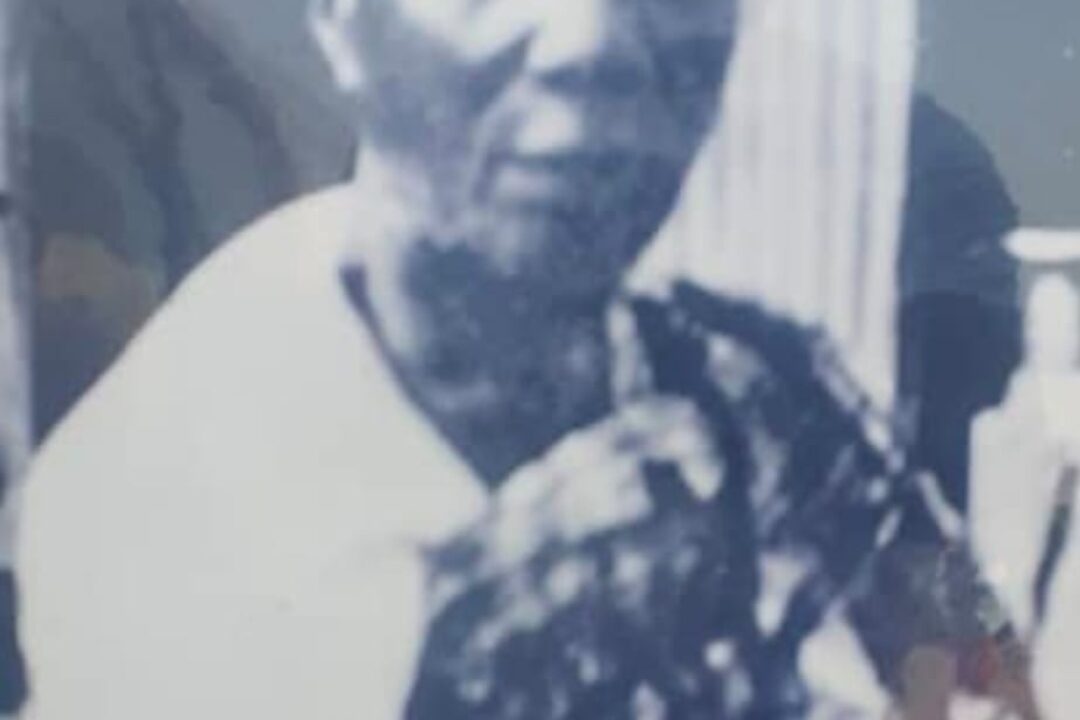
Nana John Kwame Ayew

Let’s talk of Nana Kwame John Ayew’s credentials based on What historians have recorded:

  1. Founder of the Gold Coast Cocoa Farmers’ Association. He set it up shortly after the First World War to organise farmers against the buying monopoly of foreign firms (Kuusaana et al., citing Prof. A. Adu Boahen).


  2. ⁠Leader of the great cocoa hold-ups. He led the hold-ups of 1920–21 and 1930–31 in Larteh, Dodowa, Akuapem and Akyem Abuakwa. These were farmers’ strikes against prices fixed by the UAC, SCOA and other European trading houses.

  3. ⁠One of the two “firebrands” of the cocoa struggle. Historians name him with Winifried Tetteh Ansah of Manya Krobo as the leaders of the farmers’ resistance between 1920 and 1940.

  4. ⁠African cocoa exporter to England. His own trading firm supplied cocoa directly to Cadbury in England (R. J. Southall). At the time, almost all of the trade passed through European middlemen.

  5. ⁠Leader of the Farmer Chiefs (Akuafohenfo). He led the body of elected Farmer Chiefs across the Gold Coast, which is the basis of his title as Chief Cocoa Farmer. Historians place him beside Dr J. B. Danquah in the early nationalist movement.

The family and oral tradition also credit him with these achievements.
a. He was the first Chief Cocoa Farmer and the first indigenous cocoa merchant of the Gold Coast.
b. He built the first cocoa shed in the Gold Coast, with his secretary, Teacher Botchwey.
c. He led the spread of cocoa growing from Akuapem into the Eastern, Ashanti and Central regions and beyond.
d. He bought and shipped the cocoa harvest for sale in England.
e. He put his own money behind the cocoa control arrangements of the late 1930s. These led to the Cocoa Marketing Board in 1947 and to COCOBOD in 1979.
f. He was a major financier of the United Gold Coast Convention (UGCC).

In short, Tetteh Quarshie brought cocoa, and Nana Ayew commercialised it. That is why many call him the Father of the Cocoa Business in Ghana.

Reasons why Nana John Kwame Ayew should be considered:
1. Cocoa built Ghana. Between 1910 and 1980 Ghana was the world’s largest cocoa exporter. No other crop or industry has done more for the cedi’s value.
2. The farmer has no face on our money. Since 2007, the faces on our notes have been the Big Six, the political founders. Nana Ayew would be the first to stand for the producers, the millions of cocoa farmers whose sweat financed the nation.
3. He funded the movement already on our notes. If the family record of his support for the UGCC is confirmed, he helped pay for the movement that the Big Six led.
4. He fought for economic sovereignty. A century ago he challenged foreign price-fixing. Today Ghana and Côte d’Ivoire are fighting for a fair cocoa price through the Living Income Differential. His fight is still Ghana’s fight.
5. The timing is right. Calls are growing for new notes to mark Ghana’s 70th anniversary in 2027. A commemorative cocoa note would be a fitting tribute.

The controversies, answered head-on
•”Tetteh Quarshie is the father of cocoa.” He is the father of the seed, and nobody wants to take that from him.
Nana Ayew is the father of the business. Even Tetteh Quarshie’s claim to have been first was questioned under Governor Guggisberg, which shows how much of early cocoa history still needs to be written properly.

A joint “cocoa pioneers” note could honour both men.

“He was a merchant, not just a farmer.” That is true, and it is his strength. Because he farmed, bought and exported cocoa, he understood the whole chain, and he used that knowledge to fight for farmers.

•”Where is the proof for the ‘firsts’?” This is the campaign’s biggest gap. The Bank of Ghana will expect evidence. The claims about the first cocoa shed, the 1938 control board and the UGCC funding should be supported from the Public Records and Archives (PRAAD) in Accra and Koforidua, the Cadbury archives at Bournville, and Colonial Office files at the UK National Archives.

•”Is this just family interest?” The proposal will be stronger if it is led by a broad coalition rather than by his descendants alone: cocoa farmers’ associations, COCOBOD, the Akuapem Traditional Council and Ghanaian historians.

•Getting the dates right. Official records show that the 1937–38 hold-up led to the Nowell Commission. The British then set up wartime cocoa control boards from 1939–40, followed by the Cocoa Marketing Board in 1947. The safest wording is that his agitation paved the way for state cocoa marketing. The investment claim should be presented as the family’s account until documents confirm it.

We call on the Bank of Ghana to consider Nana John Kwame Ayew for a portrait on a future cedi note with a cocoa pod and cocoa shed on the reverse.

He gave Ghana its first great industry. It is time Ghana gave him his place on its money.


Related Stories
Popular Stories