REJOINDER: MR. SENYO HOSI, LOSS OF MILLIONS OF GHANA CEDIS IN AGRICULTURAL INVESTMENT USING DATA FROM THE MINISTRY OF FOOD AND AGRICULTURE
The Ministry of Food and Agriculture attention has been drawn to online publications and a video circulating on social media in which Mr. Senyo Hosi vehemently asserts that he had lost millions of Ghana Cedis in investments using data of the Ministry of Food and Agriculture.
The Ministry finds the assertion made most unfortunate due to its implications for the development of Ghana’s agriculture, particularly, the deterring effect it could potentially have on investments in the sector.
Statements made also undermine the integrity of the Ministry and constitute a major drawback to efforts being made to modernize and transform Ghana’s agriculture.
Given the serious nature of the assertions by Mr. Hosi, the Ministry considers it obligatory to seek additional information in a bid to fully understand and establish the veracity of the claims made.
To help the Ministry achieve this, we openly invite Mr. Hosi to furnish our entity with responses to the following pertinent questions:
I. the nature of investment(s) into which millions of Ghana cedis were sunk?
II. The source of MoFA data that informed the failed investment(s)
III. Whether there was engagement with any technical directorate or senior official of the Ministry on the specific data related to the investment(s), and
IV. Whether a formal complaint has ever been lodged, verbally or otherwise about the integrity of the data use
The Ministry is urging Mr. Senyo Hosi to formally and promptly respond to the questions posed, to assist the Ministry investigate the matter and take remedial action if necessary.
For further enquires, kindly contact the Public Relations of MoFA on phone number 0243080921
Signed
Chief Director, Ministry of Food and Agriculture
A section of business minded leaders have questioned why student jobs as well as casual employment for young people do not exist in our country today unlike our Western and Asian counterparts. In fact, this is reasonable concern that the country including everyone must contribute to addressing it.
Apart from harnessing energies built up in our youth for the growth of the economy, student jobs also provide opportunities for students to earn income to complement support from parents as well us getting the requisite working experiences to catapult them to bigger responsibilities at work places after graduation and in full employment status.
The students gain confidence at work, build network with colleague workers and business owners, and at the same time become efficient with time management while at school or home.
The question has always been: Which kind of jobs are available to attract and recruit student workers? Indeed the jobs may vary across various continents and economies, but every country has priority areas around which jobs are created for the people.
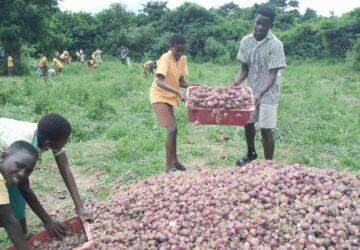
We may not see much of job vacancies in our supermarkets, malls, cleaning services, factories etc as in Europe or America, but in Ghana the agricultural sector, from the farm, to harvesting, transportation, sales and distribution, processing and preservation, and exports are our hallmarks with competitive advantage over many nations on the globe.
So why have students stopped working on farms (both animals and crops), getting involved with harvesting of food and transportation, participating in food sales, distribution and processing to earn an income or to help contribute to income generation of their families? Agriculture is the area where Ghana identifies its maximum strength to compete with other nations like
The Netherlands, USA, Brazil and Ukraine for food production and exports. Every aspect of our educational system must therefore direct its attention to agricultural sector to help utilize the untapped potential of this sector. It must be realized that in today’s post-COVID19 era, the nation with food, not gold or machines, is the wealthiest.
Growing up, and at school, many of us took farming work seriously and worked alongside our parents. Managing cocoa farms, food crops and animals, sale of food produce, etc were regular duties assigned to us although as students. Some earned direct incomes to support their education or contributed to the overall family income being managed by their parents. I later realized that this is similar to what pertains in most advanced countries where students and the youth take up part-time jobs on farms, supermarkets, cleaning companies and others. In fact, almost all Ghanaian students abroad perform these extra-duties to support their education and to remit their families back home.
I remember studying in the Netherlands in the early 2000, my four-hour part-time cleaning and farm jobs enabled me put up a house back in Ghana.
This was aside what I could send to support my family and dependants in Ghana and elsewhere. Why is the Ghanaian student today so financially dependent on families, and not urgently seeking to work like their counterparts elsewhere? I do recall how students refused to take up laboratory cleaning jobs when I was Head of Department in one of Ghana’s premier universities despite enormous free time they had to waste in their hostels and halls.
We therefore need to look into this sector, identify the hindrances and improve upon the conditions in order to attract more such potential hands to grow our economy, and to increase income levels of our energetic youth and make them financially source:
Prof Peter Twumasi
Fairtrade Africa, West Africa Network is organising its Regional Convention and Congress from the 13th to the 14th July 2022 in both Ghana and Cote d’Ivoire. This year’s event focuses on learning and best practices from Fairtrade certified producer organisations on value addition and income diversification to remain resilient and viable farmer cooperatives.
The West Africa Regional Fairtrade Convention (RFC) is a biennial event organised by Fairtrade Africa West Africa Network which brings together all Fairtrade and non-Fairtrade producers and other stakeholders within and outside the region to deliberate on contemporary issues affecting producers and to propose ways of advancing the businesses of producers and their partners.
Through the event, producers deliberate on new market opportunities, linkages with entrepreneurs in Agri processing as well as issues that relate to advocacy, youth and gender-related issues within agricultural supply chains.
The Regional Fairtrade Congress is organised to bring together producers for democratic decision making on governance of the regional network. It is a platform within FTA’s governance structure and decision-making process for representatives of each producer organisation in the region to meet and interact on issues affecting FTA’s work.
Mainly, the congress enables producers to receive updates on happenings within FTA and the FT system and to raise issues of concern to them for discussion at FTA General Assembly (GA) and other levels within the FT system. Additionally, delegates at the Congress also elect their regional representatives to the FTA GA.
In his address, Mr. Benjamin Kouame, Fairtrade Africa Board Chair focused on trade Africa’s strategic vision on product and market development for Fairtrade certified producers. He emphasised the need for engaging stakeholders on policy, financing and market linkages that support and promote trade.
In his opening remarks, Isaac Tongola, Executive Director of Fairtrade Africa emphasised the role of Fairtrade Africa in empowering its producers to become more resilient and transformed organisations, in order to ensure sustainable livelihoods.
The opportunities that market linkages from the AfCFTA element present are critical to helping producers step- up on their efforts at adding value to their commodities in order to promote intra-African trade.
“Fairtrade is committed to helping producers address the challenges that climate change poses to agriculture and farmer livelihoods. Despite the changing climate conditions, we continue to support our producers to be resilient in adaptation and mitigation approaches by focusing on new areas and project interventions that enable value addition and income diversification”, he added.
Edward Akapire, Head of Region for Fairtrade Africa West Africa Region reiterated the commitment of Fairtrade to strengthen its member producer organisations:
“The West Africa Fairtrade Network has over the period mobilised its members to access the capacity building on various topics relevant to our operations as Farmers and Workers, supported in the area of fundraising and engaged policymakers in an attempt to achieve favourable terms for producers”.
In Cote d’Ivoire, Fairtrade introduced the Farmer Business School under the Recover Africa Project. The Farmer Agribusiness Resilience School (FARS), pursues the ambitions of phase 1 by improving the resilience of producers due to the Covid-19 pandemic.
This phase aims at the one hand to maintain and diversify relationships within supply chains. On the other hand, it aims to guarantee the continuity of food security and income generation activities around the school farms.
The purpose is to strengthen local food security through the availability of quality agro-pastoral products on local markets; improve the economic resilience of producers by creating and maintaining income-generating activities.
Through the project, it is expected that school farms are functional and generate agro-pastoral products on local markets. It is also expected that producers through the training received from school farms will carry out income-generating activities.
The Women’s School of Leadership (WSOL) is a training, mentoring and coaching programme aimed at improving participants’ basic leadership skills and application of human rights provisions on gender issues in their own environment.
Through the training, women are empowered to decide on their future through increased capacity to make decisions and take action on themselves; take control and manage resources by being supported to actively participate and voluntarily assume leadership roles in their Producer Organisations and communities.
In Ghana, organisations like Bia West Cooperative, is partnering with Fairtrade on a Mondelez Cocoa Life project, focused on crop diversification. Producers have ventured into other crops apart from cocoa. These include rice farming, and maize farming among others. Other Producer Organisations like Bomarts Ltd have invested in fruit processing for exports.
Since it joined Fairtrade certification, Bomarts exporting processed and fresh mango and pineapple to customers mostly in Europe and the Middle East market, the company produces and sells approximately 500 tons of tropical dried fruits per year.
At the processing unit, a total of 5 metric tonnes of dried fruit per day are processed from mango, pineapple, coconut, papaya and banana. Kuapa Kooko is the oldest Fairtrade certified cocoa producer organisation in Ghana.
Under the alternative livelihoods component of the KKFU sustainability programme, about 220 women have received skills training. Now we have in Kuapa Kokoo shower gel, dish washing soap, washing powder, Hair food, Parazone, local rice, among others. There has also been skills training for women in batik tie and dye.
In its efforts to ensure sustainability in production, Fairtrade Africa has been implementing projects aimed at ensuring adaptation and mitigation efforts to address the challenges of climate change, price volatility, the effects of the pandemic and an increasing global inflation in the supply chain, in with line with the new 2021-2025 global strategy that puts the producer at the heart of all transformation and that focuses on digitalisation, impact data, transparency and traceability that is needed to drive agricultural growth.
It’s interesting how constantly players within Ghana’s Agro Industry have and continue to call on governments to either provide or undertake one form project or make available financial assistance for Agro Industry development and growth.
But let’s pause and think about the following issues……
There’s another policy MOFA is rushing to bring out. That’s the legislation to force Banks to lend for agric purposes!
WILL THIS HELP?
It’s bad and needless. A simple answer to why it won’t work is in the QUESTION.
WHY ARE BANKS REFUSING TO LEND TO AGRI?
Let’s remember that the BANKS are in business to make money and if there’s money to be made lending to Agric, why would the BANKS hold back?
Why don’t we concentrate fixing the risk factors and make agric attractive to BANKS?
SECTOR PLAYERS CREDIBILITY SYSTEMS
We have been told how several development partners, donor organizations, Multi Nationals have put in millions and millions of dollars, pounds, euros etc into several value chains and districts in Ghana.
We are also aware and we know ourselves and several others who have benefited hugely from both government and donor funding but have failed to either pay back the funds or deliberately run down the projects.
We have heard stories of many major stakeholders, Snr Industry players who have obtained one form of credits from notable Banks and Investment and have failed to fulfill the required financial agreements.
In some cases many have gone to different shops and Agro outlets where they have obtained goods and other critical agriculture equipments either on credit or with the promise of paying back the next day, yet this payment have never materialized.
The current non payment for credits be it cash, Inputs or technical support are not limited to only other value chain players but also small holder farmers.
It’s a known fact that most farmers in most cases default in such scenario.
This situation of constant default is not only limited to just credits but also is a major cause for the collapse of most of the country’s most viable past Agriculture Ventures and companies. Some were incorporated locally and internationally.
There are individuals who have have deliberately or unconsciously run down such past viable enterprises.
The most interesting thing is that this are people who still continue to enjoy the sector.
Same situation could be said of workers and managers and several task undertakes on many farms whose action of pilfering, deliberately disruption and damages continues to contribute to the many gargantuan problems the sector already bereft with.
As we seek to streamline an industry and position it for investment and credit drives we must also take into consideration such acts of workers and many other tendencies that have the likelihood to collapse people’s critical investments.
The big question is should A CREDIT WEALTHY CHECK be undertaken in Ghana’s Agriculture Space how many people will pass this test or credit score rating.
Many of the Country’s Banks have time in again complained bitterly how most of their debts are those they have done on Agriculture and its value chain.
It’s time we start thinking of streaming the industry in such a way we can begin to call the right shorts and decisions to show leadership as required.
In conclusion I will like to passionately plead with those who have defaulted on credits in whatever form should begin to take steps to address the problem before calling on the government to make major changes or provide major financial aid.
As the good old book said – take the speck out of your eye,’ before you attempt to remove the plank in your brother’s
Farmer Anthony Morrison
Ceo Chamber of Agribusiness Ghana
Chairman Ghana Agriculture Sector Skills Body of TVET Commission
International Agriculture and Infrastructure Development Group
Fairtrade Africa participated in the 28th ARSO General Assembly organized from 27th June, -1st July, 2022 at the Hilton Hotel in Yaoundé, Cameroon.

The GA brought together ARSO members, who are national standards bodies across the continent, and partners of ARSO to discuss key issues on standardization within Africa.
There were four panel discussion including impact of harmonized African standards in promoting the pharmaceuticals industry’s growth, using standards to underpin the value addition and access to market to agriculture for agriculture and food product, implementing harmonized standards to spur the development of the Africa automobile industry and the role of sustainability standards and eco-certification in promoting sustainable development and trade.
Fairtrade Africa was invited to participate in one of the panel sessions to discuss ‘the role of sustainability standards and eco-certification to promoting sustainable development and trade’. FTA was represented by Abubakar Afful, Programme Team Leader of Cocoa in Ghana, who used the occasion to share benefits of sustainability schemes such as Fairtrade to producers and its contribution to development.
During the panel discussion, the Team Leader highlighted the importance of producer support service in helping producer organizations in complying with the FT standards.
He also shared lessons around the approach of FT standards setting where producers and actors are well involved before the standards are approved which make it more participatory for the producers. He also focused on the benefits of certification including the premium, minimum price, support to communities, protection to the environment, stronger organisations etc.
The Team leader also highlighted the importance of transparency and managing the expectation of producers before they get certified. He used the opportunity to explain the FT approach in channelling premiums to producers in a transparent manner directly from the buyer to the producer.
This was in a response to a question to a participant from the CCC of CDI.
In summary, he highlighted the following as the key in supporting producers to remaining compliant to sustainability standards:
Involvement of Producers in standards to increase their ownership, understanding and easy implementation
Ensuring transparency in the system
Access to training, one-on-one coaching and mentoring, strategic support, thematic support etc. to support POs to implement the standards
Access to market to generate revenue to implement the standards, improve livelihood and developmental projects
Access to donor funds to implement projects around key thematic areas
There were other panel members the Secretary General of ISO and the Senior Director and Head of ZED Quality standards of India.
The Team Leader in his concluding remarks reiterated that sustainability has come to stay and called all on stakeholders to support the producers to be able to comply.
The session was moderated by the Secretary General of ARSO, Dr. Hermogen Nsengemana.
The Ministry of Food and Agricultural has denied receiving money from the Finance Ministry to settle debts owed to Fertilizer Suppliers under Government flagship Program, Planting for Food and Job.
A close source from the ministry told this portal 99that no money has been received from the Finance Ministry and they are looking forward to receiving such amount since the pressure from the contractors is too much.
The failure of the government to pay fertilizer suppliers has made majority of these contractors to face bankruptcy forcing their banks to chase them for their monies.
FINANCE MINISTER’S CLAIMS:
The Minister on the floor of parliament when asked about the issue of Financial Clearance to MOFA to clear the large debt owed partners and suppliers revealed that his ministry has released money to clear outstanding debts
“Mr. Speaker at the end of 2021 an amount of GHC 86.31 million was outstanding, under PFJ Programme. This amount has now been released to MOFA for payment. This year, MOFA has requested for an amount of GHC 485.90 million for payment under PFJ programme. An amount of GHC 278.57 million has subsequently been released to MOFA” Hon Ken Ofori –Atta has added.
REVELATIONS:
According to one of these contractors, he said the Minister for Finance is trying every means to cover the debts by creating pressure between the implementing Ministry and that of the contractors.
“We are very sure MOFA would have attended to us if the Finance Ministry had paid the money like the sector Minister claimed” he added.
Suppliers said, their respective Banks have been chasing them after the Minister’s presentation on the floor of Parliament because these banks think; they (Suppliers) have diverted the payment to different accounts.
INVESTIGATIONS:
In an earlier report last month, a number of Fertilizer suppliers confirmed that government still owed them with monies after supplying farmers under PFJ with fertilizers.
Peasant framers had also in a separate story expressed worry over how the scarcity of fertilizers has been affecting their farming businesses since suppliers are reluctant to supply them with fertilizers.
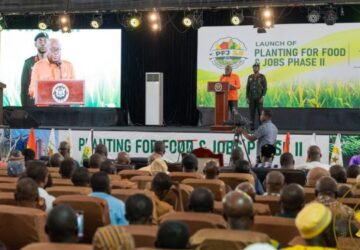
Planting for Food and Jobs is a flagship agricultural Campaign of the Government, with five (5) implementation modules. The first module PFJ (Crops) aims to promote food security and immediate availability of selected food crops on the market and also provide jobs.STORY BY MICHAEL OFOSU-AFRIYIE, KUMASI
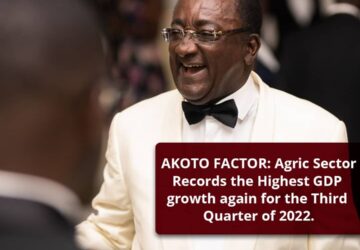
Dr Owusu Afriyie Akoto Minister for Food and Agriculture, Ghana
Dr. Owusu Afriyie Akoto is the man with the impeccable records.
Dr. Owusu Afriyie Akoto, an old student of Opoku Ware School, graduated from the University of Ghana (Legon) with a Bachelor’s Degree in Agriculture. He also holds M.Sc. and PhD degrees in Agricultural Economics from the University of Cambridge, England.
He worked as an Economist, Senior Economist, Principal Economist, and Chief Economic Advisor over a period of 18 years at the International Coffee Organization (ICO) in London, England. He has also worked as a consultant to the World Bank and the United Nations on Soft Commodities (Cocoa, Coffee, Sugar).
Between 1995 and 2007, he was the CEO of two international commodity companies, Goldcrest Commodities Limited and Plantation Resources Limited both based in Ghana.
In 2008 he was elected to the Parliament of the Republic of Ghana. He spent two terms as Member of Parliament for Kwadaso Constituency in Kumasi, Ashanti Region. In Parliament, he held the positions of Deputy Ranking Member and subsequently the substantive Ranking Member for the Committee on Food, Agriculture and Cocoa Affairs until 2017.
In 2017 he was appointed the Minister for Food and Agriculture. In this role, he has spearheaded the design and implementation of the Government of Ghana’s popular and transformational agricultural flagship programme, Planting for Food and Jobs (PFJ).
Under the leadership of Hon. Dr Owusu Afriyie Akoto, Ghana has been transformed into the breadbasket of West Africa – moving from “not being on track” in 2017 to “being on track” in 2019 on the African Agriculture Transformation Scorecard (AATS). In that same year (2019), Ghana was ranked fourth on the African continent by the Economic Intelligence Unit (EIU) in its Global Food Security Index (GFSI).
In February 2019, Africa Seeds which is the intergovernmental Seed Agency of the African Union, conferred on Dr Akoto the title of SEED CHAMPION OF AFRICA.
Later the same year, he was appointed Chairman of the Board of the Inter African Coffee Organisation (IACO), a pan-African organisation promoting the interest of coffee producers on the continent; a term he finished serving in December 2020.
He is the current Chairman of the ECOWAS Specialised Ministerial Technical Council for Agriculture (CTMS Agric) and in June, this year was unanimously appointed Chairman of the Steering Committee for the newly established Côte d’Ivoire-Ghana Cocoa Initiative.
ATTEMPTS by some elements of staff within the ranks and file of the government-owned Cocoa Processing Company (CPC) to instigate the removal of the company’s Managing Director, Nana Agyenim Boateng, has hit rough patches after an investigative Committee set up by the Honourable Minister for Food and Agriculture, cleared the MD of any wrongdoing.
Some agitated staff of the company reportedly wrote a petition to the Minister for Food and Agriculture, Hon. Dr. Owusu Afriyie Akoto, alleging impropriety on the part of the MD, and calling for his removal.
The Honourable Minister then set up a 3-Member Committee led by a former deputy Minister and MP for New Edubiase, who also doubles as the Special Advisor to the Minister on Cocoa Affairs, Hon. George Boahen Oduro, to investigate the allegations.
Other members of the Committee included the Director of Women in Agriculture(WIAD), Mad. Paulina Addy and Head of the Internal Audit Unit of the Ministry.
According to sources close to the Ministry, the workers, after presenting the petition refused at the initial stages to honour an invitation by the Committee to present evidence and or to substantiate allegations of impropriety leveled against the MD.
Reports indicated that these agitated staff backed by a leading member of the company, claimed they could not appear before the Committee because of confidentiality and insisted rather that the Committee should deal with the Industrial and Commercial Workers Union(ICU) which is their mother union.
After several persuasions, the agitated staff finally appeared before the Committee and presented their grievances on May 11, 2022.
The Committee, in the course of their work, launched thorough investigation into the issues by extending invitations to several including the MD, and the Board Chairman of the Company in its bid to ascertain the veracity or otherwise of the allegations, as entailed in its terms of reference.
Reports however reveal that the workers could not substantiate most of the allegations they presented, whilst others only bothered on minor errors such as lack of wide consultation in some decisions, which did not constitute any form of illegality or impropriety.
Further information indicates that the Committee has presented its findings to the Sector Minister
The Committee, according to information, has exonerated and acquitted the MD of all charges leveled against him.
Additionally, the MD, who was asked to step aside pending investigations, will soon resume his position to continue his good works and vision of transforming the once dormant Cocoa Processing Company.
Meanwhile, there are credible reports that the Board will meet somewhere within the week to discuss the final report and recommendations made by the Investigative Committee.
As part of measures to bring clarity on Genetically Modified (GM) technology activities in Ghana and status of work done on a GM product (PBR COMPEA) within CSIR in Ghana,a day’s workshop has been held for Editors in the Ashanti Region.
The workshop held at Golden Tulip hotel in Kumasi was organized by Open Forum on Agricultural Biotechnology (OFAB) in collaboration with Council for Scientific and Industrial Research (Ghana).
The two main scientists :Dr.Daniel Osei.Ofosu and Dr Jerry Nboyine made presentations on Basics of GM technology, Biosafety regulations in Ghana,process & status of Pod Borer Resistant (PBR) COMPEA) development in Ghana among other topics.
The scientists in their presentations provided scientific evidence to prove that Organic farming alone can’t feed the World.
They are therefore advocating for Ghana to look at the indigenous products and adopt a technology to help address the current challenged agricultural sector was facing.
Dr.Jerry Nboyine,a researcher with the Council for Scientific and Industrial Research (CSIR-SARI) stated emphatically that Genetically Modified Organism (GMOs) have been consumed for over three decades now and no one has died of it.Stressing that Organic agricultural can’t feed the World..His assertion was fully supported by Dr.Daniel OSEI Ofosu, national coordinator Program for Biosafety System.According him,the reality is that “we can’t feed the world with organic farming.I have worked with farmers for about Fifteen (15) years now and have met thousands of farmers.He admitted that Agricultural sector in Ghana faces alot of challenges ; transit,pests and diseases etc .
Dr Ofosu said countries should be allowed to look at a technology that benefits them and this is what we scientists are advocating for”.He however, disclosed that in Ghana,”we currently don’t have GMO.According to him,all items are currently under going test or trails.
Records available indicate that, Ghana’s Council for Scientific and Industrial Research-Savannah Agricultural Research Institute (CSIR-SARI) has,since 2012,undertaken research in the development of PBR COMPEA variety and is at the point of seeking regulatory approval for its release to the farming community for cultivation.The good news is that Ghana’s Biosafety Act 831 of 2011 provides the legislative framework to ensure on adequate level of protection in the field of safety development, transfer handling and use of GMOs resulting from biotechnology that may have an adverse effect on health and environment.
For the avoidance of doubt, Ghana’s GM Compea is engineered to be resistant to Maruca pest.
GM Compea is being developed by Ghanaian scientists at CSIR-SARI and GM Compea is also being developed using the local Songotra variety.
On his part,Dr Richard Ampadu-Ameyaw,the National Coordinator for OFAB) said they have no intention of imposing GMO on anyone.
He said the workshop aimed at equipping the media with the necessay information to enable them contribute significantly to demystify the misconception about GMOs.
This, according to him, would go along way to help the media effectively educate the general public to adopt the best technology to ensure sustainable national food security and improved livelihoods of farmers.Story by Isaac Amoah
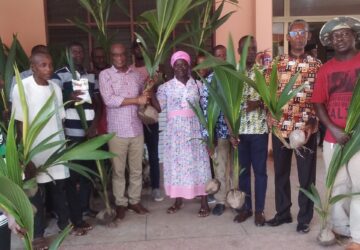
The Municipal Chief Executive (MCE) for Asokwa, Chief Akwannuasah Gyimah on Friday morning led staff and officers of the Assembly as well as other heads of departments of state agencies at the Municipality to plant about 5, 000 tree species and seedlings.
Planting the first tree specie which was the Royal dwarf palm tree at the precincts of the Municipal Assembly, Chief Akwannuasah noted the importance of the Green Ghana Project by the government of Ghana.
Apart from the aesthetic importance of tree planting, the MCE said the planting of trees has the potential of enhancing the quality of air that persons breathe in the country.
He therefore urged the public to embrace the idea from government and be involved in any drive aimed at encouraging people to plant trees.
“As I plant this tree today at Asokwa just as many including the President and the Asahtehene would be doing elsewhere I would want to urge every citizen of Ghana to inculcate this habit and do so every time they would have opportunity so that together we can plant trees to make Ghana green”, the MCE stated.
MUNICIPAL ENVIRONMENT OFFICER:
Speaking to this reporter at the event grounds, Joel Guma, Asokwa Director of Environment and Sanitation said the objective of the tree planting exercise was to ensure Ghana and in particular Asokwa becomes a green environment.
He disclosed that 5, 000 tree species including Acacia, royal dwarf palm, teak and potted plants had been made available to Asokwa for planting today.
Mr Guma said the Assembly had released seedlings of the tree species to state institutions and departments in Asokwa including the National Disaster Management Organisation (NADMO), the security agencies, the Ghana Education Service (GES), Assembly members as well as other interested persons and groupings in Asokwa to plant same in the Municipality.
He commended the Member of Parliament (MP) for Asokwa as well as the chiefs and people of the Municipality for showing interest in the national exercise.
PARTICIPANTS:
Yaw Boafoh, a former student of Kumasi High School who took part in the exercise expressed happiness about the ability to plant a tree in the Asokwa Municipality.
He noted that he had seen many persons plant trees previously in Kumasi but had not physically taken part.
Mary Mensah, a hawker near the Asokwa Shopping Mall said she was happy getting the opportunity to plant a tree in today’s exercise.
She commended the Asokwa Municipal Assembly for making it possible for ordinary people to have access to seedlings to participate in the national exercise.STORY BY MICHAEL OFOSU-AFRIYIE, KUMASI