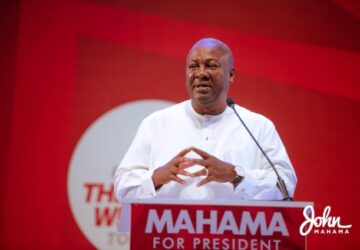
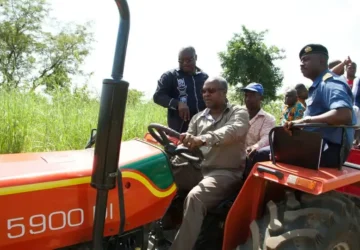
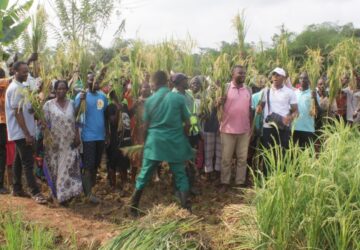
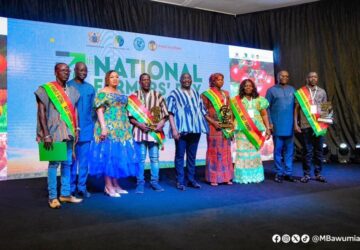
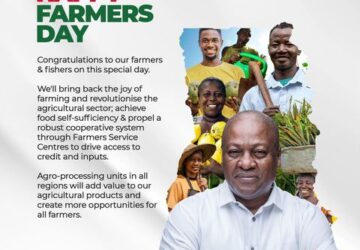
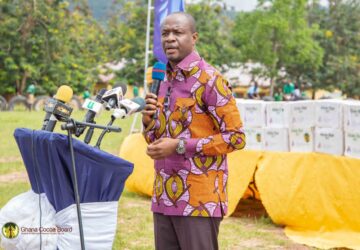
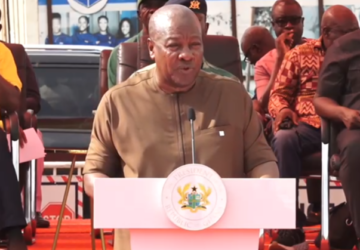
Former President John Dramani Mahama has assured that the next National Democratic Congress (NDC) administration will prioritise the welfare of farmers while working to ensure that they are well-resourced.
According to him, his administration will also create more opportunities for all farmers in the country.
“Our farmers are the backbone of our economy, and we will continue to invest in their success”he noted.
“On this occasion, I want to assure our farmers that the next NDC government will prioritise their welfare and work tirelessly to ensure they have the necessary resources and support to thrive,” he posted on Facebook on Friday as the country marks the 39th National Farmer’s Day Celebration.
This year’s celebration is on the theme, “Delivering Smart Solutions for Sustainable Food Security and Resilience.”
According to Mr Mahama, the theme highlights the importance of innovation and resilience in agriculture. “As we celebrate our farmers today, we must acknowledge the need for smart solutions within a 24-hour economy to ensure sustainable food security for our nation.”
Mr Mahama also pledged to bring back the joy of farming and revolutionising the agricultural sector.
“We aim to achieve food self-sufficiency through a policy that supports large-scale commercial agricultural production.
“This will be propelled by a robust cooperative system that will benefit from Farmers’ Service Centres established nationwide to drive access to agricultural credit and inputs,” he added.
According to him, the NDC will introduce agro-processing units in all regions to add value to agricultural products and create more opportunities for all farmers.
“Establishing agricultural processing plants will target crops such as palm, cashew, groundnuts, cotton, coffee, cocoa, soya, cassava, shea nuts, cereals, ginger, spices, cut flowers, fruits and horticultural products,” he added.
Blue Skies, KIC and Mastercard Foundation have announced award winners of the 2023 School Farm Competition at a ceremony held on 24th November, 2023 in Kumasi.
Present at the event were Mr. Benjamin Gyan-Kesse, Executive Director of KIC, Mr. Joe Mensah, Board Chair, KIC, Mr. Alistair Djimatey, Public Affairs Manager from Blue Skies Company Ltd; Nana Yaw Sarpong Serebour, 2022 National Best Farmer; the Deputy District Director of Education, from the Ghana Education Service; the Regional Director of the Ministry of Food & Agriculture (MOFA), Rev. Dr. John Manu, as well as other representatives from Ghana Education Service, Blue Skies Company Ltd, KIC and this year’s participating schools.

The School Farm Competition, started as an initiative of Blue Skies Foundation, to create awareness about agriculture among young people and create a pipeline of talent within the agricultural sector with focus in three regions in the south.
In 2022, through KIC’s partnership with Mastercard Foundation, KIC partnered with Blue Skies to scale up the programme and to reach more schools nationwide.
The Competition introduces students in junior and senior high schools to agriculture by focusing on horticulture. The students learn from concepts such as nursing seedlings, to transplanting, cultivation beds and the right application use of approved chemicals and fertilizer, as well as the use of PPEs.
Through the practical experience, the program seeks to create change in mindset about seeing agriculture as a form of punishment to seeing it as an economic viable activity.
Prior to the program roll-out for each year’s school, the teachers are trained on the good agricultural practices and innovative ways to introduce farming to young people. The initiative ends with an award ceremony where deserving schools, teachers, and students are given prizes to appreciate their commitment and enthusiasm towards the project, and the impact made on the students and communities at large.
Speaking at the event, Mr. Alistair Djimatey, Public Affairs Manager, Blue Sky Products Ghana Ltd said: “Through the School Farm Competition, Blue Skies is helping to change the mindsets of young people about agriculture. We believe that this will go a long way to not only create young talents for the agricultural sector and for agribusiness enterprises but will also provide valuable life skills to young people. “
In his speech, Benjamin Gyan-Kesse, Executive Director of KIC outlined the importance of agriculture in providing economic opportunities for young people in the future. “The School Farm Competition is not only in recognition of the relentless enterprising hard work and dedication of students who participated in this year’s program, but also underscores the vital importance of agriculture in shaping the leaders and innovators of tomorrow.”
“We are also grateful to the Mastercard Foundation for its continued commitment to empowering young people providing them opportunities for work-readiness and skills training.” he added.
In his remarks, Rev. Dr. John Manu, the Regional Director for MOFA outlined some of the opportunities that young people could consider for future careers in agribusiness and agriculture, by highlighting the relevance of agricultural education for food security. He also mentioned the need for young people to consider value-addition as they consider the current trends in the sector.
The Award for the Best School Farrm JHS Category went to Adoe D/A Junior High School; 1st Runner Up was Wenchi SVD Junior High School, with Poponya Fantem D/A Basic School taking the 2nd Runner Up award. For the SHS Category, Ghana Senior Hugh School, Tamale, won the Best School Farm of the Year Award 1st runner Up for SHS Category went to Bepong Senior High School; Mankessim Senior High School won the 2nd Runner Up.
Adoe D/A Junior High School won award for Most Entrepreneurial School; Most Committed School went to Peki Senior High Technical School(PESTECH) ;Ecole Ronsard, Accra won the Most Innovative School. Discovery of the Year was awarded to SDA Senior High School, Gomoa. Most Sustainable School award went to Ghana Senior High School, Tamale
The Best Male Student JHS Category went to Adbul Latif, Gbulahagu from D/A Junior High School; Best Female Student JHS Category was received by Ofeibea Annon, Adoe D/A Junior High School; Best Male Student SHS Category was awarded to Bright Anibraka, Bepong Senior High School. Effah Yvonne, Peki Senior High Technical School (PESTECH) won the Best Female Student SHS Category.
Best Teacher for Northern sector, JHS Category went to Cecil Boamey, Du-West Junior High School; Best Teacher for Southern Sector, JHS Category was awarded to Francis Ofosu-Agyekum, Anyinam D/A Girls Model JHS; Christian Pernarh, Bepong SHS received award for Best Teacher SHS Category. Dr. Anthony Pile Special Award went to Mr. George Attah Danso, Head Teacher of Adoe D/A JHS.
Other award categories include Lemuel Mantey Agric Leadership Award. This went to Hadid Dramani, Ghana Senior High School, Tamale. Sadata Wuaku, Bisease Senior High School received the Ruth Smith Adjei Special Recognition Award
At KIC, we are committed to creating mindset change about agriculture, by empowering young people to help them identify some of the opportunities within the agricultural sector.
Vice President of the Confederacy for the Development of Poultry in Africa (CADA), Mr. John Bewuah Edusei has called for a ‘pragmatic program’ to grow the poultry business in Ghana and reduce frozen chicken imports.
He said there is the need for a full and quick attention given to the frozen chicken business if government really wants to stabilize the economy of the country.
According to the CADA Vice President, the amount of foreign currency used for these imports is quite huge and has the ability to impact negatively on Ghana’s currency, the Cedi.
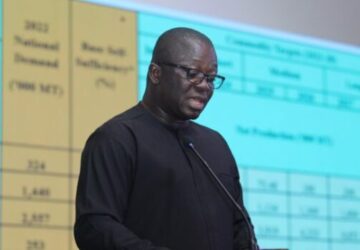
Mr. John Bewuah Edusei
“Our youth need jobs and a lot of agricultural schools and Universities have turned out so many agriculturalist onto the field. Persistently allowing the growth of this frozen Chicken importation, simply means that we are promoting the businesses of other countries from where these frozen Chicken are imported.
…By so doing we are also offering jobs to the outside world, when we patronise their produce. I am not in any way suggesting that the businesses of our Importers of frozen Chicken should collapse, I am rather calling and emphasising for the situation where our Chicken importers will invest in local broiler production.” He noted.
Mr. Bewuah Edusei who has been one great voice always advocating for governmental assistance for the poultry industry in Ghana speaking to journalists, pointed that Import values are around a minimum 350,000 metric tons, implying that Ghana eats about 1,000,000 KG of Chicken every single day.
Mr. Bewuah Edusei who is also the Secretary to the Hatcheries Association also questioned government’s plan to select what it called Anchor Farmers to grow broilers locally.
“In the 2024 Budget, read a few days ago, the finance Minister mentioned that there was going to be a selection of Anchor Farmers to grow Broilers locally. The question is, on which market are these going to be sold, when so much of Cheap, but poor quality, frozen Chicken have already flooded our markets. In a situation where the market is already chocked, when we say we are going to grow more, without cutting down on what comes in, forecasting for a possible market, where are we going to sell these local Broilers.” He queried worriedly.
Listing the stages through which the broiler business should pass in order to become a success, he therefore insisted that his proposal of a 10 percent cut of frozen chicken imports will be very helpful if government is serious about local broiler production.
“Joblessness and poverty are dangerous phenomena to our country. We have to work at it by encouraging our rich, frozen chicken importers to invest in local broiler poultry production, to produce to fill in the 10 percent cut off, with local broiler production.” He insisted.
KIC has announced a call for applications for the 2024 AgriTech Challenge Pro program. Nominations are open till November 24th 2023.
The AgriTech Challenge Pro program is supported by the Mastercard Foundation, through the KIC and the Mastercard Foundation partnership launched to train the next generation of young leaders and entrepreneurs in Ghana’s agricultural sector.
The KIC Agritech Challenge Pro is a five- month accelerator program aiming to support young entrepreneurs to launch and grow commercially viable, scalable solutions to key problems in the agricultural sector.
The program aims to drive technology and innovation as a catalyst to enhancing productivity, improving yields, and creating more jobs within Ghana’s agricultural sector. Participants are drawn from the AgriTech Challenge Classic program and from a pool of existing start-ups who are ready to nurture their business for investor-readiness. At the end of the training, KIC and its partners award some selected businesses with up to USD50,000 seed funding.
Past winners from the competition share their valuable experience gained through the capacity building and coaching received from the training. Speaking about impact of joining the KIC program, Caroline Amanor, co-founder and CEO of Maku Foods, a KIC supported business, mentioned that KIC’s AgriTech Challenge Pro had led to the growth of her business, citing the insights from the trainings, coaching and skills acquired by being part of the programme.
“We started very small. We were introduced to the KIC program, and since we joined we have learnt a lot. We were part of the winners for the 2022 AgriTech Challenge Pro competition and through the seed funding we received, we have been able to invest in building the business and purchasing more equipment for processing our ingredients into ready- to cook condiments and spices.
KIC helped position our business for growth and investor readiness,” she said.
Kosmos Innovation Center (KIC) is committed to empowering young people to find innovative and entrepreneurship opportunities within the agricultural value chain. For the 2023 AgriTech Pro, KIC awarded $350000 worth of seed funding to 11 startups.
Ends
About Kosmos Innovation Center: The Kosmos Innovation Center (KIC) invests in young entrepreneurs and small businesses who have big ideas and want to see their country grow. The KIC was established in Ghana in 2016 with programs focused on inspiring and empowering young entrepreneurs to drive change in their own country. Since its inception, the KIC has focused on innovation in agriculture – the country’s most important sector and largest employer.
More than 1300 aspiring entrepreneurs have participated in KIC Ghana programs, resulting in the creation of promising startups that have gone on to secure seed funding, additional business training, and capital investment.
About Mastercard Foundation: The Mastercard Foundation works with visionary organizations to enable young people in Africa and in Indigenous communities in Canada to access dignified and fulfilling work.
It is one of the largest private foundations in the world with a mission to advance learning and promote financial inclusion to create an inclusive and equitable world. It was established in 2006 through the generosity of Mastercard when it became a public company.
The Foundation is an independent organization, and its policies, operations, and program decisions are determined by its own Board of Directors and senior leadership team. It is a registered Canadian charity with offices in Toronto, Kigali,
Accra, Nairobi, Kampala, Lagos, Dakar, and Addis Ababa. For more information on the Foundation, please visit: www.mastercardfdn.org.
About Mastercard Foundation and KIC Partnership: Mastercard Foundation and KIC announced the launch of a multi-year partnership to train the next generation of young leaders and entrepreneurs in Ghana’s agriculture sector in May 2022.
Other key aspects of the partnership include the AgriTech Challenge Classic, AgriTech Challenge Pro, the KIC Incubation, Business Booster, and the Blue Skies Foundation School Farm Competition.
About AgriTech Challenge Pro: The KIC AgriTech Challenge Pro is an acceleration program aimed at equipping existing early-stage teams or AgriTech startups with the right tools, funding, and support to bring their business ideas or products to market and prepare them to scale.
The program was developed to create opportunities for teams that are already formed and looking to take their business to the next stage. KIC AgriTech Challenge Pro takes an inclusive approach, offering its services to all agricultural business teams in accordance with KIC’s goal of developing talent and advancing innovation in Ghana.
Media contacts:
mediarelations@kicghana.org
Follow us on:
Facebook | Twitter | Instagram| LinkedIn | YouTube | Website
The Executive Director of the National Service Scheme (NSS), Mr. Osei Assibey Antwi has announced that the Scheme has entered into partnership with Jospong Group of Companies and the Asian-African Consortium (AAC).
Mr.Osei Assibey Antwi,NSS Boss
This partnership, he said, is one of the concrete actions the Scheme is intentionally embarking on to implement its new goal of “Deployment for Employment”.
He said the expectation of the Scheme for this collaboration is to provide the service personnel with practical experiences to complement the theoretical concepts they have studied in the classroom.
Mr. Osei Assibey Antwi made the announcement at a two-day induction seminar themed “Service to enhance Ghana’s food security”, organized at the Pentecost Convention Center at Gomoah Fetteh in the Central Region for one thousand (1,000) national service personnel within the agricultural sector as a step towards nurturing a more resilient and food-sufficient Ghana,
The aim of the Scheme in this direction is to join hands with its partners to strategically deploy and groom the selected service personnel in agriculture to work towards food sufficiency and employment of the young graduates after their national service.,
Mr. Osei Assibey Antwi expressed his profound appreciation to the Jospong Group and the AAC for their partnership, saying it will provide a great opportunity for the National Service Personnel to become agric-prenuers and thus reduce graduate unemployment in the country.
Taking advantage of the occasion, the NSS Executive Director appealed to the nation’s institutions and colleges that provide agricultural programs to modernize their curricula and allow for meaningful practical attachments, as is the case in other professions like medicine.
Mr. Assibey Antwi admonished the service personnel to take this rare opportunity seriously. He reminded the current batch of service personnel that, as the Scheme’s first graduates following its golden jubilee anniversary, they are expected to set a new, constructive precedent that future batches will be proud to follow.
The NSS boss hint about additional programs that the Scheme is putting in place in other economic sectors, including housing and construction, ICT, tourism, and hospitality, all of which are aimed at supporting the Scheme’s goal of lowering the unemployment rate for Ghanaian graduates.
He also expressed his gratitude to some of the 2023–2024 national service personnel who were assigned to positions in the tourism and hospitality industries. He said that the graduates raised the occupancy rate of certain hotels in Ghana from 17% to 42% by using strategic advertising and inventiveness
Mr. Assibey Antwi hinted that according to a recent report from the research, monitoring, and evaluation unit of the Scheme, most of those national service personnel have secured permanent employment in sectors of the country’s economy.
On his part in addressing to the national service personnel, the Executive Chairman of the Jospong Group of Companies, Dr. Joseph Siaw-Agyepong, explained that over forty-six farmer groups across the sixteen regions of Ghana have been engaged to serve as centers to which the service personnel will be attached for training.
Dr. Siaw-Agyepong further intimated that over one hundred (100) full scholarships for post-graduate studies in agriculture in countries including Russia, Thailand, Japan, Nigeria, Tanzania, and Zimbabwe have been arranged for outstanding personnel at the end of the service year.
Telling a story of his own humble beginnings and how far he has come today, the Executive Chairman inspired the service personnel to be passionate about their work, put in a lot of effort, and be driven by good intentions.
For her part, the Chief Executive Officer of the Asian-African Consortium, Mrs. Adelaide Araba Siaw-Agyepong, expressed hope and optimism about the project, saying it will provide valuable hands-on experience for personnel as well as enhance their abilities across the entire rice production value chain.
She stated that the national service personnel will be exposed to trainings in land preparation, agricultural research, mechanized farming, sustainable and data-driven farming, safety and compliance, networking, and career development, among others.
The AAC boss further proclaimed that the program would open doors to future job prospects for national service personnel as they will, at the end of the service year, acquire expertise that will make them very competitive in the employment market.
The program had in attendance all the sixteen Regional Directors of the Scheme, senior Officers of the Scheme at the Head Office, and several distinguished stakeholders within the agriculture ecosystem of Ghana, including the president of the Ghana Rice Inter-professional Body (GRIB), Nana Kwabena Adjei Ayeh II, the 2021 national best youth farmer,
Ms. Marian Ofori Twumasi, the Deputy Minister for Agriculture (livestock), Hon. Alhaji Hardi Tufeiru, the Director of Research at the Youth Employment Agency, Agya Yaw Nsia, and other large-scale farm owners.
All these resource persons took their turns to motivate the service personnel present and kindle their interest in agriculture, emphasizing the fact that agriculture has too many opportunities to offer them.
Dr. Joseph Siaw-Agyepong, the Executive Chairman of the Jospong Group of Companies, blessed the personnel and prayed that they succeed in their service.
The zongohene of Mpasatia in the Atwima Mponua District of Ashanti, Chief Abdullai Mohammed has sent congratulatory message to the government for the recent cocoa price increment from GH 800 to GH 1308 per bag.
He said this would boost the morale of Cocoa farmers to take good care of their farms.
In his reaction shortly after the announcement by the President, Chief Abdullai who is also the President of Council of Zongo Chiefs of Mpasatia said the government has done well in this regard as he believes would encourage Ghanaians especially the youth to go into cocoa farming business.
According to him, though the increment would cushion Cocoa farmers a bit but they still need support ranging from agricultural inputs, supplying of Cocoa nurseries and loans.
On granting of loans to cocoa farmers, Chief Abdullai Mohammed indicated that, the government should go into terms with cocoa farmers who could meet the collateral conditions before granting the loans. He charged Ghana Cocoa Board ( COCOBOD ) and Cocoa Extension Division not to repeat mistake they did this year in the coming years. He said farmers were not supply with the nurseries this year but only supplied to farmers whose cocoa trees were old and destroyed by the government.
According to him,this caused frustration as they were not told earlier else they would have made proper arrangements on getting their own cocoa seedlings.
Chief Abdullai Mohammed stressed that he doesn’t understand why children are involving in other trades but when they accompany their parents to assist them in Cocoa farms they termed it as child labour.
He said the current cocoa farmers are getting old and “we need to nurture children to replace us when we die or pass on else the future of cocoa industry would be bleak.
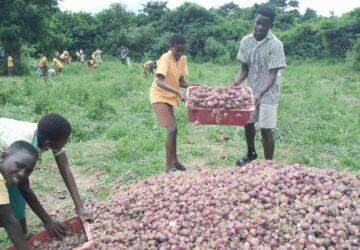
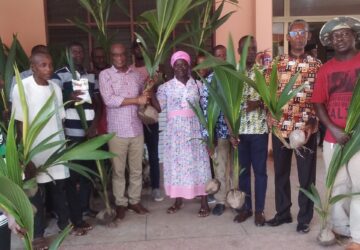
The Sagyimase Presbyterian Primary School, located in the Eastern Region of Ghana, has demonstrated the country’s potential to produce its own citronella (onion) locally.
Currently, Ghana spends millions of dollars to import onions from Niger, causing significant strain on the nation’s economy.
However, the efforts of these enterprising students have debunked prevailing notions, proving that Ghana has the capability to reduce or even halt this costly importation.
This article calls upon the Ghanaian government to either engage in state onion production or empower local farmers to take up this essential crop.
Furthermore, it emphasizes the urgent need for the Ministry of Food and Agriculture to establish a comprehensive onion production plan, which could potentially stabilize the local currency against the US dollar.
Ghana’s heavy reliance on imported onions from Niger has significantly impacted its economy. Weekly, the country spends at least $2 million on this import from Niger route alone, a figure that could be significantly reduced through local production.
Niger is the key exporter of dry onions in the West Africa region, responsible for almost two-thirds of total exports in 2021, according to market intelligence platform, Indexbox.
Figures from the Observatory of Economic Complexity (OEC) show that in 2021, Niger exported onions worth $23.4m, making it the world’s 31st largest exporter of onions.
In the same year, onions were the sixth-most exported product for Niger. The main destinations of onion exports from Niger were Ghana ($21.7m), Ivory Coast ($1.15m), Benin ($451,000), Togo ($84,500) and Nigeria ($35,100).
Fortunately, the Sagyimase Presbyterian Primary School has emerged as a beacon of hope, showcasing the country’s untapped potential for onion farming.
Sagyimase Presbyterian Primary School – Setting an Example
Located in the Eastern Region of Ghana, the Sagyimase Presbyterian Primary School has taken the lead in proving that Ghana the gate way to West Africa can successfully grow and harvest its own onions.
By cultivating citronella on school premises (School Farm), the students have demonstrated their commitment to showcasing Ghana’s agricultural capabilities and challenging dependence on onion imports.
Their success has prompted the need for broad-based action in both the government and agricultural sectors.
Government Intervention and Empowering Local Farmers
Given the potential shown by the Sagyimase Presbyterian Primary School, the Ghanaian government should take immediate action to either embark on state onion production or empower local farmers to step up.
This could be achieved through the allocation of funding and resources to support onion cultivation across the country.
Additionally, incentives such as increased access to loans, subsidized fertilizers, and technical assistance should be offered to local farmers to encourage mass production.
Development of a Workable Onion Production Plan
The Ministry of Food and Agriculture lead by industrious Bryan Acheampong has a crucial role to play in overcoming Ghana’s onion import dependency. The ministry must develop a comprehensive and practical onion production plan that takes into account soil suitability, climate conditions, and the latest farming techniques.
By providing guidance and support to local farmers interested in onion cultivation, the ministry can improve local production and bolster Ghana’s self-sufficiency.
Strengthening the Local Currency
Reducing onion imports would not only enhance Ghana’s economy but also mitigate the impact of currency fluctuations. By producing onions locally, the country would lessen its reliance on foreign markets and stabilize the Ghanaian cedi against the US dollar. This would bring about economic stability, fostering growth and development across various sectors.
Conclusion
The Sagyimase Presbyterian Primary School in Ghana’s Eastern Region has highlighted the untapped potential for onion production in the country.
By successfully cultivating citronella locally, these students have proved that Ghana is more than capable of reducing or even eliminating onion imports. It is imperative that the Ghanaian government takes decisive action by either engaging in state onion production or empowering local farmers.
Additionally, the Ministry of Food and Agriculture should develop a comprehensive onion production plan, which will not only enhance the country’s self-sufficiency but also contribute to economic stability. By addressing this issue, Ghana can embark on a path towards agricultural independence and sustainable development.
Credit: Isaac Justice Bediako broadcast Journalist (EIB-NETWORK)
The President of the Republic, Nana Addo Dankwa Akufo-Addo, on Saturday, announced GH¢1,308 the new producer price per bag of cocoa at an event in Tepa, in the Ashanti Region.
Speaking at the event, President Akufo-Addo stated that, until recently, international prices of cocoa had remained very low, and made worse by COVID-19, adding that, in spite of this, COCOBOD and Government have been taking the very hard decision of increasing producer price of cocoa.
Nana Akufo-Addo
“Cocoa prices have increased from seven thousand, six hundred cedis (GH¢7,600) per tonne in 2016, to twelve thousand, eight hundred cedis (GH¢12,800) per tonne in 2022, a significant increase of sixty-eight percent (68%). This has had an adverse impact on COCOBOD’s financial performance,” he said.
Eric Nana Agyemang Prempeh,NADMO boss interacting with Tepamanhene
Acknowledging that the sustainability of the entire cocoa industry hinges on a well remunerated producer, who is willing to invest in business only with the certainty that Government will pay the appropriate price, the President stated that Government, in keeping with its promise to cocoa farmers has increased the producer price.
According to President Akufo-Addo, Government has “increased cocoa prices from twelve thousand, eight hundred cedis (GH¢12,800) per ton, to twenty thousand, nine hundred and forty-three cedis (GH¢20,943) per ton, or one thousand, three hundred and eight cedis (GH¢1,308) per bag. That price is seventy-point-five percent (70.5%) of the Gross FoB price, and is equivalent to one thousand, eight hundred and twenty-one dollars ($1,821) per ton.”
This, the President indicated,” is the highest price to be paid to cocoa farmers across West Africa in some fifty (50) years. With the predicted stable prices above two thousand, six hundred United States dollars (US$2,600) threshold, Government will continue to honour our famers with good prices in the years ahead. Indeed, better days are ahead.”
Unprecedented Transformation
Describing the cocoa landscape as witnessing an unprecedented transformation under his government, President Akufo-Addo noted that the productivity enhancement programmes being implemented by COCOBOD are having a positive impact on productivity, incomes and climate resilience.
COCOBOD, the President said, continues to undertake the rehabilitation of diseased farms free of charge through the programme, explaining that the programme entails a one-off payment of compensation to both the land owner and the tenant farmer, and involves cutting, treatment and replanting of the affected farm, and the maintenance of the farm for a period of two (2) years before it is handed over to the farmer.
“In addition to the payment of compensation of one thousand cedis (GH¢1000) per hectare, paid separately to both land owner and tenant, COCOBOD bears the entire cost of the cutting, treating, replanting and maintenance for two (2) years before it is handed over to the farmer. Compensation paid to both landlords and famers stands at one hundred and twelve million six hundred and eight-six thousand, and forty cedis (GH¢112,686,040) as at September 2022,” he said.
COCOBOD, the President noted, has also rolled out a Contributory Scheme, under the new Three-Tier Pension Scheme for cocoa farmers. Enrolment has started, and will continue, and will, thus, make way for contributions from farmers and COCOBOD in the coming season.
COCOBOD, he said, is expected to contribute some seventy-four point five million cedis (GH¢74.5million) to the fund this year.
“The Scheme will enable cocoa farmers also to save towards their retirement, so as to guarantee income security, improved living standards in their old age, and motivate the youth to venture into cocoa farming,” he stated.
President Akufo-Addo continued, “This is the first successful attempt to give effect to section 26(1) of the Ghana Cocoa Board Act, 1984, PNDCL 84, which provides for the setting up of the Scheme. This has been made possible because of the implementation of the cocoa management system, which has provided the needed data and digital foundation for the Scheme to be successful.”
Co-operation between Ghana and Cote d’Ivoire, in the cocoa industry, he stated, has already yielded good results for the industry, following the adoption and implementation of the Living Income Differential (LID).
“The LID is an additional amount of four hundred United States dollars ($400) per ton on the price of cocoa, paid on every ton of cocoa purchased from Ghana and Cote d’Ivoire. The LID is paid fully to the farmers, as a cushion to adverse effects of low international prices of cocoa. The LID has increased the average farmers’ income by seven hundred United States dollars ($700) per ton. It is the first successful attempt by producer countries to influence incomes of cocoa famers through an international pricing mechanism,” he added.
Government, the President stated, has also rolled out a digitisation programme to digitize all operations of the sector, enhance traceability and efficient management of the domestic supply chain, through a comprehensive, integrated digital database that captures farm and farmer information, including the physical conditions of farms and farmer household characteristics.
Under the industrialisation drive, he indicated that “value addition in the cocoa industry has increased significantly, from thirty percent (30%) of annual output in 2016 to forty-eight percent (48%) in 2022. The target of processing fifty percent (50%) of the production locally is within immediate reach.”
He continued, “The promotion of domestic consumption is also beginning to yield results. Domestic enterprises have emerged strongly under the 1D1F initiative for the processing and manufacturing of various cocoa based products across the Districts. COCOBOD has taken a giant step to support small scale and artisanal chocolate manufacturing with business-friendly guidelines that provide access to premium Ghanaian beans, even at the district level.”
Through these innovations, President Akufo-Addo noted that some one hundred and thirty thousand (130,000) jobs have been created, reiterating that “Government will, through COCOBOD, continue to adopt innovations aimed at improving the welfare of the Ghanaian farmer through the implementation of productivity enhancement programmes and remunerative producer pricing.”
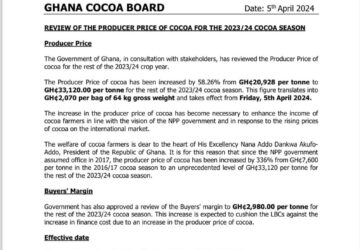
The government has announced a new cocoa price at the opening of the 2023/2024 cocoa season.
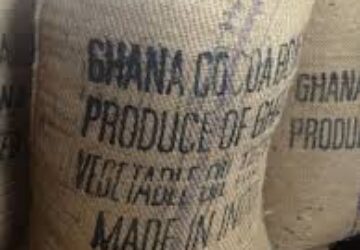
A bag of cocoa has moved from GH¢800.00 to GH¢1,308.00 per bag.
The new price moved the price per tonne from GH¢ 12,800.00 to GH¢ 20,943.00.
The new price represents 63.5 per cent increment of the previous one.
The President Nana Addo Dankwa Akufo-Addo announced this at Tepa on Saturday, September 9, 2023.
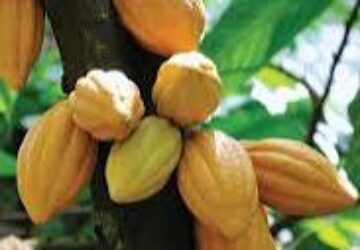
A bag of Cocoa
He said the new price was the highest in the sub region in the last 15 years and was meant to improve the livelihoods of the farmers and for a fair and remunerative price for their efforts.
The President of the Republic, Nana Addo Dankwa Akufo-Addo, on Wednesday, 30th August 2023, commissioned the Electrochem Salt Mine in Sege, in the Ada West district.
The Mine, operated by the McDan Group, currently has the ability to produce some six hundred and fifty thousand metric tons (650,000 MT) of salt per annum. The Mine is expected to increase its productive capacity to one million metric tons in 2024, and to two million metric tons by 2027, making it the biggest salt producing facility in Africa.
Addressing the gathering at the event, President Akufo-Addo noted that for some fifty-four (54) years, successive Governments have tried, without success, to harness the full value of the Songhor Lagoon.
“I am glad that under the Government of Nana Addo Dankwa Akufo-Addo, the Songhor Lagoon is being brought into full production for the benefit of residents of Ada and citizens of the entire nation,” he said.
According to President Akufo-Addo, “The man who is to receive the plaudits for the brilliance of what we are witnessing today is the courageous, excellent entrepreneur, Mr. Daniel McKorley, aka McDan. This is the first time in recent history that an indigenous Ghanaian businessman owns one of the biggest extractive industries in Africa. He is a shining example of what determination and perseverance can produce. Ayekoo!!”
Recounting a news item he came across in the run-up to the 2008 elections, the President stated that he was startled by a news report which suggested that the Federal Republic of Nigeria was in the process of importing two billion dollars’ worth of salt from Brazil.
“You can imagine the thoughts that were running through my mind. Think with me for a moment about the prospects of Ghana selling two billion dollars ($2 billion) worth of salt to Nigeria and the ripple effects the sale of such a simple commodity, which Nigeria and, indeed, many other countries in West Africa import from other continents, can have on our economy,” he added.
As an advocate for value-addition activities since coming into office in January 2017, evidenced in the implementation of the 1-District-1-Factory policy, President Akufo-Addo was delighted that Electrochem is in the process of constructing a salt refinery, in addition to a Port not too far away from here for the purpose of exporting refined salt products to the wider African market.
With Accra serving as the headquarters of the Secretariat of the African Continental Free Trade Area, the President was confident that the expected revenues of some one billion dollars ($1 billion) to the company will be surpassed.
He extended the appreciation of the Government and people of Ghana to the Paramount Chief of the Ada Traditional Area, Nene Abram Kabu Akuaku III, his Chiefs, and to the people of Ada for the support given to the success of the project.
President Akufo-Addo also took notice of the request by McDan in his speech requesting for the construction of some major road projects leading to the mine.
He assured that “I will put these requests before the Minister for Roads and Highways, and ensure that he does his best to construct the roads. I intend to take a personal interest in them.”
The President reiterated his belief that not only is Ghana the best place for doing business in West Africa, but she is also the preferred destination for a perfect blend of mineral resource potential, stable regulatory environment, favourable fiscal regime, and socially responsive mining in Africa.
“In spite of our present challenges, I maintain that it is an exciting time to be in Ghana, and do business in the country.
The Akufo-Addo Government is determined to make Ghana an example of rapid economic growth within the context of a well-developed market economy, where the private sector does not only survive, but actually thrives,” President Akufo-Addo stated.