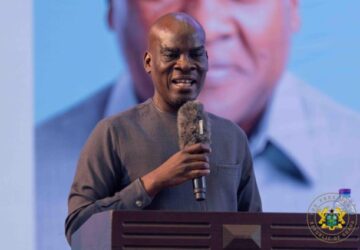
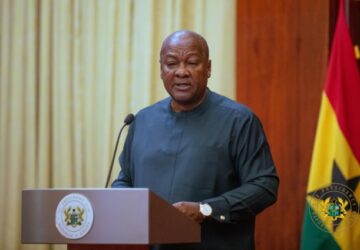
President Akufo-Addo has expressed his pride in the successful implementation of the Free Senior High School (FSHS) policy, introduced by his government in 2017.
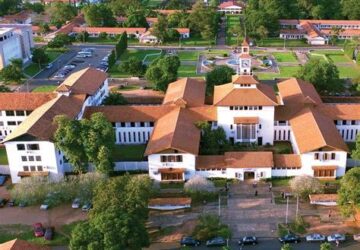
Speaking at the climax of the 75th Anniversary of Prempeh College in Kumasi, the President said despite the shortcomings of the program amidst global economic challenges, his government has maintained its commitment to providing free secondary education to all Ghanaian students.
“I’m proud that despite the COVID-19 pandemic, we have maintained and saw the successful implementation of the Free SHS policy,” President Akufo-Addo said.
“We have not wavered in our commitment to providing free education to all Ghanaian students, and we will continue to work towards making sure that every child in Ghana has access to quality education”.
The Free SHS policy was introduced by the Akufo-Addo government in 2017 to increase access to education for all Ghanaian students. The policy has been widely praised for its impact on education in Ghana, with over 5.7 million students benefiting from the program so far.
However, the policy has also faced several challenges, including funding constraints, infrastructure deficits, and concerns about the quality of education.
Despite these challenges, President Akufo-Addo says his government has worked hard to address them and ensure the success of the program.
“We have invested heavily in the education sector more than any other government. Our investment cuts across various sectors including infrastructure,” he said.
The President also announced his government will continue to work towards improving the quality of education in Ghana, including the introduction of new programs and initiatives to support students and teachers.
The success of the Free SHS policy is expected to continue to have a major impact on education in Ghana and to help to improve the country’s human development indicators.
As Ghana approaches a critical election year, citizens are voicing strong support for the continuation of certain key government programmes, while calling for the end of others.
According to a newly released report by Afrobarometer, a majority of Ghanaians — 85% — want the Free Senior High School initiative to continue, along with the Planting for Food and Jobs programme (81%), One District One Factory (71%), and the One Village One Dam policy (60%).Best online courses
However, there is significant public opposition to the electronic transactions levy (E-levy), with 79% of respondents favouring its discontinuation.
Economic Concerns and Priorities for the Next Government
When asked about the most pressing issues for the government to address, Ghanaians identified unemployment as their top concern, with 41% citing it as the most urgent problem.
Infrastructure and road development followed closely at 38%, while healthcare ranked third, with 33% indicating it as a primary need.
These priorities highlight the public’s focus on tangible improvements in job creation, connectivity, and essential services.
Rising Economic Hardships
The report also underscores the growing economic challenges faced by Ghanaians. In the past year, an alarming 82% of the population reported experiencing some level of poverty, with 45% noting they have faced moderate to high levels of poverty.
This represents a stark increase from 2017, when only 19% reported similar economic distress.
Seven in 10 respondents reported going without a cash income at least once over the past year, and many experienced shortages in essential services: 54% faced challenges accessing medical care, 44% reported difficulties with water availability, 44% encountered food shortages, and 42% struggled to secure cooking fuel.
Dwindling Optimism and Negative Assessments of Government Performance
A majority of Ghanaians expressed dissatisfaction with the current direction of the country, with fewer than half — 45% — expecting economic conditions to improve in the next year.
Ratings of the government’s economic performance have plummeted, reflecting public frustration over the state of the economy and the impact of policies that, many say, have not adequately addressed rising costs of living and access to essential services.
As the nation heads into an election season, these survey findings signal that Ghanaians are looking for both continuity in popular social programmes and a shift in economic policies that can better address rising unemployment, infrastructure gaps, and access to quality healthcare.
The demand for sustainable policies, alongside the public’s growing economic concerns, will likely shape political debates and influence voter choices in the 2024 elections.
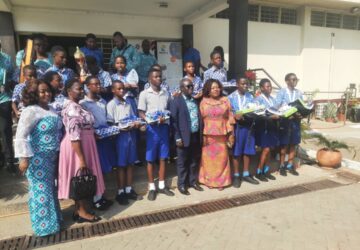
State Experimental M/A Basic School One in Kumasi has held a durbar to commemorate this year’s International Day of the Girl Child. The event was observed under the global theme: “Elevating Girls’ Voices for Sustainable Development”. Activities lined up for the event included poetry recitals, choreography, a cultural display, a talk and experience sharing. The program was sponsored by The Gaderens Initiative.
Headmistress, State Experimental M/A Basic School One,
The International Day of the Girl Child is observed annually by United Nations member countries to promote the empowerment of girls in realizing their human rights and to encourage citizens to take action by engaging government officials, policymakers, and stakeholders in making more targeted investments to address the inequalities experienced by girls.
The Day is also celebrated to help address the unique challenges and barriers encountered by girls in achieving their future ambitions. The durbar, organized by State Experimental M/A Basic School One in Kumasi to mark International Day of the Girl Child was supported by The Garderens Initiative, a Not for Profit Organization based in Kumasi.
The Headmistress of State Experimental M/A Basic School One, Madam Joana Anokyewaa said girls deserve the same opportunities as boys to reach their full potential and the school is working assiduously to achieve it. According to her, the transformative power of the voices of girls and their persuasive leadership skills create positive change in society.
“Girls continue to face numerous challenges from limited access to education and healthcare to discrimination and violence and these obstacles hinder their full potential. Indeed when our investment in the Girl child is able to transform their lives, I assure you that, the nation will spend very little resources in fighting unemployment, poverty, illiteracy, child marriage and child prostitution. I’m calling on the government and non-governmental organizations to invest heavily in the girl child by creating opportunities through providing quality education, focusing on STEM and critical thinking, creating safe spaces for self expression and empowerment as well as offering mentorship and fostering leadership opportunities and participation in decision making” Madam Anokyewaa emphasized.
The Executive Director of The Gaderens Initiative, Dr. Gertrude Aboah said it is important to address the social determinants that affects mental health and hinder girls to reach their full potential.
“Our view of mental health is that, it is not only about having a mental disorder but it is about allowing the girl- child to reach their full potential and becoming everything they are meant to be. We also tackle the social determinants, that affect mental health such as lack of opportunities and gender inequality. That’s why we chose to support the programme to empower them for thier voices to be heard and know that it is possible to realize their full potential” Dr. Gertrude Aboah explained.
In a keynote address, a Senior Nursing Officer, at Komfo Anokye Teaching Hospital, KATH, Mad. Marilyn Mawusi Ama Azumah,
acknowledged the potential embedded in young girls which they need to be helped to discover. “The purpose of the programme is to remind girls to know that they are special and they are capable of doing anything they set their minds to do. They need to pay attention to know who they are as individuals, explore talents and to overcome their low self-esteem” , Mad Marilyn Azumah indicated.
The Girls’ Prefect, Juliana Sarkodie appealed to the government and all stakeholders to make the issues of girl child a priority and create an enabling environment to make it easier for the girl-child to thrive.
The Director of Communications for the governing New Patriotic Party (NPP), Richard Ahiagbah, has credited the Free Senior High School (FSHS) policy with a 35.1 percent increase in student enrolment in the Volta Region, a milestone he described as vital for the region’s development.
Addressing a press conference on the “abuse of the electoral loyalty of the Volta Region” on October 30, 2024, at the NPP’s Regional Headquarters in Ho, Ahiagbah underscored that the FSHS policy has eased the financial burdens on families, particularly empowering female students to continue their education.
Richard Ahiagbah
“The Free SHS policy has been transformative for the Volta Region, lifting financial constraints that previously prevented many families from sending their children to school, especially girls,” Mr. Ahiagbah stated. “Today, we have achieved gender parity at the SHS level, thanks to this policy, which ensures that girls have equal access to secondary education.”
According to Ahiagbah, the policy’s impact on gender parity represents a significant step forward for the region and underscores the NPP’s commitment to equitable education access.
Mr Ahiagbah highlighted that the 35.1 percent increase in enrolment is a strong indication of the Volta Region’s potential to thrive educationally and economically if given the right support. “Increasing enrolment figures is about more than just numbers; it’s about investing in the future of this region,” he remarked. “An educated population is the foundation of development, and by removing financial barriers, we are building a more skilled and empowered workforce for the future.”
NDC Propaganda
Responding to claims by the opposition National Democratic Congress (NDC), Ahiagbah addressed what he called “deceptive propaganda” concerning the double-track system implemented initially to accommodate the influx of students entering secondary school. Critics, including NDC representatives, have argued that the system’s staggered schedule contributed to an increase in early pregnancies among female students.
Ahiagbah dismissed these claims as baseless, emphasizing that such assertions overlooked the broader positive impact of the FSHS policy on female students’ educational opportunities.
“It’s shameless propaganda from the NDC to suggest that the double-track system led to pregnancies among young women. This line of attack ignores the reality: the FSHS policy has given thousands of female students the chance to pursue their education rather than being left behind,” he contended. “If not for the FSHS, how many female students would still be excluded from the classroom, particularly here in the Volta Region?” Ahiagbah asked.
He stressed that: “What we must be concerned about in the Volta Region is the education of our children to compete at the highest levels because of the elimination of the cost barrier, which has forced many in the past to drop out of school”.
In his view, only the NPP can protect and improve the FSHS policy because the NDC considers it a 419 scam. “Former President John Mahama said that if he had GHS 2 billion to invest, he would not invest in FSHS. If H.E. Mahama becomes president, he will not invest in FSHS. Mahama will kill FSHS, plain and simple,” he added.
He added: “My accomplished educationist brother, Christopher Ahiagba, told me how he got through school. Because he was not given pocket money for school, he and his brothers would hunt rats to trade for their upkeep. Today, thanks to the FSHS policy, no child in the Volta Region has to suffer that fate. Apart from Eworkple and Aborbitadi, education is the next favorite thing for our people. Let’s vote on 7 December to protect the FSHS”.
Educational infrastructure
He stated that to address the increased number of students taking advantage of the FSHS in the Volta Region, the government initiated 134 classroom projects and has completed 92, which are being used, and the remaining 42 are near completion.
He mentioned that the government had invested to boost rural connectivity in the Volta Region. “A total of 54 rural telephony projects were initiated, of which 52 have been completed and are operational, enhancing the quality of life in these communities. These communities existed when the NDC was in power between 2008 and 2016 but failed to meet the people’s fundamental needs,” he cited.
Source: tntnewspapergh.com
The Education Ministry has cautioned all parents/guardians not to pay any money to anyone at the solution centres at the ongoing Computerized School Placement System (CSSPS) across the country.
This, according to the Ministry would ensure that no parent or guardian was burdened with financial issues while going through the solution process for their children to be placed at the school of their choice.
Madam Afra Sika Mensah
Madam Afra Sika Mensah, Deputy National Coordinator of the Free Senior High School (FSHS) programme, who announced this to the media in Accra on Tuesday also urged parents to desist from engaging the services of people hovering around the centres (Golo boys).
She explained that rather they should engage only designated officials who have been tagged at the centres to help them resolve their issues relating to the placement of their children.
High turnout
The Deputy National Director described the high turnout at the centres during the first two days of the exercise as very good since it was an indication of parents showing interest in the CSSPS exercise.
Madam Afra also reminded parents/guardians to desist from leaving their children alone to go to the solution centres since that would not help the course of the exercise but rather development keen interest in the exercise so they could ask all the critical questions when they engage the officials at the centres.
She mentioned change of school, no placement at all, re-entry and change of residential status as among the issues brought the various centres across the country.
Background
The Education Ministry recently announced the commencement of the CSSPS to give the opportunity candidates who could not be placed in their choice of school to do self-placement.
Again, the ongoing exercise would create an opportunity for parents to make changes such as wrong placement to schools for example boys placed in girls’ schools and vice versa.
A total of 447,698 candidates have been automatically placed in Senior High Schools (SHS’s) as well as Technical Institutions (TI’s) across the country.
The figure represents 80.93 per cent of all qualified candidates who sat the examination this year while the remaining candidates are to do self-placement so they can go to school.
Source: tntnewspapergh.com
The construction of state-of-the-art school infrastructure and other educational projects across the country is geared towards creating an enabling environment for the training of 21st-century graduates.
Massive infrastructure, including classroom blocks, dormitories, science laboratories, ICT laboratories, and STEM institutions, is gradually shaping the country’s fortunes in diverse ways.
Speaking at the 54th Speech and Prize-Giving Day and Homecoming of the Jachie Pramso Senior High School in the Ashanti region, Dr Yaw Osei Adutwum, Minister for Education, announced that President Nana Addo Dankwa Akufo-Addo’s huge investment in the education sector was to transform the nation through education.
Dr.Osei Yaw Adutwun
The theme for the event was “The relevance of the current educational system to national development : Its priorities and renewed aspirations for the Ghanaian child”.
He therefore urged all Ghanaians to remember to vote for Dr Mahamudu Bawumia to continue the innovative projects and developments initiatives ongoing in the country.
Evidence-Based Communication
The Education Minister who is also the Member of Parliament for Bosomtwe spent quality time mentioning the various innovations and policies that have been introduced in the nation’s education space with the help of videos and pictures which he described as “Evidence-Based Communication”.
Dr Adutwum praised President Nana Akufo Addo for his support and desire to vote for huge budget support towards the funding education of education across various levels.
He assured the school of his readiness to continue providing the right resources towards the development of the school to promote effective teaching and learning in the school.
Commendation for commitment
The President of the Old Students Association of JAPASS, Mr George Ernest Asare, said, “In spite of the short notice to members on the 54th Speech and Prize Giving Day being held today, you responded positively and made valuable contributions to the organizers”.
He commended all the old students and other people who came to their aimed as they were planning the anniversary.
Mr Asare said “As old students, we should continue to strive to support our alma mater to achieve excellence in all fields of endeavour. It is for this reason that we have decided to develop a Smart Block, which will act as a digital library for our students “.
The Headmaster of the School, Mr Benjamin Kye Ampadu, in his address stated that the school which was established in October 15, 1970, as a government-assisted secondary school with 134 students now has become a thriving educational community of 4,246 students with a staff strength of 185 teaching and 105 non-teaching staff.
He stated that the vision of the management now was to ensure that at least 95 per cent or more of their students secure admission to tertiary institutions worldwide, up from the current average of 71 per cent.
Prudent strategies
Mr Ampadu mentioned the introduction of several initiatives to drive academic excellence such as Vacation Assessment Test (VAT), Literacy and Numeracy, Drop Everything and Read (DEAR PROGRAMME) as well as Mind Your Language to enhance language proficiency.
The Chief of Jachie, Baffour Kwaku Amoateng IV, praised the various stakeholders who have assisted the school in diverse ways over the years to reach where it is now.
He stated that the school had trained thousands of people who are working in diverse positions in the country and beyond and urged the students to remain focused so they can achieve their set goals for their future.
The Director-General of the National Service Authority, Mr. Osei Assibey Antwi, has commended the Ghanaian media for its unwavering support and objective reportage on the Authority’s activities.
He explained that for the past fifty years, the media has played a significant role in the National Service Scheme activities. He encouraged the media to continue to support the Authority in the spirit of mutual respect and commitment to building a better Ghana for all Ghanaians.
Mr. Osei Assibey Antwi made these statements during a media engagement event organized as part of activities for the official transition of the National Service Scheme to the National Service Authority.
The Director-General observed that, for fifty years, the National Service Scheme performed its core mandate of mobilizing and deploying eligible Ghanaians to the various sectors of the Ghanaian economy for national development, and that the Scheme has successfully achieved its expected targets. “However, we need to do more now as an Authority”, he added.
Mr. Osei Assibey Antwi reiterated the need to maintain the bond between the Authority and the media “as we do whatever we can to ensure the development of the country’s youth.”
He noted that some sections of the public misconstrue the activities of the Authority, and regrettably, some sections of the media carry such stories on them. He, therefore, urged the media to be guided by their journalistic principles of “check, cross-check, and check again”, especially when reporting on matters concerning the Authority.
He said some of the issues about national service, especially regarding postings and the attitudes of some of the user agencies that come into the public space are skewed and therefore clarity needs to be sought first from Management before publication.
The Director-General of the National Service Authority addressing the media
This, he said, is important because Ghanaians generally are concerned about national service issues because hundreds of thousands of families at every point in time have their wards doing their national service.
Mr. Osei Assibey Antwi said that more responsibilities are placed on the Management and staff, now that the Scheme has become an Authority. He said, “Becoming an Authority means that we need to change our attitudes towards the work we do and be more responsive to the expectations of the general public, especially our major stakeholders”.
He added, “Many of the things that we do must meet the general expectations of the public, especially regarding our deployment exercise, which is our core mandate as an Authority”.
A cross-section of the media and audience
Responding to concerns and questions from the media, the Deputy Director-General of the Authority in charge of General Services, Mrs. Gifty Oware-Mensah cleared the perception that all deployments of the Authority are allegedly done based on “protocol postings” for children and relatives of rich and influential personalities of the society.
She explained that people with special needs and disabilities, married women, pregnant women, and those who are specifically requested by tertiary institutions and other user agencies are usually given special consideration to be posted to specified places. These, however, do not transcend the specifically identified individuals to every person in the posting process.
She urged the media to disregard sensational rumours and always seek the truth from Management to enrich their stories on the Authority. “Our doors are always open for you the media to come verify whatever you need to know, and we will always be here to welcome you and to provide you with the needed information about the Authority”, she added.
Members of the media were grateful for the opportunity offered to them to seek clarifications on their doubts about the Authority and its operations and activities.
The Ministry of Education has officially released the 2024/25 placement results for students entering Senior High Schools and Technical and Vocational Education and Training (TVET) Institutions.
This release allows thousands of students to check their school placements and secure admission for the upcoming academic year.
According to a statement by the Ministry, of the 563,339 results received from the West African Examinations Council (WAEC), a total of 553,155 candidates qualified for placement.

A file photo
Out of these, 447,698 candidates, making up 80.93% of the qualified group, were automatically placed into one of their selected school choices.
However, not all candidates were successfully matched. Approximately 104,918 qualified students could not be placed in any of their preferred choices.
To assist these students, the Ministry has encouraged them to use the Self-Placement platform, where they can select schools that still have available slots.
For those checking their placement status, the Ministry has provided a step-by-step process. Qualified students are to visit the official CSSPS website at https://www.cssps.gov.gh or https://www.cssps.org, enter their ten-digit index number followed by the year of completion (formatted as 123456789024 for 2024), and submit their information to view their placement results.
Additionally, the Ministry has set up multiple resources to assist the public, including the National Solution Centre at GNAT Hall, Adabraka, Accra, as well as 16 Regional Solution Centres.
Students and parents can also call the helpline at 0308258001 for further assistance with any placement-related inquiries.Attached below is the full statement;
A total of 21, 103 learners in the North East Region have been successfully transitioned into mainstream schools under the Ghana Education Outcomes Project (GEOP) as part of efforts to encourage out-of-school children to access formal education.
The learners, who constituted cohort two of the project passed the Accelerated Learning Programme (API) in literacy and numeracy in their mother tongue, and as such, have acquired the instructional training as outlined in the Complementary Basic Education (CBE) policy.
Some scenes from the event
Beneficiary districts of the programme in the region included Bunkprugu/Nakpanduri, Yunyoo/Nasuan, Chereponi, East Mamprusi, Mamprugu Moaduri and West Mamprusi District.
Hajia Nana Fatima High, GEOP Coordinator at a durbar held in Walewale in the West Mamprusi Municipality of the North East Region to officially transition learners into the mainstream schools, said learners prior to the transitioning were taken through rigorous baseline and end-line assessments.
The durbar held under the theme “Getting All Children Educated through Support to Schools and Communities” was organized by the Ministry of Education in collaboration with its implementing partners including Plan International Ghana among others.
It was attended by various stakeholders in education such as chiefs and other traditional and religious leaders, and community leaders, among others.
Hajia High indicated that GEOP for the past two years, have implemented two ALP cohorts in literacy and numeracy which have benefited approximately 38,443 learners.
She commended the Ministry of Education, World Bank, National Council for Curriculum Assessment (NaCCA) and other partners for their unwavering commitment to supporting out-of-school learners in the area.
She advised the learners saying “Always remember that education is your passport to a brighter future, so stay committed to this great cause and doors of opportunities will continue to unlock for you”.
The Minister of Education, Dr Yaw Osei Adutwum, in an address read for him by Nana Baffour Awuah, Director of Pre-Tertiary Education at the Ministry of Education, said the Ministry has hitherto transitioned 17,340 learners into mainstream schools in the Savelugu Municipality of Northern Region after the successful completion of the first cohort of the ALP.
He said they have made a considerable improvement by increasing the number of learners in cohort two by 3, 673 learners.
He said education was the cornerstone of development, adding that the Ministry was implementing the GEOP to give school dropouts and street children a second chance to achieve their dreams.
Mr Sulemana Gbana Hor, the Northern Program Manager of Plan International Ghana an NGO, said they have supported in equipping teachers with the tools needed to improve teaching quality and learning outcomes in 239 mainstream school improvement programmes throughout three regions and in eleven districts.
He said “We have provided targeted training to teachers empowering them to deliver remedial lessons to underperforming students to facilitate their academic progress.
Mr Hor, urged all stakeholders in the region to recognize the importance of education, adding that it is not only about academic success but also about creating future leaders who would contribute to the growth and development of the communities and the nation at large.
Mr Simon Anaane Amokase, the North East Regional Director of the Ghana Education Service (GES) said the project has contributed to an increase in school enrollment and attendance and also helped to improve positive teaching and learning outcomes in the region.
He added that the involvement of parents and community members in the education processes of the learners has been enhanced.
Mr Seidu Mutalib Abubakari, a beneficiary and an ambassador of the project who is now a University graduate praised the Ministry of Education and partners, saying “But for their support some of us including many other children in the region would not have gotten formal education”.
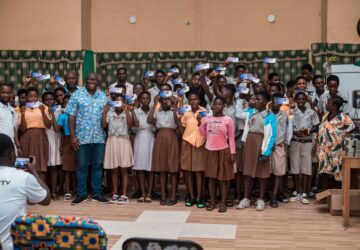
Learners after the durbar received learning materials such as pens, pencils, erasers, mathematical sets, and sports kits among others to support them in the schools.
A six-member delegation from the Zambian Higher Education Loans and Scholarship Board last Tuesday visited the Students Loan Trust Fund’s headquarters in Accra.
on
The delegation which comprised of three members of the board and three members of the management team are in the country for a four-day tour aimed at understudying how Ghana’s SLTF system operates so they could replicate it in their country.
Since their arrival of Monday, the team has been engaging the management of the SLTF on several areas of their operations such as the scope of work, financial sustainability models, digital transformation, governance, partnership and stakeholders engagement among other issues.
Some scenes from the meeting
During a courtesy call at the Education Ministry, Dr Yaw Osei Adutwum announced that the ongoing reforms in Ghana’s education system was aimed at ensuring that it matches with the current global standard.
He explained that the various interventions introduced during the past seven years had transformed the education space drastically.
The Education Minister who is also the Member of Parliament for Bosomtwe stated that the ongoing reforms in the country was to ensure that students acquired the 21st century education in the right environment and not in the 19th century learning environment.
He spent much time enumerating the various novel innovations in the nation’s education sector to the delegation amidst the display of pictures and videos to support his statements.
The Education Minister described the relationship between Ghana and Zambia as very cordial dating back to decades of good relationship.
Readiness to support
He indicated that Ghana was ready to support any country that comes to seek support towards the transformation of its education system since the continent cannot remain poor due to a lack of good education.
Prudent operations
The Chief Executive Officer of SLTF, Mr Nuhu Bayorbo Mahama, stated that his outfit would continue to maintain its position in prudent management of the fund to help students to have access to the funds when necessary.
He assured the delegation of the SLTF readiness to continue providing them with the needed support to enable them replicate their success story in their country.
The CEO praised Zambia for choosing Ghana as the country they wanted to learn from and stated that they would be ready to also visit Zambia when called upon to come and guide them during their operations.
Leader of the delegation
The leader of the Zambian delegation, Mr Geoffrey Samukongo, who is the Chairman of the Higher Education Loans and Scholarship Board, said the visit was to have a valuable insight into the best practices, particularly in areas such as funding mechanisms, recovery strategies and system digitalization.
Again the visit was to help them learn about how the SLTF had been able to manage a large-scale financial aid programme so it can help them replicate it in their country.
He described Ghana’s current education system as a model for the African continent and thanked Dr Adutwum, the Education Minister and the government for their vision and efforts towards transforming the nation through education development.