BY KINGSLEY E.HOPE
Diesel Dawn at Asafo
At five in the morning, Kumasi awakens with the guttural roar of diesel engines. Haulage trucks, articulated lorries, and commuter minibuses idle in tight rows, their exhaust hanging heavy in the humid air.
Ama Serwaa, a provisions vendor at Asafo Market, wipes soot from her glass display case and sighs.


“By the afternoon your chest tightens, your eyes burn,” she says in Twi. “But you cannot sell provisions from home.”
Across town at Kejetia Market, a vegetable trader coughs as she arranges her produce. In Suame Magazine, a mechanic rubs black dust from his tools. Their voices echo Serwaa’s: Kumasi’s air is a silent burden carried daily by its workers.
That burden is part of a larger crisis. Across Ghana, air pollution is estimated to cause 32,500 premature deaths annually — about 14 percent of all deaths in the country, according to the State of Global Air 2025 report.


But the burden and the solutions are not shared equally.
The country’s capital Accra has become the showcase of Ghana’s clean air movement. Campaigns including Breathe Accra, supported by Bloomberg Philanthropies, C40 Cities, and the Clean Air Fund, have seen more than sixty sensors feeding real‑time dashboards. Regulators can pinpoint hotspots and act.
But in Kumasi, that ecosystem shrinks. Despite being a freight crossroads with levels of the most dangerous particles at five times the World Health Organisation’s guidelines, Kumasi has far more limited monitoring. There are six functional sensors currently concentrated within the Kumasi metropolis, transmitting live data feeds to the EPA’s national headquarters in Accra, according to Dr Jackson Ediah Nyantakyi, the EPA’s regional director. Not near enough to monitor the area’s 43 districts.
Kumasi’s citizens are bathed in vehicular emissions, unpaved roads, human activities, and industrial emissions. Seasonal variations mean rain neutralizes dust, while harmattan brings elevated Sahara dust.
In 2025, Parliament passed the Air Quality Management Regulations empowering the Environmental Protection Authority to enforce national limits on pollution from factories, vehicles, and other sources. The Authority was quick to act in Accra, shutting down polluting companies in recent months. The most high-profile example was the shutdown of Empire Cement Ghana in September for severe air pollution and repeated breaches of its environmental permit. The company was ordered to halt operations until it installed modern pollution control systems and complied with Ghana’s emission standards.
But in Kumasi there has been no such action.
At Komfo Anokye Teaching Hospital, pulmonologist Dr Sandra Owusu‑Kwarteng, sees the damage daily. The smallest and most dangerous air pollution particles – thirty times smaller than a human hair – bypass natural barriers, lodge deep in lungs, and enter the bloodstream from there they are conveyed to every organ in the body causing havoc.
Dr Sandra Owusu‑Kwarteng’s team treats patients with unexplained respiratory distress, Chronic Obstructive Pulmonary Disease (known as COPD) in non‑smokers, adult‑onset asthma, diabetes, hypertension, strokes, and cardiovascular complications — all diseases linked to air pollution exposure. “We see the unequivocal clinical damage every day,” she says. “Yet without monitoring tools, these diseases remain statistically invisible in national policy.”
Experts say Kumasi and other major cities must not be left behind.
“Ghana’s investments in air quality monitoring infrastructure are very minimal — and within the country Accra has received far more monitoring interventions,” says Desmond Appiah, Country Director of the nonprofit, the Clean Air Fund. “Other parts of the country are not free from air pollution. We should also remember that air pollution is trans‑boundary and often referred to as the ‘silent and invisible killer.’ These are more reasons why investments in monitoring to help know the status and collect the real data to impact policy and decisions are crucial.”
Appiah identified three urgent gaps:
– Monitoring deficits in the centre of Kumasi, depriving citizens and authorities of critical data.
– Health data linkage failures, making it difficult to connect hospital records to pollution hotspots.
– Weak enforcement capacity, leaving municipal officers without analyzers, budgets, or legal authority.
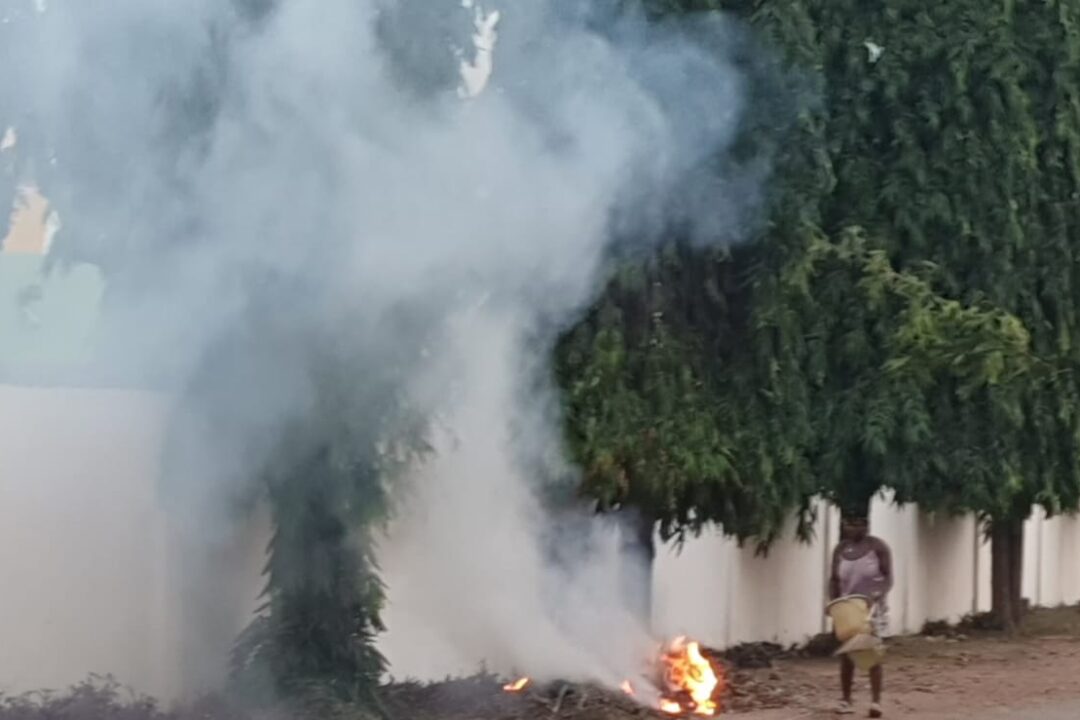
At Kumasi’s first regional air pollution forum, in April, organised by the Clean Air Fund, officials admitted that transport and open household waste burning remain the biggest challenges.
“Poverty and lack of waste collection leave residents little choice but to burn refuse,” said David Oppong‑Darko, Ashanti Regional Head of Environmental Health. “Assemblies prosecute offenders, but gains must be sustained.”
The EPA’s Dr Nyantakyi said that enforcement cannot rest on the EPA alone. “Enforcement in Accra has begun, but Kumasi requires resources, sensors, and collaboration to catch up. Effective implementation requires multi‑stakeholder collaboration with bodies like the DVLA (Driver and Vehicle Licensing Agency), transport operators, and the media.”
As part of outreach, the EPA is conducting sensitization campaigns, advising residents to wear nose masks during poor air quality periods.
“Protecting the air quality is so dear to EPA management,” Dr Nyantakyi said. “I will request that all hands come on deck to ensure that the serene air that God gave us, the quality is protected for our use.”
As dusk falls at Asafo, Ama Serwaa packs her goods. Nearby, school children cough on their way home, their uniforms streaked with dust.
“We hear about pollution in Accra,” she says. “But our children breathe this air every day. We need to know what we are breathing.”
Experts say until Kumasi installs sensors, links hospital records to environmental feeds, and equips officers with enforcement tools, its citizens will continue to pay for economic growth with their lungs, hearts, and bloodstreams.
“The tools exist. The science is clear,” says the Clean Air Fund’s Appiah. “The laws are already on the books. What is missing is the institutional commitment to enforce them, the resources to deploy sensors, and the political will to make Kumasi’s air visible, measurable, and safe to breathe.” This story was produced in collaboration with New Narratives as part of the Clean Air Reporting Project.Funding was provided by Clean Air Fund.Funder had no say in the story’s content.