By:Isaac Amoah
Javier Farias, a Communication & Stakeholder Engagement Expert, has stated unequivocally that artificial intelligence (AI) does not invent misinformation but rather makes it cheap, fast and scalable.
He defined misinformation as unintentional dissemination of inaccurate information shared in good faith.Typically driven by honest public concern, legacy myths, or lack of basic radiological literacy. (IAEA).


According to him, disinformation refers to deliberate and coordinated creation of fake news with an explicit intent to deceive, manipulate, or damage public support, often inspired and sponsored by adversarial lobbies, while malinformation also refers to factual, real-world data taken entirely out of its original context, framed selectively, or leaked maliciously to provoke irrational panic, fear, and community outrage.(IAEA).
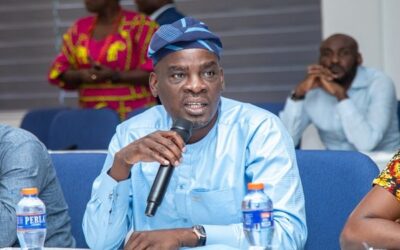
The communication & stakeholder engagement expert stated these when he spoke on the topic “Managing Misinformation and Fake News” during a two-day virtual workshop for media professionals on responsible AI in journalism.
The workshop, which was organised by Nuclear Power Ghana (NPA), in collaboration with the Ghana Journalists Association (GJA), Ghana News Agency (GNA), Private Newspapers and Online News Association of Ghana (PRINPAG) and other stakeholders, was on the theme “Responsible AI in Journalism: Strengthening Speed, Accuracy, Ethics and Risk Communication in the Nuclear Landscape”.
Javier Farias pointed out why smart people believe in false information. He said “false information confirms what they already believe in.”

“It triggers emotion. They have seen it before; someone they trust shared it. It looks professional; they don’t have time to check it. Other enablers include expertise…Emotion travels faster than explanation,” he added.
He revealed that “radiation leak detection travels faster… and not every rumour deserves a response.”
On how to prevent rumours, he advised leaders of various institutions, especially those in the nuclear landscape, to warn people before the false narrative appears.
“During construction, images of steam, protective clothing or industrial equipment may circulate without context,” he added.
Speaking on the topic “Rethinking Media Ethics in the Age of AI and Instant News,” Zakaria Tanko Musah, Esq. Lecturer/Journalist/Media Trainer/ Barrister-at-Law, urged media professionals to be verifiers, adding that every media professional should say to himself or herself that “AI helps me work faster, but I will check every fact before I publish it.”
He said there should be “No verification, no publication” in every newsroom.
He reminded media professionals that core ethics do not change.
He, therefore, stressed the need for media professionals to put attention to truth & verification.”Check with human experts before publishing and AI output should never be the ultimate source,” he added.
Reminding them of their accountability, he said, “Your byline means your responsibility. If AI helped, you disclose it. Technology changes. The duty to be accurate, fair, and accountable stays the same.”
The legal expert and media trainer urged media professionals to avoid the following – Clickbait words: “deadly”, “meltdown”, “radiation leak” without confirmed data. Instead say, “Unconfirmed report, officials checking” or “Routine” monitoring shows no release.
.Zakaria Tanko Musah, Esq said AI can help them to keep accuracy. “Use AI to transcribe, then listen and confirm quotes yourself. Keep human in loop: AI drafts, you fact-check and add reporting.
He cautioned media professionals not to let AI mislead their audience. “Don’t generate fake images of nuclear plants or workers. Don’t publish AI-written paragraphs as if you reported them,” he stressed.
He called on media professionals to always talk to real people first before any publication. He also admonished them to give fair time to respond.
According to him, in nuclear stories, fear spreads fast. A short, fair reply calms panic and shows fairness. “We contacted the regulator on Tuesday at 10am, gave 4 hours for a reply. Published both sides.” —disclosure line.
He cautioned that live exercise —rumour goes viral. He gave the scenario below to buttress his point:
BREAKING: Leak at Ghana nuclear site! The photo shows workers running! Share now! Share now! AI image —120k shares in 1 hour
The photo is fake. There is no official report. Your desk is buzzing to publish.
He also provided the best way to handle it whenever they encounter such circumstance in the course of their professional work.
“Keep in mind that AI is a tool, not the journalist; therefore, media professionals must stay responsible for every line they do or publish,” he added.
AI cannot take the blame
Nuclear needs extra care, and mall errors cause big fear. Adding one wrong word can undo years of trust.”Remember, on average, it takes 3 seconds for:
A rumour to leave a WhatsApp group and reach a second group.
According to him, news is instant now, and one post can reach a nation before you have time to verify it.
AI makes it faster and faker:
Anyone can create a realistic image or quote in seconds. Trust drops.
Why is responsible AI crucial in Nuclear Landscape?
Ghana is exploring nuclear for clean and reliable power. Most people know very little. Your story becomes their first truth.
WHY IT MATTERS FOR YOU
Public fear is high, and knowledge is low
Words like “radiation” scare people. Simple, clear reporting prevents panic and rumours. YOURS IS TO:
EXPLAIN RISK & AVOID HYPE
The new problem: speed vs. accuracy
Speed wins clicks, but kills trust. First to publish gets views…to be wrong loses the audience forever. Nuclear stories cannot be rushed.
One inaccurate headline about a leak = market panic, and that may not be cured even if it turns out to be false. How journalists already use the AI —good side.
GOOD USE
Research & summarize faster, turn a 100-page IAEA report into key points in minutes, then verify, transcribe interviews, summarize long reports. Draft, don’t publish raw AI. Use AI to outline your explainer on radiation, but add reporting.
Outline drafts and translate technical terms.
Based on the above usefulness, one can emphatically state that AI advantages are far better than disadvantages; hence, AI is a blessing if it is used responsibly by media professionals to ensure accuracy and ethical values in reporting in all sectors, including nuclear space.