The Ashanti regional branch of the Ghana Journalists Association (GJA), in collaboration with the Mental Health Society of Ghana (MEHSOG) and the Ghana Federation of Disability Organisations, as part of strengthening the capacity of Ghanaian journalists and digital media practitioners to promote rights-based, inclusive, and development-orientated reporting that advances economic justice and social inclusion for persons with disabilities, have organised one-day media training for selected media professionals.
The training workshop, which was held on Tuesday, 6th October, 2026, at CLOGSAG Hall, Adum, Kumasi, was on the theme “Effective Media Reporting on Disability: Promoting Economic Justice and Inclusion through Responsible Journalism”.


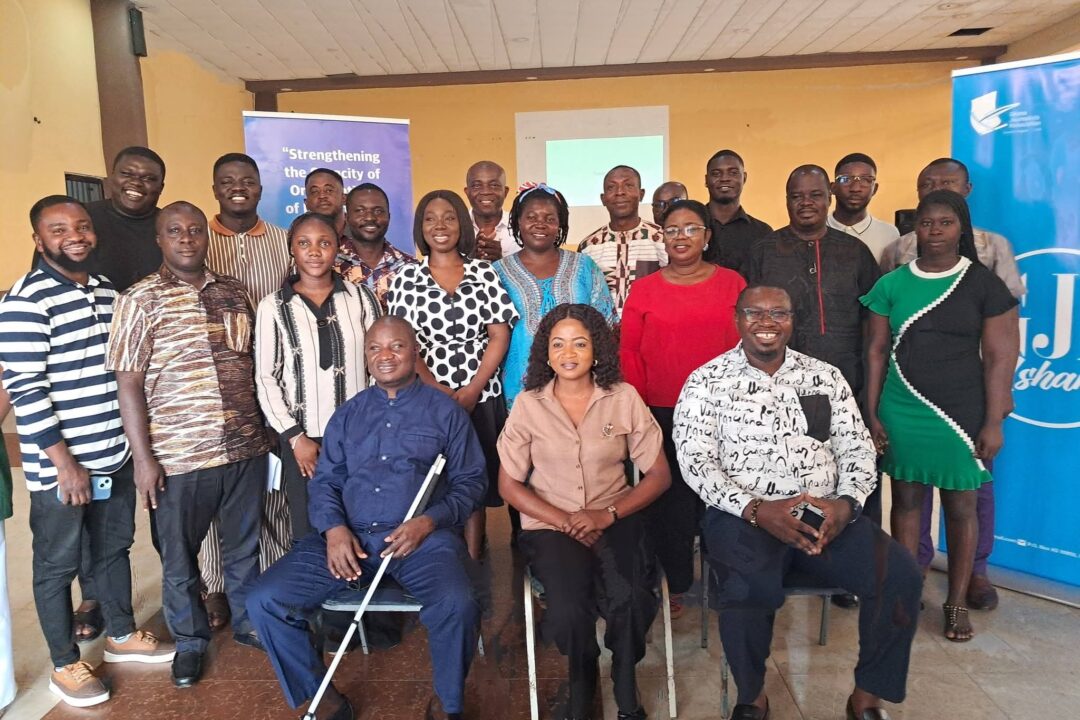
Participants in a group photograph with Dr.Enoch Acheampong, Humphrey Matey Kofie (Esq),Mr Peter Anomah-Kordieh K and other officials
The training, dubbed “Reporting on Disabilities,” was supported by the European Union and the Africa Disability Institute (ADI).
The national training brought together selected editors, reporters, producers, broadcasters, online journalists, and disability advocates from across Ghana.

The participants received practical training led by Dr Enoch Acheampong, a senior lecturer at Kwame Nkrumah University of Science and Technology (KNUST), Department of Health Promotion and Disability Studies He provided practical skills to participants onusing the Guidelines for Media Reporting on Disability in Ghana manual, focusing on: Rights-based approaches to disability reporting, appropriate disability terminology, language, ethical interviewing, and storytelling.

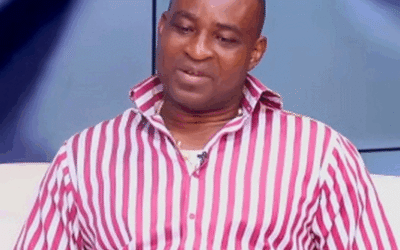
Dr.Enoch Acheampong making presentation
Besides, Dr. Acheampong took the media professionals through topics such as reporting on disability and economic justice. Disability-inclusive digital journalism, countering stereotypes and misinformation, developing compelling human-centred stories that influence public policy.
Speaking on the workshop objectives, expected outcomes and overview of the programme, Humphrey Matey Kofie (Esq), the Executive Secretary of MEHSOG, said the training was aimed at strengthening journalists’ knowledge and application of appropriate disability terminology and rights-based reporting and improving media reporting on disability and economic justice across newspapers, radio, television and digital platforms.
Adding that the training also aimed at promoting the effective use of the Guidelines for Media Reporting on Disability in Ghanaas, a standard professional reference, increases the visibility of persons with disabilities as experts, professionals, entrepreneurs, and leaders in national discourse.
“Our commitment is to build stronger collaboration between the Ghana Journalists Association (GJA), Organisations of Persons with Disabilities (OPDs), media institutions, and other stakeholders.
According to him, to promote responsible digital campaigns that amplify disability inclusion and economic justice, Ghana Federation of Disability Organisations (GFD) decided to organise one strategic capacity building programme in Kumasi for journalists drawn from print, broadcast and digital media.

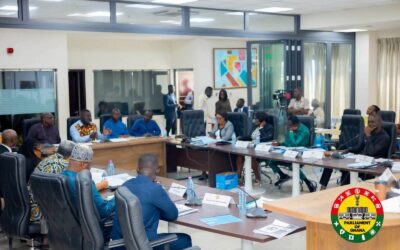
Mr.Kofi Adu Domfeh, Ashanti GJA chairman, Nicolas Osei-wusu,vice chairman and other participants
He pointed out that expected outcomes of the training are expected to result in improved understanding and consistent use of appropriate disability terminology by journalists and increased production of accurate, balanced, and rights-based disability stories.
Other expectations include seeing greater media attention to issues of economic justice, employment, entrepreneurship, and financial inclusion for persons with disabilities.
The rest include reduced use of stereotypes, discriminatory language, and charity-based narratives; increased participation of persons with disabilities as credible news sources and experts; strengthened partnerships between the media, disability organisations, and policymakers; and enhanced public awareness of disability inclusion through traditional and digital media platforms, respectively.
According to the Executive Secretary, utilising media and digital platforms for economic justice and Inclusion Campaigns cannot be overemphasised.
That is because the media plays a pivotal role in shaping public perceptions, influencing policy dialogue, and promoting inclusive national development.He observed that in Ghana, the media has contributed significantly to raising awareness on disability rights
However, evidence from published research, media monitoring initiatives and engagements with disability advocates indicates that disability reporting continues to be characterised by limited coverage, inappropriate language, stereotypes and inadequate attention to issues of economic justice affecting persons with disabilities.
“Although Ghana has enacted the Persons with Disability Act, 2006 (Act 715), ratified the United Nations Convention on the Rights of Persons with Disabilities (UNCRPD), many journalists have not received structured professional training on disability-sensitive reporting. Consequently, disability stories often fail to reflect a rights-based and development-orientated perspective.
With the rapid growth of digital media and citizen journalism, there is an urgent need to strengthen the capacity of journalists and digital content creators to produce accurate, inclusive and evidence-based stories that promote economic justice, social inclusion and equal opportunities for persons with disabilities.”
The training workshop forms part of building a cadre of journalists equipped to champion disability-inclusive reporting through national and regional capacity-building programmes implemented in partnership with the Ghana Journalists Association (GJA).
Touching on evidence-based baseline findings, the Executive Secretary of MEHSOG said a review of published studies, media monitoring reports, newsroom engagements and disability advocacy initiatives in Ghana presents a consistent picture of the current media landscape and highlights the need for targeted capacity building.
The evidence indicates that: Many journalists are not sufficiently conversant with appropriate disability terminology, leading to the continued use of outdated and inappropriate expressions such as ‘cripple’, ‘handicapped’, ‘wheelchair-bound’, ‘suffers from disability’, ‘deaf’, ‘dumb’ and other labels that reinforce stigma rather than dignity. International and African journalism manuals consistently identify terminology as one of the most significant capacity gaps requiring professional training.
According to the report, disability reporting remains largely event-driven, with increased coverage during the International Day of Persons with Disabilities, donations, charitable events, or public controversies, while sustained reporting on disability and development issues remains limited.
“Many stories continue to portray persons with disabilities through charity, pity, tragedy, or “superhuman” narratives, instead of recognising them as rights holders, professionals, entrepreneurs, innovators, and active contributors to national development.
Focusing on coverage of economic justice issues—including employment, entrepreneurship, financial inclusion, accessible workplaces, digital inclusion, skills development, procurement opportunities, and access to productive resources—remains minimal despite their importance to national development.
Humphrey Matey Kofie (Esq) said persons with disabilities are still under-represented as expert sources in news stories.
Stressing that coverage often relies on government officials, NGOs, or carers speaking on their behalf rather than allowing persons with disabilities to tell their own stories and share their expertise.
He revealed that few media organisations have institutionalised disability-sensitive editorial practices or incorporated disability reporting guidelines into routine newsroom operations, resulting in inconsistent reporting standards across newspapers, radio, television, and digital media.He recalled that previous media and capacity-building initiatives in Ghana have demonstrated that targeted journalist training significantly improves awareness of disability rights, ethical storytelling, and the use of person-first and rights-based language.
These experiences, he maintained, also confirm the need to expand training beyond a limited number of journalists to achieve a nationwide impact.
“These findings demonstrate an urgent need for structured professional development that equips journalists with the knowledge and practical skills required to report disability issues accurately, ethically, and inclusively while advancing economic justice and national development,” he emphasised.
The Ashanti Regional Chairman of GJA, who doubles as editor of LuV Fm, a subsidiary of the multimedia group, commended GFA and MEHSOG for the collaboration for the training.
According to him, this administration’s doors were widely opened for continuous collaboration for the capacity-building of media professionals, and he urged other organisations to come on board.
He therefore encouraged his colleagues’ media professionals to use knowledge and additional skills acquired to help champion the inclusion of minority groups in society, especially PWDs, etc.
“Let’s inculcate the skills and knowledge we’ve acquired from the training in our reporting on issues.
Let’s uphold ethical values and push for the inclusivity of PWDS and other minority communities,” Mr Domfeh added.
Mr Peter Anomah-Kordieh K, the Executive Director of GFD, stressed the need for the media professionals to desist from the wrong usage of terminology in their remortgage on disabilities.
He appealed for the unflinching support of the media to educate Ghanaians on the need to desist from all forms of discrimination and stigmatisation against PWDs.Stressing that PWDs don’t need charity and pity, but they need inclusion.By:Isaac Amoah