Skip to content
Menu
Menu

Ghana pushes to become a pharmaceutical manufacturing hub in Sub-Saharan Africa…as NBA calls for stronger biosafety regulations


Accra, Ghana – As part of efforts to help strengthening the Ghanaian Pharmaceutical sector with a focus on vaccine production, National Biosafety Authority held a stakeholder workshop on Vaccine Development and Manufacturing in Ghana: Regulatory Readiness and the need to urgently strengthen Ghana’s biosafety regulatory framework and a road map for end to end vaccine development and manufacturing.

The workshop came at a time when the Ministry of Health recognized that vaccines are vital for Ghana because they protect children and communities from deadly, preventable diseases like measles, polio, yellow fever, and malaria.

The workshop convened by National Biosafety Authority, GIZ GmbH, European Union, German Federal Ministry for Economic Cooperation and BMZ under the PharmaVex Ghana program was to demonstrate partners shared commitment to materialize Ghana’s ambition to be a vaccine hub in sub-Saharan Africa.


tntnewspapergh.com


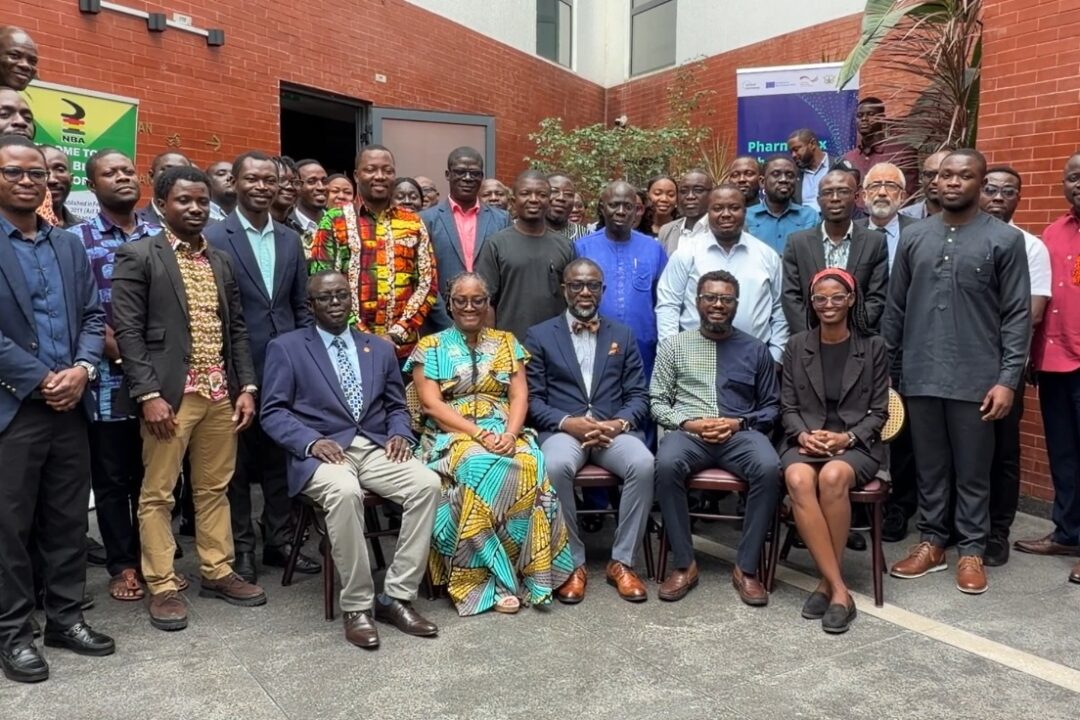
A group photograph

Target
The workshop brought in more than 50 key health professionals including regulators, research institutions, manufacturers, ministries, legal and development partners to validate Ghana’s emerging regulatory direction for vaccines and biologics as well as to discuss how to achieve self-sufficiency in vaccine production.

Presentations
In his opening remarks, Chief Executive Officer of the NBA, Kwame Dei Asamoah-Okyere, said the COVID-19 pandemic exposed Ghana’s vulnerability to vaccine nationalism and the need to build local capacity.


“Your presence at this workshop demonstrates our shared commitment to materialize Ghana’s ambition to be a vaccine development and manufacturing hub in sub-Saharan Africa to achieve self-sufficiency in vaccine production to meet future national, regional and continental needs,” he told stakeholders.

Mr. Asamoah-Okyere noted that while much of the national conversation has focused on medicine regulation, the role of Biosafety Act, 2011 (Act 831) on handling and use of genetically modified organisms (GMOs) has not been adequately reflected.

“Scientific advancement must always be accompanied by effective and efficient regulatory oversight that protects human health and the environment while promoting innovation and investment.
“We have held bilateral and regulatory roundtable meetings in recent weeks with FDA to build consensus on regulatory oversight for biologicals and biosimilars, using vaccines as a use case for clinical trial authorization, market authorization, and facility licensing” he added.

Speaking on behalf of the Minister of Health, Dr. Daniel Amaning Danquah, Director Pharmacracy Unit, Ministry of Health said vaccine manufacturing, vaccine development and production is very crucial to our health security.

“You know that almost everybody born in Ghana has to be given a minimum of six vaccines, and these are products that we have not been producing in Ghana. We have always relied on partners and donors, other countries to support us. And over the years, there has been a downward trajectory where our donors and funders, they keep with drawing bit by bit and pushing the responsibility on us to procure our own vaccines.

“We have to bring everybody on board, so that we gain the trust that is needed for us to use vaccines that is manufactured in country, and also to meet all the standards required to be able to manufacture vaccines” he said.

On the Technical Front, Chief Executive Officer, National Vaccine Institute, Mr. Sodzi Sodzi-Tettey believes that Ghana must straighten our regulatory space with international best practices and standards.

“These investments will enable Ghana not only to manufacture but also position Ghana as a regional leader.
“The NVI remains committed and willing to build a resident vast ecosystem; that protects our population, supports regional health security and contributes to African Unions vision of expanding, passing manufacturing across the continent.
“We are confident that the discussions will generate actionable recommendations that moves us close as to shared goal of making Ghana, Africa’s preferred destination and hub for vaccine production and manufacturing” added.

On the Development Partners Front, GIZ, Component Manager, Jasper Sablah believes that Ghana must do this well to become competitive across the globe.
“We believe that, the regulatory aspect, has not been properly addressed when it comes to handling biological specimens and substances, which can affect even some international collaborations and that’s why GIZ is excited NBA is leading this workshop” he said.

The Component Manager revealed that the German Cooperation (GIZ) has expressed its readiness to support Ghana in the manufacturing of vaccines beginning 2024.
“As a provider of international cooperation services, GIZ has taken the lead role to support vaccine manufacturing in Ghana; through our cooperation with Government of Ghana and the Presidential Vaccine Manufacturing Committee, we are glad to be supporting Ghana’s 10-year development roadmap intended to transform the country into a Pan-African Vaccine Manufacturing hub. We are happy to be partnering with other development sector partners such as the European Union as well as private sector partners” he said.

Appreciation
Stakeholders welcomed the engagement as a timely opportunity to deepen their understanding of the Biosafety Act, 2011 (Act 831).

They also shared perspectives on key challenges confronting the Pharmaceutical sector in Ghana with a focus on vaccine production and manufacturing.
The workshop concluded with assurance that sub committees would be formed to help strengthen Ghana’s biosafety regulatory framework and a road map intended to transform the country into a Pan-African Vaccine Manufacturing hub.
Story by:Nana Yaw Reuben


Ghana pushes to become a pharmaceutical manufacturing hub in Sub-Saharan Africa…as NBA calls for stronger biosafety regulations


Accra, Ghana – As part of efforts to help strengthening the Ghanaian Pharmaceutical sector with a focus on vaccine production, National Biosafety Authority held a stakeholder workshop on Vaccine Development and Manufacturing in Ghana: Regulatory Readiness and the need to urgently strengthen Ghana’s biosafety regulatory framework and a road map for end to end vaccine development and manufacturing.

The workshop came at a time when the Ministry of Health recognized that vaccines are vital for Ghana because they protect children and communities from deadly, preventable diseases like measles, polio, yellow fever, and malaria.

The workshop convened by National Biosafety Authority, GIZ GmbH, European Union, German Federal Ministry for Economic Cooperation and BMZ under the PharmaVex Ghana program was to demonstrate partners shared commitment to materialize Ghana’s ambition to be a vaccine hub in sub-Saharan Africa.


tntnewspapergh.com


A group photograph

Target
The workshop brought in more than 50 key health professionals including regulators, research institutions, manufacturers, ministries, legal and development partners to validate Ghana’s emerging regulatory direction for vaccines and biologics as well as to discuss how to achieve self-sufficiency in vaccine production.

Presentations
In his opening remarks, Chief Executive Officer of the NBA, Kwame Dei Asamoah-Okyere, said the COVID-19 pandemic exposed Ghana’s vulnerability to vaccine nationalism and the need to build local capacity.


“Your presence at this workshop demonstrates our shared commitment to materialize Ghana’s ambition to be a vaccine development and manufacturing hub in sub-Saharan Africa to achieve self-sufficiency in vaccine production to meet future national, regional and continental needs,” he told stakeholders.

Mr. Asamoah-Okyere noted that while much of the national conversation has focused on medicine regulation, the role of Biosafety Act, 2011 (Act 831) on handling and use of genetically modified organisms (GMOs) has not been adequately reflected.

“Scientific advancement must always be accompanied by effective and efficient regulatory oversight that protects human health and the environment while promoting innovation and investment.
“We have held bilateral and regulatory roundtable meetings in recent weeks with FDA to build consensus on regulatory oversight for biologicals and biosimilars, using vaccines as a use case for clinical trial authorization, market authorization, and facility licensing” he added.

Speaking on behalf of the Minister of Health, Dr. Daniel Amaning Danquah, Director Pharmacracy Unit, Ministry of Health said vaccine manufacturing, vaccine development and production is very crucial to our health security.

“You know that almost everybody born in Ghana has to be given a minimum of six vaccines, and these are products that we have not been producing in Ghana. We have always relied on partners and donors, other countries to support us. And over the years, there has been a downward trajectory where our donors and funders, they keep with drawing bit by bit and pushing the responsibility on us to procure our own vaccines.

“We have to bring everybody on board, so that we gain the trust that is needed for us to use vaccines that is manufactured in country, and also to meet all the standards required to be able to manufacture vaccines” he said.

On the Technical Front, Chief Executive Officer, National Vaccine Institute, Mr. Sodzi Sodzi-Tettey believes that Ghana must straighten our regulatory space with international best practices and standards.

“These investments will enable Ghana not only to manufacture but also position Ghana as a regional leader.
“The NVI remains committed and willing to build a resident vast ecosystem; that protects our population, supports regional health security and contributes to African Unions vision of expanding, passing manufacturing across the continent.
“We are confident that the discussions will generate actionable recommendations that moves us close as to shared goal of making Ghana, Africa’s preferred destination and hub for vaccine production and manufacturing” added.

On the Development Partners Front, GIZ, Component Manager, Jasper Sablah believes that Ghana must do this well to become competitive across the globe.
“We believe that, the regulatory aspect, has not been properly addressed when it comes to handling biological specimens and substances, which can affect even some international collaborations and that’s why GIZ is excited NBA is leading this workshop” he said.

The Component Manager revealed that the German Cooperation (GIZ) has expressed its readiness to support Ghana in the manufacturing of vaccines beginning 2024.
“As a provider of international cooperation services, GIZ has taken the lead role to support vaccine manufacturing in Ghana; through our cooperation with Government of Ghana and the Presidential Vaccine Manufacturing Committee, we are glad to be supporting Ghana’s 10-year development roadmap intended to transform the country into a Pan-African Vaccine Manufacturing hub. We are happy to be partnering with other development sector partners such as the European Union as well as private sector partners” he said.

Appreciation
Stakeholders welcomed the engagement as a timely opportunity to deepen their understanding of the Biosafety Act, 2011 (Act 831).

They also shared perspectives on key challenges confronting the Pharmaceutical sector in Ghana with a focus on vaccine production and manufacturing.
The workshop concluded with assurance that sub committees would be formed to help strengthen Ghana’s biosafety regulatory framework and a road map intended to transform the country into a Pan-African Vaccine Manufacturing hub.
Story by:Nana Yaw Reuben




Related Stories
Popular Stories