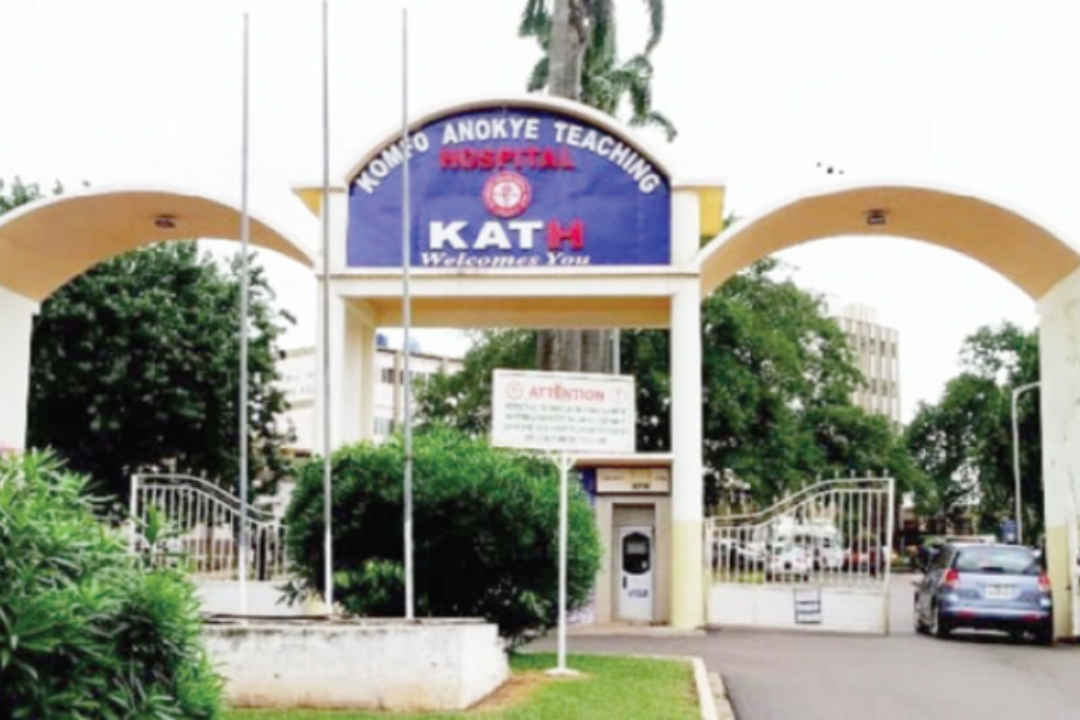
The temporary suspension of new admissions at the Accident and Emergency Centre of Komfo Anokye Teaching Hospital (KATH) was a professional and patient-centred decision taken by the Chief Executive Officer, Dr. Paa Kwesi Baidoo, and the hospital’s management team in the interest of saving lives and ensuring quality healthcare delivery.
At the time of the decision, the Accident and Emergency Centre, which was designed to accommodate 37 beds, was operating far beyond its intended capacity.
More than 60 patients were occupying critical care spaces, while several others awaited emergency attention.
Faced with this extraordinary situation, management was confronted with a difficult choice: continue admitting patients into an already overstretched facility and compromise patient safety, or take temporary measures to decongest the facility while alternative arrangements were activated.


The decision taken by management was therefore not an act of negligence, but rather an act of responsibility and leadership aimed at protecting both existing and incoming patients.
It is important to note that:
• The suspension was temporary.
• Neonatal, paediatric and obstetric emergency services remained operational.
• No patient was abandoned, as arrangements were made through the Regional Health Directorate and other health facilities to absorb emergency cases.
• The decision was based purely on clinical and operational realities, not administrative convenience.
The events that followed have vindicated the concerns raised by KATH management.
Immediately after the announcement, the Ashanti Regional Minister, Dr. Frank Amoakohene, engaged the Ashanti Regional Director of Health Services and convened an emergency meeting involving heads of health facilities across the region.
The outcome of that meeting was the implementation of coordinated measures to redistribute emergency cases to other capable health facilities, thereby reducing pressure on KATH and ensuring continuity of care for patients.
Subsequently, the Chief Executive Officer of KATH briefed the Regional Minister and confirmed that following these interventions and the collective efforts of healthcare workers across the region, normal operations had fully resumed at the Accident and Emergency Centre.
This development clearly demonstrates that the congestion challenge was real and required urgent intervention.
Rather than criticizing the leadership of KATH, the situation should be viewed as evidence of the immense pressure under which the hospital operates as the foremost referral centre for the middle and northern sectors of Ghana.
The incident also highlights the urgent need for continued investment in healthcare infrastructure to support the growing demand for specialized and emergency medical services.

Government’s ongoing interventions, including the resumption of work on the KNUST Medical Centre with over GHS 400 million in GETFund support, completion works on the Sewua Regional Hospital, and the ongoing construction of the state-of-the-art Cath Lab Facility at KATH, are all critical steps toward addressing these systemic challenges.
The Cath Lab Facility in particular will significantly enhance KATH’s capacity to diagnose and treat cardiovascular conditions locally, reducing referrals and improving access to specialist care for patients in the Ashanti Region and beyond.
Dr. Paa Kwesi Baidoo deserves commendation for prioritizing patient safety, drawing national attention to the capacity challenges facing the hospital, and working collaboratively with government and healthcare stakeholders to restore normal operations within a short period.
The successful resolution of the situation reflects not a failure of leadership, but leadership that recognized a challenge, acted decisively, and partnered with stakeholders to protect lives
KEY MESSAGE:
“Dr. Paa Kwesi Baidoo did not close the Accident and Emergency Centre. He took a temporary and responsible decision to prevent overcrowding from endangering lives. The swift intervention by stakeholders and the subsequent resumption of services confirm that the challenge was real and that management acted in the best interest of patients.”
Jerry James Sukah
Thank you