Skip to content
Menu
Menu

Rosatom demonstrates 3D-printing technologies that could enable Ghana to manufacture complex parts in hours rather than months


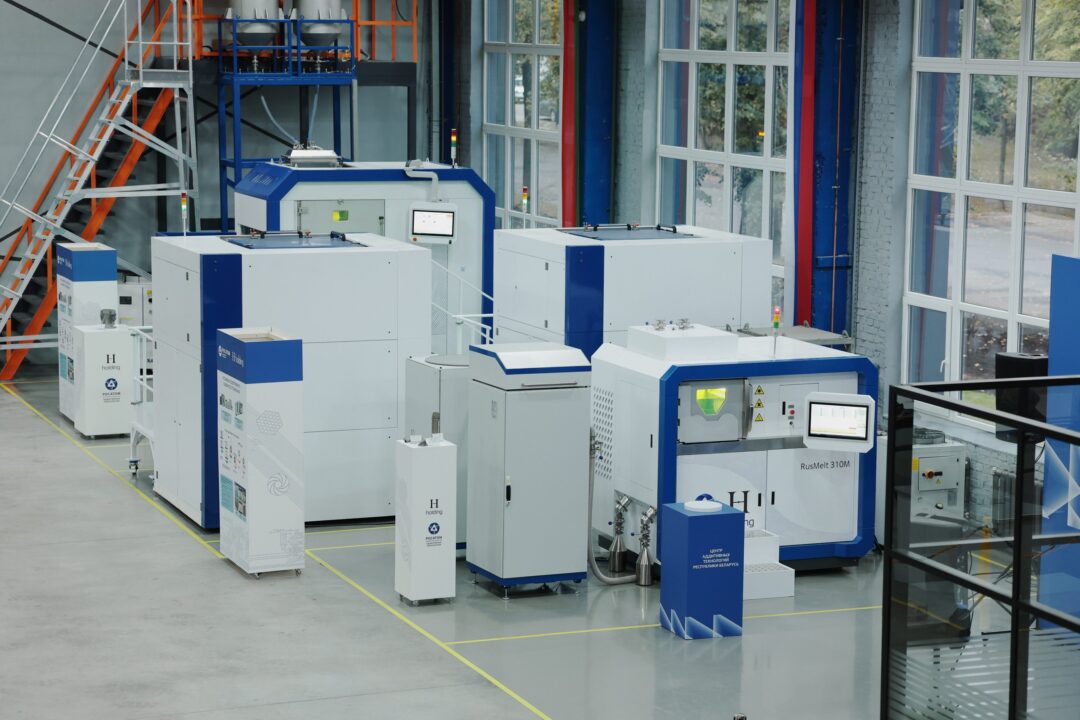
On 27 August 2026, during a visit to Russia, Egypt’s Minister of Electricity and Renewable Energy Dr. Mahmoud Esmat toured Rosatom’s Moscow Additive Technologies Centre, where he saw how industrial 3D printing can help countries produce complex components and spare parts locally, shorten supply chains and reduce dependence on imports.

The visit highlighted a model that could be relevant well beyond Egypt: fully operational additive technology centres combining production, engineering expertise, training, and, eventually, local equipment manufacturing.

The technology has already been used to produce components for demanding industrial applications. Among the products previously demonstrated by Rosatom is a spacer grid for a nuclear fuel assembly: a highly complex structure traditionally requiring months of manual work can be 3D-printed in just 10–11 hours.


tntnewspapergh.com


Rosatom has also demonstrated a one-piece anti-debris filter for a next-generation fuel assembly, replacing a conventional design made up of 55 separate parts with a single seamless component.

Additive technologies, presented during a visit by Egypt’s electricity minister to Russia, highlight how 3D printing could support Ghana’s mining industry

Head of Rosatom’s Additive Technologies business Ilya Kavelashvili stressed that the company’s core export value lies not in standalone hardware sales but in delivering fully operational additive technology centres tailored to local markets. “Such a centre functions both as a service bureau and a training hub while also laying the groundwork for future local equipment production. Ultimately, it catalyses the emergence of a national additive manufacturing sector,” he noted.


The industrial value of additive manufacturing goes beyond replacing conventional production methods. For complex or low-volume parts, 3D printing can eliminate tooling, casting, and much of the machining normally required while enabling designs that are difficult or impossible to manufacture conventionally. As a result, industries can respond much faster to equipment failures and urgent demand.

Commenting on the visit to the Moscow Additive Technologies Centre, Dr. Mahmoud Esmat emphasised: “Additive manufacturing technologies offer promising opportunities to support local manufacturing, develop the production of components and spare parts, and enhance the efficiency and sustainability of supply chains.”

President of TVEL JSC (part of Rosatom group) Natalia Nikipelova  pointed to an established cooperation track record with Egypt, particularly in nuclear fuel supply for the ETRR2 research reactor in Inshas, and highlighted the upcoming milestone of fuel delivery for El Dabaa’s VVER1200 reactors in 2027. “Additive technologies open a promising nonnuclear avenue for expanding our partnership, building on existing trust and technical alignment,” she highlighted.

Following the visit, Rosatom’s Fuel Division and the Executive Authority overseeing Nuclear Power Plant Construction Projects in the Arab Republic of Egypt, signed a joint statement of intent on cooperation in establishing an additive technology center in Egypt. The discussions also covered the progress of the El Dabaa Nuclear Power Plant and plans for a potential desalination complex, reflecting the expanding scope of Rosatom-Egypt cooperation.
Ghana offers another example of where additive technologies could bring tangible benefits.

The country’s core mining and quarrying sector accounted for 9.5% of GDP in 2024, making it an important part of the national economy and a key area for industrial development.

For Ghana’s mining industry, 3D printing could help reduce reliance on imported parts and equipment by enabling local production of selected components, including hard-to-source or low-volume spare parts. Additive manufacturing can also support the rapid repair and replacement of components for mining machinery, shorten supply chains, and reduce downtime while allowing parts to be redesigned for specific operating conditions.
As local additive manufacturing capabilities develop, the technology could contribute to a more resilient mining supply chain and strengthen domestic industrial capacity.


Rosatom demonstrates 3D-printing technologies that could enable Ghana to manufacture complex parts in hours rather than months


On 27 August 2026, during a visit to Russia, Egypt’s Minister of Electricity and Renewable Energy Dr. Mahmoud Esmat toured Rosatom’s Moscow Additive Technologies Centre, where he saw how industrial 3D printing can help countries produce complex components and spare parts locally, shorten supply chains and reduce dependence on imports.

The visit highlighted a model that could be relevant well beyond Egypt: fully operational additive technology centres combining production, engineering expertise, training, and, eventually, local equipment manufacturing.

The technology has already been used to produce components for demanding industrial applications. Among the products previously demonstrated by Rosatom is a spacer grid for a nuclear fuel assembly: a highly complex structure traditionally requiring months of manual work can be 3D-printed in just 10–11 hours.


tntnewspapergh.com


Rosatom has also demonstrated a one-piece anti-debris filter for a next-generation fuel assembly, replacing a conventional design made up of 55 separate parts with a single seamless component.

Additive technologies, presented during a visit by Egypt’s electricity minister to Russia, highlight how 3D printing could support Ghana’s mining industry

Head of Rosatom’s Additive Technologies business Ilya Kavelashvili stressed that the company’s core export value lies not in standalone hardware sales but in delivering fully operational additive technology centres tailored to local markets. “Such a centre functions both as a service bureau and a training hub while also laying the groundwork for future local equipment production. Ultimately, it catalyses the emergence of a national additive manufacturing sector,” he noted.


The industrial value of additive manufacturing goes beyond replacing conventional production methods. For complex or low-volume parts, 3D printing can eliminate tooling, casting, and much of the machining normally required while enabling designs that are difficult or impossible to manufacture conventionally. As a result, industries can respond much faster to equipment failures and urgent demand.

Commenting on the visit to the Moscow Additive Technologies Centre, Dr. Mahmoud Esmat emphasised: “Additive manufacturing technologies offer promising opportunities to support local manufacturing, develop the production of components and spare parts, and enhance the efficiency and sustainability of supply chains.”

President of TVEL JSC (part of Rosatom group) Natalia Nikipelova  pointed to an established cooperation track record with Egypt, particularly in nuclear fuel supply for the ETRR2 research reactor in Inshas, and highlighted the upcoming milestone of fuel delivery for El Dabaa’s VVER1200 reactors in 2027. “Additive technologies open a promising nonnuclear avenue for expanding our partnership, building on existing trust and technical alignment,” she highlighted.

Following the visit, Rosatom’s Fuel Division and the Executive Authority overseeing Nuclear Power Plant Construction Projects in the Arab Republic of Egypt, signed a joint statement of intent on cooperation in establishing an additive technology center in Egypt. The discussions also covered the progress of the El Dabaa Nuclear Power Plant and plans for a potential desalination complex, reflecting the expanding scope of Rosatom-Egypt cooperation.
Ghana offers another example of where additive technologies could bring tangible benefits.

The country’s core mining and quarrying sector accounted for 9.5% of GDP in 2024, making it an important part of the national economy and a key area for industrial development.

For Ghana’s mining industry, 3D printing could help reduce reliance on imported parts and equipment by enabling local production of selected components, including hard-to-source or low-volume spare parts. Additive manufacturing can also support the rapid repair and replacement of components for mining machinery, shorten supply chains, and reduce downtime while allowing parts to be redesigned for specific operating conditions.
As local additive manufacturing capabilities develop, the technology could contribute to a more resilient mining supply chain and strengthen domestic industrial capacity.




Related Stories
Popular Stories