Skip to content
Menu
Menu

Time to think about relocating the capital from Accra?


The perennial floodings in Accra and the intensity of natural disasters plaguing property and residents have occasioned the debate on relocating or decentralising government machinery in Ghana.

As part of climate change resilience policies geared at resetting cities in the country, there’s a crucial need to be pragmatic and forthright if the country wants to make meaningful headway on the sustainability of cities.

The Greater Accra region has, since independence, been flooded annually, and successive governments and physical institutions have not done anything concrete to solve the planning challenges.


tntnewspapergh.com


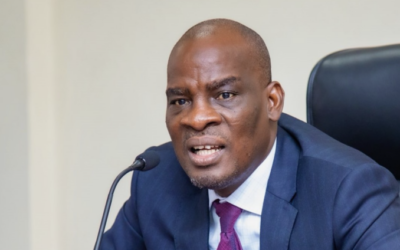
J.K. Owusu-Boakye,the author

Today, at the watch of government and policymakers, the flooding has gotten worse, and the economic costs to the state are very debilitating, to say the least. It has besets the efforts at resetting cities in Ghana to ensure climate change resilience and sustainability.

The school of thought that advocates for the relocation of the capital city to Kintampo (the midpoint of Ghana) is gaining momentum, and it is time to consider the idea and take action to solve the perennial flooding in Accra and other parts of Ghana once and for all.


The opportunity costs and the cost-benefits to the exchequer (state finance) outweigh the heavy funding regimes initiated as ad hoc solutions to Accra’s perennial floods.

For example, the billions of dollars pumped into Accra flooding solutions could be used by the government to even construct housing units for the teeming workers in the country.

Again, the massive resources that successive governments have allocated for Accra drains would have built a capital city at the midpoint of Ghana. Moreover, the failure of the MMDAs to enforce planning regulations in the regions has led to this state of affairs, and the concomitant results are clearly seen.

The Nkrumah plan for Accra has not been developed, and the rising sea levels and associated human factors of indiscipline, disregard for planning regulations and cultural influences in land acquisitions and management, as well as the destruction to water bodies (that affects their flow to the sea), are but some of the grievous sins leading to the flooding we are witnessing in the Accra region and parts of the country. Further to the problem is the failure of the NDPC and local government, environment, and natural resource ministries in these national disasters.

The NDC government’s attempt to reset the country will obviously fail to rains and natural disasters if and only if they relocate the capital to a new location from Accra.

Accra has now become the sinking hole of massive capital injection by governments but cannot achieve any meaningful results of solving flooding because we are doing what we do to aggravate the floods (all waterways are blocked, waste disposal is hazardous, and the physical planning system is failing to regulate and enforce the bye-laws of the respective assemblies). It can not be said that this is a ‘force majeure’ or an act of God! No, this is a man made by the people and the governmental systems in Ghana. The only sure way is to go up country and build a new city for government machinery and make Accra the commercial and investment capital whilst taking the administrative capital up to Kintampo.

This, I trust, will save the country a lot of hard-earned dollars and give socioeconomic benefits to the state. Jesus Christ said in one of his parables in the gospel, ‘One who puts new wine into an old wineskin will tear…’!

So to wit, if we continue to put massive developmental funds (scarce resources) into solving Accra’s floods, we risk, as a country, dissipating resources which could help us develop this country and, in the end, achieve nothing, because nothing will change to avert the climate change disasters associated with causing the Accra floods.

By J.K. Owusu-Boakye, an Energy Law and Management Consultant. Email me at mekwadwowusu@yahoo.com.


Popolar Stories

Time to think about relocating the capital from Accra?


The perennial floodings in Accra and the intensity of natural disasters plaguing property and residents have occasioned the debate on relocating or decentralising government machinery in Ghana.

As part of climate change resilience policies geared at resetting cities in the country, there’s a crucial need to be pragmatic and forthright if the country wants to make meaningful headway on the sustainability of cities.

The Greater Accra region has, since independence, been flooded annually, and successive governments and physical institutions have not done anything concrete to solve the planning challenges.


tntnewspapergh.com


J.K. Owusu-Boakye,the author

Today, at the watch of government and policymakers, the flooding has gotten worse, and the economic costs to the state are very debilitating, to say the least. It has besets the efforts at resetting cities in Ghana to ensure climate change resilience and sustainability.

The school of thought that advocates for the relocation of the capital city to Kintampo (the midpoint of Ghana) is gaining momentum, and it is time to consider the idea and take action to solve the perennial flooding in Accra and other parts of Ghana once and for all.


The opportunity costs and the cost-benefits to the exchequer (state finance) outweigh the heavy funding regimes initiated as ad hoc solutions to Accra’s perennial floods.

For example, the billions of dollars pumped into Accra flooding solutions could be used by the government to even construct housing units for the teeming workers in the country.

Again, the massive resources that successive governments have allocated for Accra drains would have built a capital city at the midpoint of Ghana. Moreover, the failure of the MMDAs to enforce planning regulations in the regions has led to this state of affairs, and the concomitant results are clearly seen.

The Nkrumah plan for Accra has not been developed, and the rising sea levels and associated human factors of indiscipline, disregard for planning regulations and cultural influences in land acquisitions and management, as well as the destruction to water bodies (that affects their flow to the sea), are but some of the grievous sins leading to the flooding we are witnessing in the Accra region and parts of the country. Further to the problem is the failure of the NDPC and local government, environment, and natural resource ministries in these national disasters.

The NDC government’s attempt to reset the country will obviously fail to rains and natural disasters if and only if they relocate the capital to a new location from Accra.

Accra has now become the sinking hole of massive capital injection by governments but cannot achieve any meaningful results of solving flooding because we are doing what we do to aggravate the floods (all waterways are blocked, waste disposal is hazardous, and the physical planning system is failing to regulate and enforce the bye-laws of the respective assemblies). It can not be said that this is a ‘force majeure’ or an act of God! No, this is a man made by the people and the governmental systems in Ghana. The only sure way is to go up country and build a new city for government machinery and make Accra the commercial and investment capital whilst taking the administrative capital up to Kintampo.

This, I trust, will save the country a lot of hard-earned dollars and give socioeconomic benefits to the state. Jesus Christ said in one of his parables in the gospel, ‘One who puts new wine into an old wineskin will tear…’!

So to wit, if we continue to put massive developmental funds (scarce resources) into solving Accra’s floods, we risk, as a country, dissipating resources which could help us develop this country and, in the end, achieve nothing, because nothing will change to avert the climate change disasters associated with causing the Accra floods.

By J.K. Owusu-Boakye, an Energy Law and Management Consultant. Email me at mekwadwowusu@yahoo.com.




Related Stories
Popular Stories