By:Isaac Amoah
The Ashanti Regional chapter of the Ghana Journalists Association (GJA), in collaboration with Reporters Without Borders (RSF Germany), has organized a day’s capacity-building workshop to strengthen the capacity of journalists in environmental reporting and personal safety.
The training workshop forms part of Erastus Asare Donkor’s 2025 Research and Recharge Fellowship with Reporters Without Borders-Germany.
That part of the fellowship was to enable Erastus to share his experiences on how to impact young journalists to report safely on the environment.


The training workshop based on this year’s World Environment Day theme “Inspired by nature, for climate & for our future” was held on Friday, 5th June 2026, at True Vine Hotel, Kumasi.

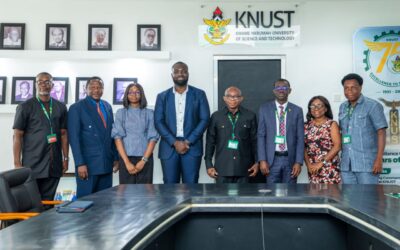
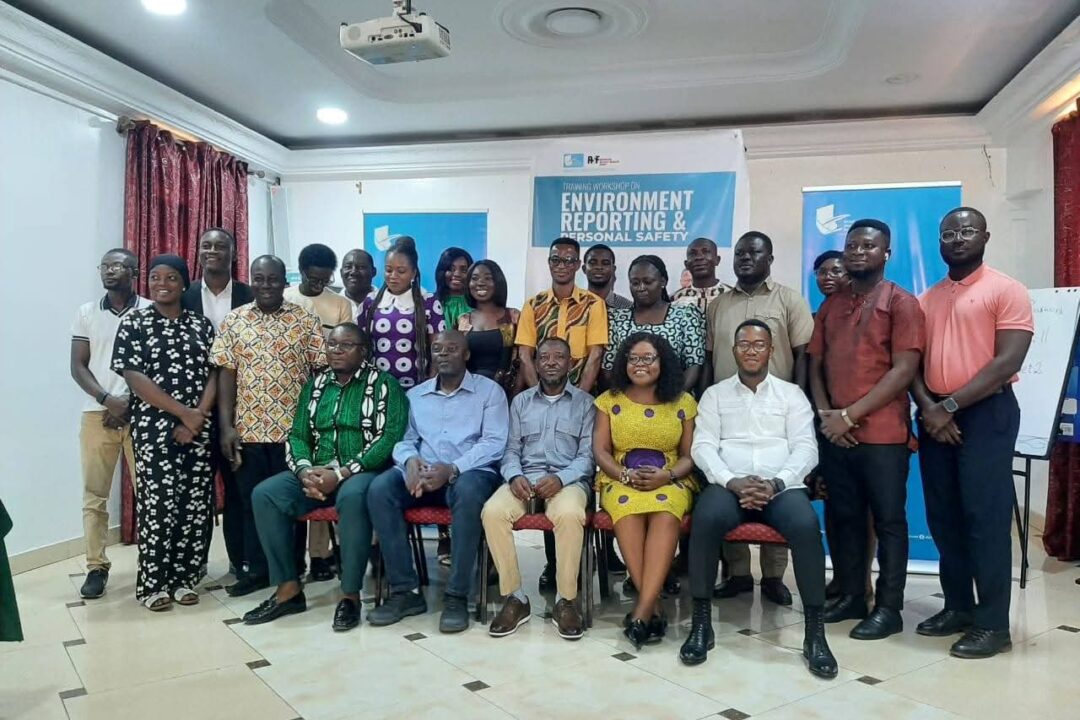
A group photograph of participants and resource persons
The participants were taken through topics such as “Weather forecast interpretation” by Dr. Azumah Karim, CCCFS, and “Environmental Stewardship: The Role of the Media” by Mr. Richard Boadi Soadwa, Area Head of the Amansie area of the Environmental Protection Authority (EPA) on behalf of Dr. Jones Adiyiah Nyantakyi, EPA.

Other topics include risk assessment, conflict management, and personal safety for journalists by Dr. Jones Opoku-Ware, KNUST; and “Investigating Environmental Crimes and Reporting on Illegal Mining: Lessons from the Field” by Erastus Asare Donkor, environmental journalist.

Mr. Richard Boadi Soadwa making presentation
The insight workshop coincided with this year’s World Environment Day.
Mr Kofi Adu Domfeh, the Ashanti Regional Chairman of GJA, who doubles as the news editor, LUV Fm, explained that the workshop was aimed to equip selected journalists with the knowledge and skills required to report accurately on environmental issues while safeguarding themselves in often challenging and high-risk reporting environments.

Mr Kofi Adu Domfeh in an interview with journalists after the workshop
According to him, the initiative comes at a time when environmental concerns, particularly those linked to mining activities and illegal small-scale mining, popularly known as “galamsey,” continue to dominate national discourse.
Available records indicate that Ghana’s extractive sector remains a significant contributor to economic growth and national development. However, industry activities also present environmental, social, and governance challenges that require informed public engagement and responsible media coverage.

Erastus Asare Donkor sharing his experience in an interview.
According to organizers, journalists play a critical role in shaping public understanding of environmental issues and influencing actions aimed at protecting natural resources and promoting sustainable development.
Mr. Domfeh noted that in recent years, journalists investigating illegal mining and environmental degradation have encountered numerous threats, including intimidation, physical attacks, accidents, and other forms of harassment. Some media practitioners have sustained injuries while pursuing stories in remote mining communities.He therefore underscored the importance of strengthening the capacity of journalists to tell impactful environmental stories while ensuring their safety.
Sharing his thoughts on why GJA decided to hold the training on World Environment Day and to plant symbolic trees, Mr. Domfeh said, “World Environment Day reminds us that protecting the environment is a shared responsibility. Journalists are indispensable partners in this effort because they help communities understand the consequences of environmental destruction and the urgency of sustainable action.
“To perform this role effectively, they must be equipped with the knowledge, skills, and safety awareness needed to report with accuracy, courage, and responsibility,” he said.He added that quality environmental journalism remains essential in promoting accountability, supporting evidence-based decision-making, and amplifying community voices in the fight against environmental degradation.
According to him, the Ashanti GJA-RSF Germany initiative is expected to foster stronger collaboration between journalists, regulatory institutions, and mining stakeholders while promoting ethical, professional, and fact-based reporting on environmental issues.Adding that “we believe the program training would contribute to a more informed public discourse on environmental governance and help advance efforts toward a cleaner, safer, and more sustainable future for Ghana.
“The Ashanti GJA Chairman therefore seized the opportunity to express the Association’s appreciation to Reporters Without Borders-Germany for the support as well as Mr. Erastus Asare Donkor, through whose 2025 research fellowship with RSF Germany led to the funding for the capacity-building workshop.A number of participants who spoke also added their voices to the commendation of the organizers for the impactful and timely training program.
They appeal for more such capacity-building workshops and expansion of participants since they hold the key to shaping the reporting skills of journalists, especially in environmental reporting issues.