Skip to content
Menu
Menu

EJN trains journalists for Ghana’s 30×30 target project


By;Isaac Amoah

As part of efforts by the Earth Journalism Network (EJN) to equip journalists in Ghana and other countries, a three-day 30×30 Marine Conservation virtual workshop has been held for over thirty (30) media professionals across the country.

The 30×30 is a global movement to protect 30% of the world’s lands and waters by 2030.


tntnewspapergh.com


This initiative adopted in December 2022 at COP15 in Montreal sets an ambitious global roadmap to halt and reverse biodiversity loss by 2030.

It guides countries toward living in harmony with nature by 2050 through four long-term goals and 23 actionable targets.

This initiative urges governments worldwide to designate 30% of Earth’s land and ocean area as protected areas by 2030.


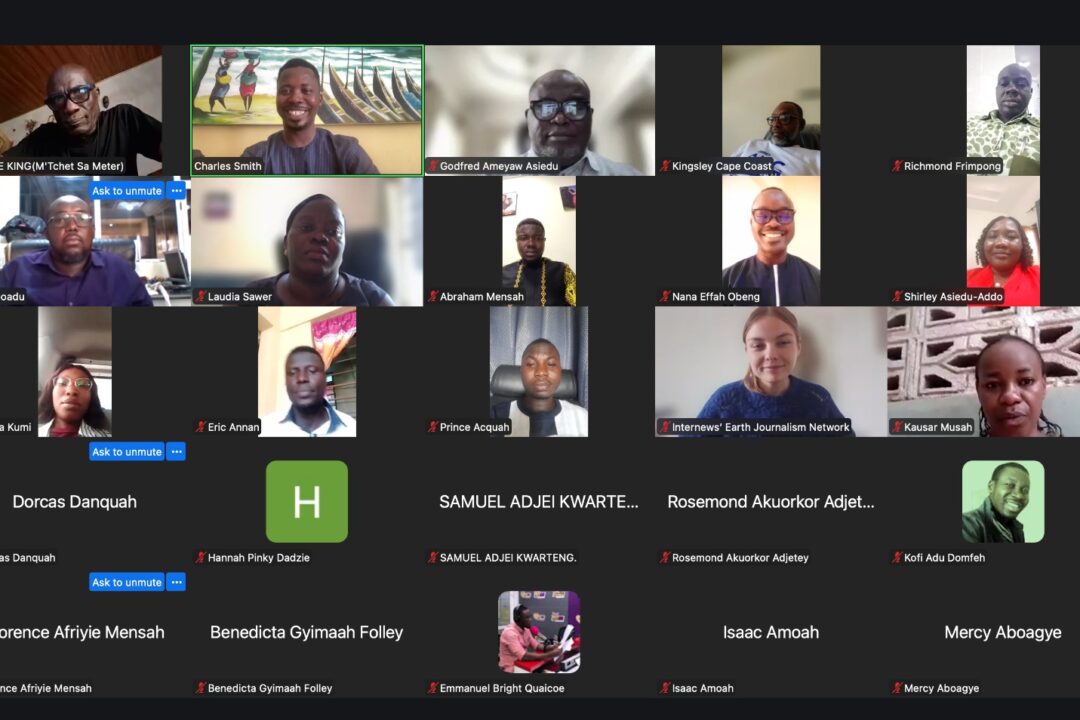
Screenshot of the participants of the workshop

It’s against the background that EJN is leading the efforts to increase the quantity and quality of reporting on key ocean topics by local media, with a focus on achieving 30×30 marine targets, increasing public awareness and informing policymakers.

EJN’s 30×30 Project also aimed to increase the skills, capacity, and knowledge base of journalists and media outlets to report on key oceans in three key target countries: Ghana, Mexico, and the Philippines.

Mr Charles Smith, Ghana Country Coordinator for Earth Journalism Network (EJN), explained that the two-year project (now to the end of 2027) primarily focuses on countries: Ghana, the Philippines and Mexico.

The participants of the training were taken through the topic: “What is the EJN’s 30 x 30 project?” And why does it matter? presented by Mr Charles Smith, EJN Ghana Country Coordinator, Marine Protected Areas (MPAs) history in the Ghana – Local policies on how it is being established- Plans for other MPAs in Ghana, – Policies on MPAs, processes in establishing them, problems with the establishment of the MPA in Ghana and the way forward, which were presented by the Deputy Executive Director (Technical) of the Fisheries Commission, Ghana – Prof. Berchie Asiedu.

Other topics treated were ‘The role of NGOs in Ghana’s efforts towards achieving the 30×30 – focus on Marine Protected Areas (MPAs)’ by Mr Stephen Kankam, Deputy Director, Hen Mpoano, and lead organisation working with FC & MOFA in establishing Ghana’s maiden MPA’, ‘Fisheries Transparency: Ghana’s efforts towards promoting transparency in the sector, the role of transparency in achieving the 30×30 Agenda, “presented by Dr Godfred Ameyaw Aseidu, Africa Coordinator, FiTI.

The rest of the topics treated at the training include “Writing a fisheries story or pitching a fisheries story”, made by Madam Shirley Asiedu Addo, Mentor, EJN’s 30×30 Project,”Rebuilding Ghana’s fisheries stocks through the establishment of the country’s first MPA, the progress, the lessons and the way forward,” presented by Fisheries Scientist and Lecturer, Department of Fisheries Aquatic Sciences and Chairman, Technical Advisory Committee on MPA – Dr Evans Kwasi Arizi, Utilising the 30×30 tracker, Skytruth info “How to apply for story grants under the EJN’s 30×30 project”, etc.

Mr Charles Smith, in a presentation, said 2030 has actionable targets.

These are 23 actionable targets set to be achieved by 2030 and focus on three main areas:

• Reducing Threats to Biodiversity (Targets 1-8): Focuses on spatial planning to near-zero loss, restoring 30% of degraded ecosystems, protecting30% of land/sea, reducing invasive species, and cutting pollution.

• Meeting People’s Needs (Targets 9-13):

Aims to manage wild species sustainably, ensuresustainable agriculture and forestry, enhance urban green spaces, and ensure fair sharing of genetic resource benefits.

• Tools for Implementation (Targets 14-23): Focuseson integrating biodiversity into policies, requiringbusiness disclosures, reducing harmful subsidies by$500 billion, mobilising $200 billion annually, andpromoting inclusive, gender-responsive decision-making.

What is 30×30?

• Target 3 of the Kunming-Montreal Global Biodiversity Framework (2022):

“Ensure and enable that by 2030 at least 30 per cent of terrestrial and inlandwater areas and marine and coastal areas, especially areas of particularimportance for biodiversity and ecosystem functions and services are effectively conserved and managed through ecologically representative, well-connected, and equitably governed systems of protected areas and other effective area-based conservation measures, recognising indigenous andtraditional territories, where applicable, and integrated into wider landscapes, seascapes, and the ocean, while ensuring that any sustainable use, where appropriate in such areas, is fully consistent with conservation outcomes, recognising and respecting the rights of indigenous peoples and local communities, including over their traditional territories.

• Protect/conserve ≥30% of land, inland waters, and coastal/marine areas by 2030.

• Includes protected areas and “other effective area-based conservation measures” (OECMs)

.• Emphasises indigenous territories and well-connected systems.What’s the global importance of 30×30?

• Halts biodiversity loss• Rebuilds fish stocks (increase in no-take zones).

• Climate regulation – Oceans absorb 30% CO₂;

• Supports food security.

• Economic benefits – finance from ocean services30x30 Benefit to Fisheries• Restores overfished stocks

.• Compensates for lost fishing area with some percentage catch increase.

• Reduces IUU fishing risks.

• Enhances resilience to climate change.

• Protected areas will replenish adjacent fishing grounds (spillover effect).

Mr Smith indicated that Ghana is committed to the 30×30 targets; hence, the introduction of closed seasons observed in the last couple of years (2019, 2021, 2022 and 2024, 2025 – artisanal fishers exempted).

Besides, Ghana also has an announcement of plans to establish the country’s first-ever Marine Protected Area, MPA, in 2024, passing a new fisheries act in 2025 with some key highlights:

Ghana’s Fisheries Context and Challenges: Overfishing, climate impacts, andplastic pollution, Low current marine protection, IUU threatens stocks (EU yellow card in 2021); Socio-economic: Balancing conservation with 2M livelihoods; Enforcement gaps: need community, co-management, lost or ghostfishing gears (monofilament nets)Recommendations

• Designate/expand MPAs (e.g., CapeThree Points)

• Integrate OEC Ms.

• Enhance monitoring (VMS, AI); community-led governance.

• Scale aquaculture/blue economy for jobs

• Enforce the new fisheries act thoroughly.Concluding his presentation, Mr Charles Smith stressed that 30×30 is vital for ocean health, fisheries, sustainability, and economies like that of Ghana.

He therefore called for urgent action on MPAs and reforms to help safeguard and secure Ghana’s fish stocks. Adding that “there is the need to support the Ministry of Fisheries and Aquaculture’s 2026 MPA goals”.


Popolar Stories

EJN trains journalists for Ghana’s 30×30 target project


By;Isaac Amoah

As part of efforts by the Earth Journalism Network (EJN) to equip journalists in Ghana and other countries, a three-day 30×30 Marine Conservation virtual workshop has been held for over thirty (30) media professionals across the country.

The 30×30 is a global movement to protect 30% of the world’s lands and waters by 2030.


tntnewspapergh.com


This initiative adopted in December 2022 at COP15 in Montreal sets an ambitious global roadmap to halt and reverse biodiversity loss by 2030.

It guides countries toward living in harmony with nature by 2050 through four long-term goals and 23 actionable targets.

This initiative urges governments worldwide to designate 30% of Earth’s land and ocean area as protected areas by 2030.


Screenshot of the participants of the workshop

It’s against the background that EJN is leading the efforts to increase the quantity and quality of reporting on key ocean topics by local media, with a focus on achieving 30×30 marine targets, increasing public awareness and informing policymakers.

EJN’s 30×30 Project also aimed to increase the skills, capacity, and knowledge base of journalists and media outlets to report on key oceans in three key target countries: Ghana, Mexico, and the Philippines.

Mr Charles Smith, Ghana Country Coordinator for Earth Journalism Network (EJN), explained that the two-year project (now to the end of 2027) primarily focuses on countries: Ghana, the Philippines and Mexico.

The participants of the training were taken through the topic: “What is the EJN’s 30 x 30 project?” And why does it matter? presented by Mr Charles Smith, EJN Ghana Country Coordinator, Marine Protected Areas (MPAs) history in the Ghana – Local policies on how it is being established- Plans for other MPAs in Ghana, – Policies on MPAs, processes in establishing them, problems with the establishment of the MPA in Ghana and the way forward, which were presented by the Deputy Executive Director (Technical) of the Fisheries Commission, Ghana – Prof. Berchie Asiedu.

Other topics treated were ‘The role of NGOs in Ghana’s efforts towards achieving the 30×30 – focus on Marine Protected Areas (MPAs)’ by Mr Stephen Kankam, Deputy Director, Hen Mpoano, and lead organisation working with FC & MOFA in establishing Ghana’s maiden MPA’, ‘Fisheries Transparency: Ghana’s efforts towards promoting transparency in the sector, the role of transparency in achieving the 30×30 Agenda, “presented by Dr Godfred Ameyaw Aseidu, Africa Coordinator, FiTI.

The rest of the topics treated at the training include “Writing a fisheries story or pitching a fisheries story”, made by Madam Shirley Asiedu Addo, Mentor, EJN’s 30×30 Project,”Rebuilding Ghana’s fisheries stocks through the establishment of the country’s first MPA, the progress, the lessons and the way forward,” presented by Fisheries Scientist and Lecturer, Department of Fisheries Aquatic Sciences and Chairman, Technical Advisory Committee on MPA – Dr Evans Kwasi Arizi, Utilising the 30×30 tracker, Skytruth info “How to apply for story grants under the EJN’s 30×30 project”, etc.

Mr Charles Smith, in a presentation, said 2030 has actionable targets.

These are 23 actionable targets set to be achieved by 2030 and focus on three main areas:

• Reducing Threats to Biodiversity (Targets 1-8): Focuses on spatial planning to near-zero loss, restoring 30% of degraded ecosystems, protecting30% of land/sea, reducing invasive species, and cutting pollution.

• Meeting People’s Needs (Targets 9-13):

Aims to manage wild species sustainably, ensuresustainable agriculture and forestry, enhance urban green spaces, and ensure fair sharing of genetic resource benefits.

• Tools for Implementation (Targets 14-23): Focuseson integrating biodiversity into policies, requiringbusiness disclosures, reducing harmful subsidies by$500 billion, mobilising $200 billion annually, andpromoting inclusive, gender-responsive decision-making.

What is 30×30?

• Target 3 of the Kunming-Montreal Global Biodiversity Framework (2022):

“Ensure and enable that by 2030 at least 30 per cent of terrestrial and inlandwater areas and marine and coastal areas, especially areas of particularimportance for biodiversity and ecosystem functions and services are effectively conserved and managed through ecologically representative, well-connected, and equitably governed systems of protected areas and other effective area-based conservation measures, recognising indigenous andtraditional territories, where applicable, and integrated into wider landscapes, seascapes, and the ocean, while ensuring that any sustainable use, where appropriate in such areas, is fully consistent with conservation outcomes, recognising and respecting the rights of indigenous peoples and local communities, including over their traditional territories.

• Protect/conserve ≥30% of land, inland waters, and coastal/marine areas by 2030.

• Includes protected areas and “other effective area-based conservation measures” (OECMs)

.• Emphasises indigenous territories and well-connected systems.What’s the global importance of 30×30?

• Halts biodiversity loss• Rebuilds fish stocks (increase in no-take zones).

• Climate regulation – Oceans absorb 30% CO₂;

• Supports food security.

• Economic benefits – finance from ocean services30x30 Benefit to Fisheries• Restores overfished stocks

.• Compensates for lost fishing area with some percentage catch increase.

• Reduces IUU fishing risks.

• Enhances resilience to climate change.

• Protected areas will replenish adjacent fishing grounds (spillover effect).

Mr Smith indicated that Ghana is committed to the 30×30 targets; hence, the introduction of closed seasons observed in the last couple of years (2019, 2021, 2022 and 2024, 2025 – artisanal fishers exempted).

Besides, Ghana also has an announcement of plans to establish the country’s first-ever Marine Protected Area, MPA, in 2024, passing a new fisheries act in 2025 with some key highlights:

Ghana’s Fisheries Context and Challenges: Overfishing, climate impacts, andplastic pollution, Low current marine protection, IUU threatens stocks (EU yellow card in 2021); Socio-economic: Balancing conservation with 2M livelihoods; Enforcement gaps: need community, co-management, lost or ghostfishing gears (monofilament nets)Recommendations

• Designate/expand MPAs (e.g., CapeThree Points)

• Integrate OEC Ms.

• Enhance monitoring (VMS, AI); community-led governance.

• Scale aquaculture/blue economy for jobs

• Enforce the new fisheries act thoroughly.Concluding his presentation, Mr Charles Smith stressed that 30×30 is vital for ocean health, fisheries, sustainability, and economies like that of Ghana.

He therefore called for urgent action on MPAs and reforms to help safeguard and secure Ghana’s fish stocks. Adding that “there is the need to support the Ministry of Fisheries and Aquaculture’s 2026 MPA goals”.




Related Stories
Popular Stories