Skip to content
Menu
Menu

MSC responds to FAO’s state of world fisheries & aquaculture 2026

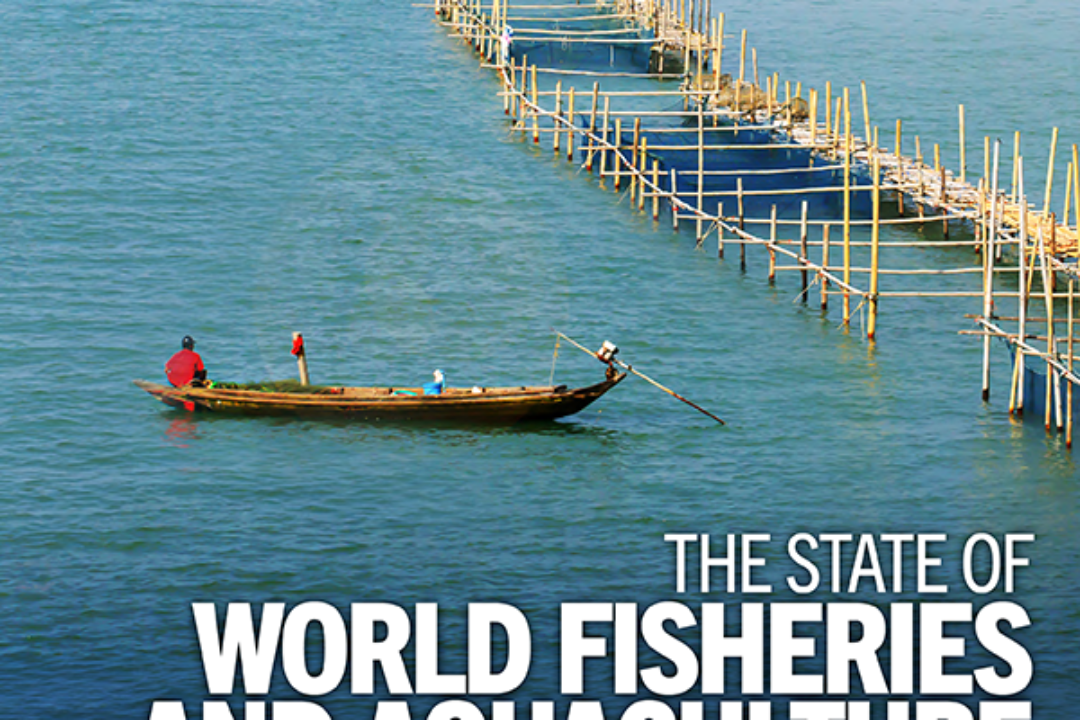
The UN’s Food and Agriculture Organisation (FAO) launched its latest State of World  Fisheries and Aquaculture report at the Our Ocean Conference, in Mombasa, Kenya, at an  event co-organized by the MSC. The report uses new methodology to analyse more fish stocks than previous assessments, providing a more detailed update on the state of global  fisheries resources.

Overfishing continues to be a serious problem. The share of stocks classified as biologically  sustainable in this report declined to 62.4 percent compared to 64.5 percent in the previous  report two years ago. This global figure masks a stark gap between fisheries that are under

effective management which tend to have healthy stocks and those that aren’t, with wide  differences evident across regions and species groups.

Aquatic animal foods (wild caught and aquaculture) now provide at least one-fifth of the  animal protein consumption of 3.1 billion people and at $184 billion, the trade in aquatic  animal products now rivals terrestrial meat trade in value. So protecting aquatic food  resources is vital, both for the oceans and for the humans that depend on them.


tntnewspapergh.com


Several areas and species groups maintained good or improved sustainability records,  reflecting continuous implementation of science-based management systems and harvest  strategies, but other areas subject to high fishing pressure, strong environmental variability  or limited management capacity continue to face persistent challenges.

Areas with very strong sustainable scores included the Antarctic Areas where 100 percent of  stocks are biologically sustainable, followed by the Pacific Ocean, particularly in the  Northeast Pacific and Southwest Pacific with, respectively, 89.3 percent and 86.8 percent of  stocks classified as biologically sustainable.

Areas with high levels of overfishing included the Eastern Central Atlantic with just 47.1 percent of stocks classed as biologically sustainable and the Mediterranean and Black  Sea which had the lowest overall sustainability level with just 45.7 percent of stocks considered sustainable.


Importantly, the report also reveals a more encouraging sustainability score: when weighted  by volume, 72.6 percent of 2023 landings of assessed stocks monitored by FAO are  estimated to originate from sustainably fished stocks, confirming that larger and more  productive stocks tend to be better managed.

In attendance at the Our Ocean Conference, and reacting to the report, Michael  Marriott, MSC program director for AMESA (Africa, Middle East and South Asia), said: 

“The FAO’s new data shows very clearly that overfishing continues to be a serious global  problem. Overfishing threatens ocean biodiversity, livelihoods and especially food security.  Something that this report makes abundantly clear, with new statistics showing that the trade  in aquatic animal products (wild and farmed) now rivals the terrestrial meat trade in value.

“The more detailed picture of overfishing levels in the report gives both cause for hope and a  stark warning. When fisheries are well managed, they have healthier stocks, but when


management is lacking, stocks suffer. The data shows us that sustainable management  works but is not being universally applied.

“We have the solutions: science-based management, catch limits grounded in robust stock  assessment, independent verification, and an end to illegal, unreported and unregulated  fishing. If we want to protect our ocean and its resources, we must act faster and extend  these tools and support to the fisheries and regions that need them most. Governments,  fisheries, scientists, NGOs, retailers and consumers must all work together. This report  shows exactly where those efforts must be targeted.”

The Marine Stewardship Council (MSC) is an international non-profit organisation which  sets globally recognised standards for sustainable fishing and the seafood supply chain.  Fisheries representing 20% of the world’s wild marine catch are engaged in its certification  program.

Read the SOFIA report here. 

//ENDS 


MSC responds to FAO’s state of world fisheries & aquaculture 2026

The UN’s Food and Agriculture Organisation (FAO) launched its latest State of World  Fisheries and Aquaculture report at the Our Ocean Conference, in Mombasa, Kenya, at an  event co-organized by the MSC. The report uses new methodology to analyse more fish stocks than previous assessments, providing a more detailed update on the state of global  fisheries resources.

Overfishing continues to be a serious problem. The share of stocks classified as biologically  sustainable in this report declined to 62.4 percent compared to 64.5 percent in the previous  report two years ago. This global figure masks a stark gap between fisheries that are under

effective management which tend to have healthy stocks and those that aren’t, with wide  differences evident across regions and species groups.

Aquatic animal foods (wild caught and aquaculture) now provide at least one-fifth of the  animal protein consumption of 3.1 billion people and at $184 billion, the trade in aquatic  animal products now rivals terrestrial meat trade in value. So protecting aquatic food  resources is vital, both for the oceans and for the humans that depend on them.


tntnewspapergh.com


Several areas and species groups maintained good or improved sustainability records,  reflecting continuous implementation of science-based management systems and harvest  strategies, but other areas subject to high fishing pressure, strong environmental variability  or limited management capacity continue to face persistent challenges.

Areas with very strong sustainable scores included the Antarctic Areas where 100 percent of  stocks are biologically sustainable, followed by the Pacific Ocean, particularly in the  Northeast Pacific and Southwest Pacific with, respectively, 89.3 percent and 86.8 percent of  stocks classified as biologically sustainable.

Areas with high levels of overfishing included the Eastern Central Atlantic with just 47.1 percent of stocks classed as biologically sustainable and the Mediterranean and Black  Sea which had the lowest overall sustainability level with just 45.7 percent of stocks considered sustainable.


Importantly, the report also reveals a more encouraging sustainability score: when weighted  by volume, 72.6 percent of 2023 landings of assessed stocks monitored by FAO are  estimated to originate from sustainably fished stocks, confirming that larger and more  productive stocks tend to be better managed.

In attendance at the Our Ocean Conference, and reacting to the report, Michael  Marriott, MSC program director for AMESA (Africa, Middle East and South Asia), said: 

“The FAO’s new data shows very clearly that overfishing continues to be a serious global  problem. Overfishing threatens ocean biodiversity, livelihoods and especially food security.  Something that this report makes abundantly clear, with new statistics showing that the trade  in aquatic animal products (wild and farmed) now rivals the terrestrial meat trade in value.

“The more detailed picture of overfishing levels in the report gives both cause for hope and a  stark warning. When fisheries are well managed, they have healthier stocks, but when


management is lacking, stocks suffer. The data shows us that sustainable management  works but is not being universally applied.

“We have the solutions: science-based management, catch limits grounded in robust stock  assessment, independent verification, and an end to illegal, unreported and unregulated  fishing. If we want to protect our ocean and its resources, we must act faster and extend  these tools and support to the fisheries and regions that need them most. Governments,  fisheries, scientists, NGOs, retailers and consumers must all work together. This report  shows exactly where those efforts must be targeted.”

The Marine Stewardship Council (MSC) is an international non-profit organisation which  sets globally recognised standards for sustainable fishing and the seafood supply chain.  Fisheries representing 20% of the world’s wild marine catch are engaged in its certification  program.

Read the SOFIA report here. 

//ENDS 


Related Stories
Popular Stories