Skip to content
Menu
Menu

Ending donor dependency: Ghana must transition from charity-based growth to sovereign-funded industrialization-ATVET consultant proposes a solution to MoFA


By:Isaac Amoah

Mr Joseph Kwesi Sarpong, a freelance Agricultural Technical Vocational Education and Training (ATVET) consultant who is also a retired MOFA staff member, worked briefly with GIZ, Ghana, and has stated unequivocally that the country cannot have a 21st-century “Industrialised Ghana” without a 21st-century. “It’s time we fund the backbone of the country ourselves.”

According to Mr Ssrpong, despite agriculture being the backbone of the Ghanaian economy and the pivot on which all economic activities revolve, its development remains dangerously tethered to external donor cycles.


tntnewspapergh.com


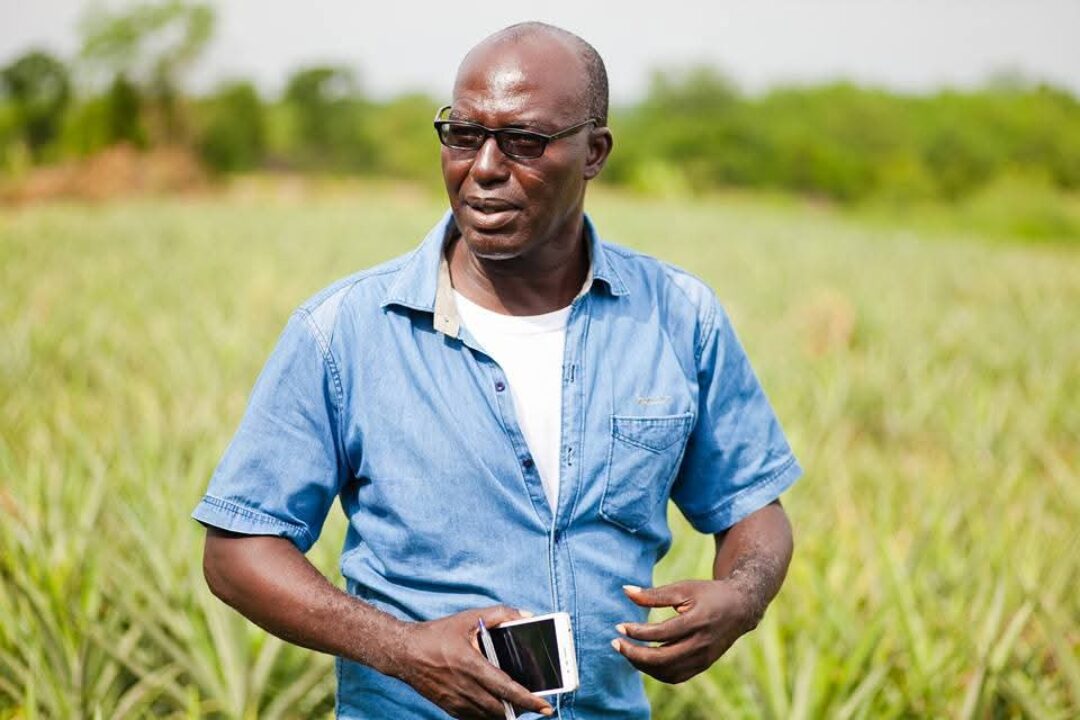
Mr Joseph Kwesi Sarpong

Adding that currently, the sector’s development budget is largely donor-supported, which is insufficient, inconsistent, and often misaligned with local seasonal priorities.

He, therefore, argued that as every sector of our economy, from banking to manufacturing, depends on agricultural stability, leaving its funding to the whims of external partners is a risk to national security.”


The above statement is contained in the memo addressed to the Chief Director of the Ministry of Food & Aquaculture (MoFA).The memo dated 10th May, 2026, was entitled “Establishing the Ghana Agricultural Development Levy (GAD-Levy) via a 1% tax reallocation”.

The Solution:

Mr.Ssrpong, therefore, proposed the “Green Slice” Reallocation.”i propose the introduction of the GAD-Levy, structured ‘not as a new tax burden’, but as a mandatory 1% reallocation of existing tax revenue.

Mechanism:

Directing 1% of the total pool of currently collected taxes (VAT, Corporate Tax, etc.) into a ring-fenced Agricultural Development Fund (ADF).

The Logic:

This is a revenue-neutral shift. It requires no new legislation to tax the public further, avoiding the “tax fatigue” complaints common in the current economic climate, while ensuring the engine of our economy is fuelled by our own resources.

Why This is Necessary Now

Ending Donor Dependency: Ghana must transition from charity-based growth to sovereign-funded industrialization. We can not build “Ghana” if our most vital sector relies on aid.

Closing the $1.9bn Gap: Dedicated internal funds are the only way to tackle the massive annual post-harvest losses and bridge the infrastructure gap (e.g., farm-to-market roads and sea-transport corridors for produce).

Economic Multiplier: Strengthening agriculture via this 1% pivot will lower food inflation, stabilize the Cedi by reducing food imports (rice, poultry, oil), and provide raw materials for local industry.

The full text of the memo by Mr Joseph Kwesi Sarpong, who is known for constructing earth dams for farmers, is reproduced below:

Memo
To: CHIEF DIRECTOR – MOFA
From: Joseph Kwesi Sarpong
Subject: Establishing the Ghana Agricultural Development Levy (GAD-Levy) via a 1% tax Reallocation

Date: 10/05/2026

EXECUTIVE SUMMARY:

THE SOVEREIGN PIVOT
Proposal: Establishing the Ghana Agricultural Development Levy (GAD-Levy) via a 1% tax Reallocation.
1. THE SOVEREIGN PIVOT
Despite agriculture being the backbone of the Ghanaian economy and the pivot on which all economic activities revolve, its development remains dangerously tethered to external donor cycles. Currently, the sector’s development budget is largely donor-supported, which is insufficient, inconsistent, and often misaligned with local seasonal priorities. As every sector of our economy, from banking to manufacturing, depends on agricultural stability, leaving its funding to the whims of external partners is a risk to national security.

  1. THE STRATEGIC CRISIS: A MULTI-SECTORAL DEPENDENCY
    I justify the request for the GAD-Levy through the lens of agriculture’s symbiotic relationship with every other sector with the following key sectors that enjoy taxes for development:
    Health & Nutrition: Everybody eats. The stomach has no holidays. The correlation between food and health is so strong that nutrition is now considered the most powerful modifiable factor in determining long-term quality of life and reducing the national burden of disease.

Education & Cognition:

The correlation between education and food is a bidirectional cycle. Nutrition provides the biological foundation for the brain to learn, while education provides the cognitive tools to make better nutritional choices. When a student is malnourished or hungry, the brain essentially enters “low-power mode,” prioritizing survival over complex cognitive tasks like mathematics or literacy. Food security is often the invisible barrier to educational equity. School feeding programs are one of the most effective tools for increasing enrolment. When food is guaranteed at school, parents are more likely to send their children, and students are less likely to be absent due to hunger and illness. A hungry child suffers from ascarcity mindset.” Their mental energy is spent wondering when they will eat next, leaving little “bandwidth” for academic learning.
Tourism & Culture: In the tourism sector, food is no longer just something tourists eat while on vacation. It is often the reason for the vacation. The financial link between food and tourism is massive and direct. On average, tourists spend 25% of their total travel budget on food and beverages. In high-cost destinations, this can rise to 35%. Every dollar spent on a local food tour or at a street stall has a high “local retention” rate. Unlike large hotel chains, food spending directly supports local farmers, market operators, and artisanal producers.
Industrial Growth: The correlation between industry and agriculture is the defining characteristic of a maturing economy. In a country like Ghana, this isn’t just a link; it is a symbiotic dependency. Industry provides the tools for high-yield farming, while agriculture provides the raw materials for industrial growth. When this correlation is strong, it creates a “virtuous cycle” of wealth. When it is weak, the country is forced to export raw materials at low prices and import finished goods at high prices. I can go on and on to look at relationships of agriculture/food and all the sectors of the economy to justify the request for GAD-levy. In conclusion, we need to fund the agricultural sector locally through a levy to ensure food security and strongly develop Ghana.

  1. The Solution: The “Green Slice” Reallocation
    I propose the introduction of the GAD-Levy, structured ‘not as a new tax burden’, but as a mandatory 1% reallocation of existing tax revenue.

Mechanism: Directing 1% of the total pool of currently collected taxes (VAT, Corporate Tax, etc.) into a ring-fenced Agricultural Development Fund (ADF).
The Logic: This is a revenue-neutral shift. It requires no new legislation to tax the public further, avoiding the “tax fatigue” complaints common in the current economic climate, while ensuring the engine of our economy is fuelled by our own resources.

  1. Why This is Necessary Now
    Ending Donor Dependency: Ghana must transition from charity-based growth to sovereign-funded industrialization. We can not build “Ghana” if our most vital sector relies on aid.

Closing the $1.9bn Gap: Dedicated internal funds are the only way to tackle the massive annual post-harvest losses and bridge the infrastructure gap (e.g., farm-to-market roads and sea-transport corridors for produce).

Economic Multiplier: Strengthening agriculture via this 1% pivot will lower food inflation, stabilize the Cedi by reducing food imports (rice, poultry, oil), and provide raw materials for local industry.

  1. Proposed Use of Funds
    The GAD-Levy will be strictly applied to high-impact “backbone” projects:

Infrastructure: Cold-chain storage and sea-taxi logistics (e.g., Takoradi-Axim-Tema corridor)
Skills: Competency-Based Training (CBT) to professionalize the youth in the sector.
Market Stabilization: Fully capitalizing the National Food Buffer Stock Company to protect both farmers and consumers from price volatility.
Extension Services: Mobilizing and digitizing extension services to ensure farmers receive the technical support required to increase productivity.
Others – (key activities).

  1. Conclusion
    This 1% reallocation is a bold, “common-sense” policy shift that honours the taxpayer, empowers the Ministry, and secures the nation’s food future. We all know that as long as our development budget is tied to donor signatures, we can’t truly plan for the long term.

I’ve put together a concept for a ‘Green Slice’—a 1% reallocation of existing taxes—that gives MoFA the sovereign funding it deserves without asking the public for a single extra Cedi.

A tax element for agriculture is actually an investment in industry.

By reallocating that 1%, you aren’t just helping farmers; you are ensuring that Ghanaian factories have the raw materials they need to stop importing expensive substitutes.

You are moving Ghana from being a “price taker” in the global market to a “value maker.” The Bottom Line: Industry and Agriculture are two sides of the same coin.

You can not have a 21st-century “Industrialized Ghana” without a 21st-century.
It’s time we fund the backbone of the country ourselves.


Popolar Stories

Ending donor dependency: Ghana must transition from charity-based growth to sovereign-funded industrialization-ATVET consultant proposes a solution to MoFA


By:Isaac Amoah

Mr Joseph Kwesi Sarpong, a freelance Agricultural Technical Vocational Education and Training (ATVET) consultant who is also a retired MOFA staff member, worked briefly with GIZ, Ghana, and has stated unequivocally that the country cannot have a 21st-century “Industrialised Ghana” without a 21st-century. “It’s time we fund the backbone of the country ourselves.”

According to Mr Ssrpong, despite agriculture being the backbone of the Ghanaian economy and the pivot on which all economic activities revolve, its development remains dangerously tethered to external donor cycles.


tntnewspapergh.com


Mr Joseph Kwesi Sarpong

Adding that currently, the sector’s development budget is largely donor-supported, which is insufficient, inconsistent, and often misaligned with local seasonal priorities.

He, therefore, argued that as every sector of our economy, from banking to manufacturing, depends on agricultural stability, leaving its funding to the whims of external partners is a risk to national security.”


The above statement is contained in the memo addressed to the Chief Director of the Ministry of Food & Aquaculture (MoFA).The memo dated 10th May, 2026, was entitled “Establishing the Ghana Agricultural Development Levy (GAD-Levy) via a 1% tax reallocation”.

The Solution:

Mr.Ssrpong, therefore, proposed the “Green Slice” Reallocation.”i propose the introduction of the GAD-Levy, structured ‘not as a new tax burden’, but as a mandatory 1% reallocation of existing tax revenue.

Mechanism:

Directing 1% of the total pool of currently collected taxes (VAT, Corporate Tax, etc.) into a ring-fenced Agricultural Development Fund (ADF).

The Logic:

This is a revenue-neutral shift. It requires no new legislation to tax the public further, avoiding the “tax fatigue” complaints common in the current economic climate, while ensuring the engine of our economy is fuelled by our own resources.

Why This is Necessary Now

Ending Donor Dependency: Ghana must transition from charity-based growth to sovereign-funded industrialization. We can not build “Ghana” if our most vital sector relies on aid.

Closing the $1.9bn Gap: Dedicated internal funds are the only way to tackle the massive annual post-harvest losses and bridge the infrastructure gap (e.g., farm-to-market roads and sea-transport corridors for produce).

Economic Multiplier: Strengthening agriculture via this 1% pivot will lower food inflation, stabilize the Cedi by reducing food imports (rice, poultry, oil), and provide raw materials for local industry.

The full text of the memo by Mr Joseph Kwesi Sarpong, who is known for constructing earth dams for farmers, is reproduced below:

Memo
To: CHIEF DIRECTOR – MOFA
From: Joseph Kwesi Sarpong
Subject: Establishing the Ghana Agricultural Development Levy (GAD-Levy) via a 1% tax Reallocation

Date: 10/05/2026

EXECUTIVE SUMMARY:

THE SOVEREIGN PIVOT
Proposal: Establishing the Ghana Agricultural Development Levy (GAD-Levy) via a 1% tax Reallocation.
1. THE SOVEREIGN PIVOT
Despite agriculture being the backbone of the Ghanaian economy and the pivot on which all economic activities revolve, its development remains dangerously tethered to external donor cycles. Currently, the sector’s development budget is largely donor-supported, which is insufficient, inconsistent, and often misaligned with local seasonal priorities. As every sector of our economy, from banking to manufacturing, depends on agricultural stability, leaving its funding to the whims of external partners is a risk to national security.

  1. THE STRATEGIC CRISIS: A MULTI-SECTORAL DEPENDENCY
    I justify the request for the GAD-Levy through the lens of agriculture’s symbiotic relationship with every other sector with the following key sectors that enjoy taxes for development:
    Health & Nutrition: Everybody eats. The stomach has no holidays. The correlation between food and health is so strong that nutrition is now considered the most powerful modifiable factor in determining long-term quality of life and reducing the national burden of disease.

Education & Cognition:

The correlation between education and food is a bidirectional cycle. Nutrition provides the biological foundation for the brain to learn, while education provides the cognitive tools to make better nutritional choices. When a student is malnourished or hungry, the brain essentially enters “low-power mode,” prioritizing survival over complex cognitive tasks like mathematics or literacy. Food security is often the invisible barrier to educational equity. School feeding programs are one of the most effective tools for increasing enrolment. When food is guaranteed at school, parents are more likely to send their children, and students are less likely to be absent due to hunger and illness. A hungry child suffers from ascarcity mindset.” Their mental energy is spent wondering when they will eat next, leaving little “bandwidth” for academic learning.
Tourism & Culture: In the tourism sector, food is no longer just something tourists eat while on vacation. It is often the reason for the vacation. The financial link between food and tourism is massive and direct. On average, tourists spend 25% of their total travel budget on food and beverages. In high-cost destinations, this can rise to 35%. Every dollar spent on a local food tour or at a street stall has a high “local retention” rate. Unlike large hotel chains, food spending directly supports local farmers, market operators, and artisanal producers.
Industrial Growth: The correlation between industry and agriculture is the defining characteristic of a maturing economy. In a country like Ghana, this isn’t just a link; it is a symbiotic dependency. Industry provides the tools for high-yield farming, while agriculture provides the raw materials for industrial growth. When this correlation is strong, it creates a “virtuous cycle” of wealth. When it is weak, the country is forced to export raw materials at low prices and import finished goods at high prices. I can go on and on to look at relationships of agriculture/food and all the sectors of the economy to justify the request for GAD-levy. In conclusion, we need to fund the agricultural sector locally through a levy to ensure food security and strongly develop Ghana.

  1. The Solution: The “Green Slice” Reallocation
    I propose the introduction of the GAD-Levy, structured ‘not as a new tax burden’, but as a mandatory 1% reallocation of existing tax revenue.

Mechanism: Directing 1% of the total pool of currently collected taxes (VAT, Corporate Tax, etc.) into a ring-fenced Agricultural Development Fund (ADF).
The Logic: This is a revenue-neutral shift. It requires no new legislation to tax the public further, avoiding the “tax fatigue” complaints common in the current economic climate, while ensuring the engine of our economy is fuelled by our own resources.

  1. Why This is Necessary Now
    Ending Donor Dependency: Ghana must transition from charity-based growth to sovereign-funded industrialization. We can not build “Ghana” if our most vital sector relies on aid.

Closing the $1.9bn Gap: Dedicated internal funds are the only way to tackle the massive annual post-harvest losses and bridge the infrastructure gap (e.g., farm-to-market roads and sea-transport corridors for produce).

Economic Multiplier: Strengthening agriculture via this 1% pivot will lower food inflation, stabilize the Cedi by reducing food imports (rice, poultry, oil), and provide raw materials for local industry.

  1. Proposed Use of Funds
    The GAD-Levy will be strictly applied to high-impact “backbone” projects:

Infrastructure: Cold-chain storage and sea-taxi logistics (e.g., Takoradi-Axim-Tema corridor)
Skills: Competency-Based Training (CBT) to professionalize the youth in the sector.
Market Stabilization: Fully capitalizing the National Food Buffer Stock Company to protect both farmers and consumers from price volatility.
Extension Services: Mobilizing and digitizing extension services to ensure farmers receive the technical support required to increase productivity.
Others – (key activities).

  1. Conclusion
    This 1% reallocation is a bold, “common-sense” policy shift that honours the taxpayer, empowers the Ministry, and secures the nation’s food future. We all know that as long as our development budget is tied to donor signatures, we can’t truly plan for the long term.

I’ve put together a concept for a ‘Green Slice’—a 1% reallocation of existing taxes—that gives MoFA the sovereign funding it deserves without asking the public for a single extra Cedi.

A tax element for agriculture is actually an investment in industry.

By reallocating that 1%, you aren’t just helping farmers; you are ensuring that Ghanaian factories have the raw materials they need to stop importing expensive substitutes.

You are moving Ghana from being a “price taker” in the global market to a “value maker.” The Bottom Line: Industry and Agriculture are two sides of the same coin.

You can not have a 21st-century “Industrialized Ghana” without a 21st-century.
It’s time we fund the backbone of the country ourselves.




Related Stories
Popular Stories