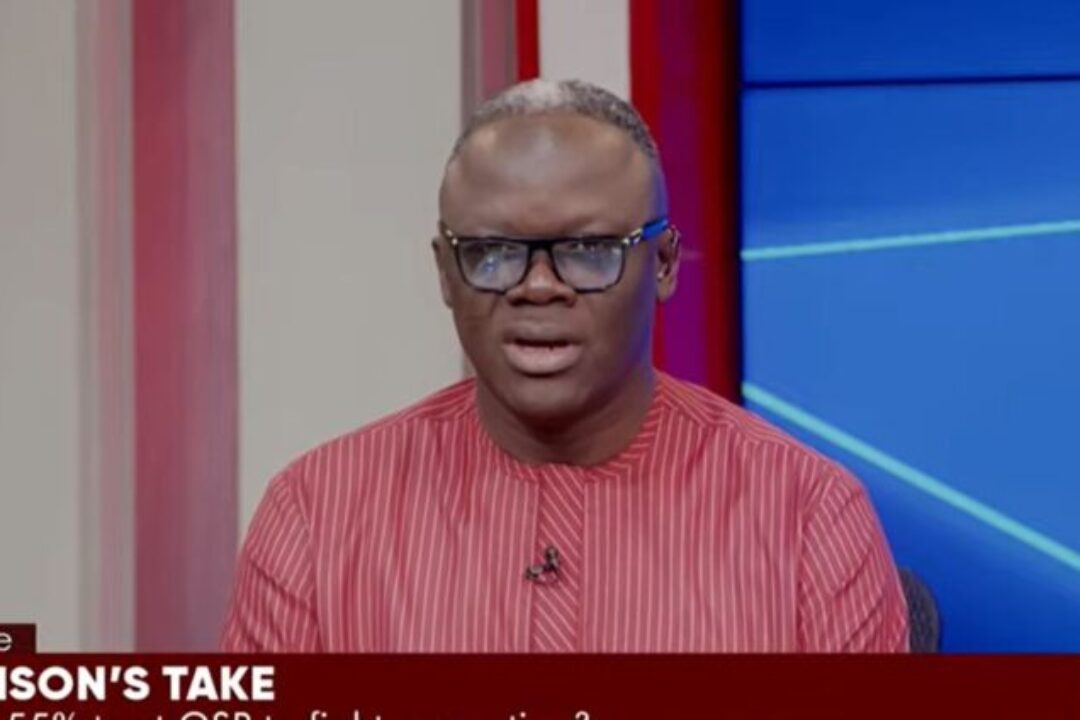
Private legal practitioner and host of the current affairs programme Newsfile, Samson Lardy Anyenini, has renewed calls for the repeal of Section 208 of the Criminal Offences Act, 1960 (Act 29), arguing that the law has become a tool for suppressing free expression and dissent.
In a detailed legal commentary titled “The Abronye Charge Sheet – misuse in plain sight,” Mr Anyenini described the provision criminalising the publication of false news likely to cause fear and alarm as a “colonial-era relic” that should have been abolished together with criminal and seditious libel laws in 2001.
He argued that the continued existence of Section 208 undermines Ghana’s democratic credentials and constitutional protections for free speech under Article 21 of the 1992 Constitution.
According to him, the provision has increasingly been used to arrest, detain and prosecute journalists, activists and political commentators.


Samson Lardy Anyenini
Mr Anyenini said he had counted at least 16 alleged cases of misuse of Section 208 within the last 18 months alone, compared to about a dozen cases over the previous eight years before January 2025.
He noted that despite years of public education and legal discussions aimed at guiding law enforcement officers on the proper interpretation of the law, the abuse of the provision had persisted.

“The culture of abuse has proven resistant to correction. Education is no longer viable; repeal is the only remedy,” he argued.
Citing the recent amended charge sheet in the criminal case involving New Patriotic Party communicator Kwame Baffoe, popularly known as Abronye, Mr Anyenini contended that the facts of the case illustrated the misuse of the law.
He argued that the alleged comments attributed to Abronye may have been insulting or defamatory but did not amount to “false news likely to cause fear and alarm” as required under Section 208.
According to him, such matters should ordinarily be handled through civil defamation proceedings rather than criminal prosecution.
Mr Anyenini acknowledged growing concerns over misinformation, abusive political commentary and reckless speech on social media, but maintained that criminal prosecution under broadly worded speech laws was not the appropriate solution.
He stressed that civil remedies remained the proper legal avenue for protecting reputations and addressing false claims.
He also criticised what he described as the silence of political leaders and governments over the repeated use of Section 208, arguing that such silence had effectively emboldened law enforcement agencies to continue invoking the provision against critics and dissenting voices.
Mr Anyenini referenced the proposed Misinformation, Disinformation, Hate Speech and Publication of Other Information Bill, 2025, which seeks to repeal Section 208 and amend Section 76 of the Electronic Communications Act, 2008 (Act 775).
He described the proposed repeal as a step in the right direction but cautioned Parliament against introducing similarly broad and vague restrictions on speech under new legislation.
According to him, any future regulation of online misinformation and harmful speech must be precise, proportionate and consistent with constitutional protections and international human rights standards.
He argued that Ghana’s legal framework should focus on narrowly tailored measures addressing intentional harm while avoiding laws that could undermine legitimate criticism, journalism and democratic debate.
Mr Anyenini maintained that the repeal of Section 208 was not about endorsing irresponsible speech but about protecting constitutional freedoms and strengthening democratic governance.
“The law has been abused beyond repair,” he stated, adding that Ghana must modernise its legal framework and move away from colonial-era speech offencesSource: Isaac Yeboah