Skip to content
Menu
Menu

Transparency International-Ghana & GIPC train journalists on promoting transparency & accountability in Ghana’s investment regime


By:Isaac Amoah

As part of deliberate efforts to build the capacity of journalists on the investment regime, Transparency International- Ghana, in collaboration with the Ghana Investment Promotion Centre (GIPC), has organised a day’s capacity-building training for journalists in the Ashanti region.

The overall goal of the workshop was to strengthen the capacity of journalists to effectively report on Ghana’s investment regime in order to promote transparency, accountability, responsible governance, and informed public discourse.


tntnewspapergh.com


A group photograph

It also aimed to enhance journalists’ understanding of Ghana’s investment law, policies, and institutional framework, among others.

The capacity-building training that drew 40 editors and senior media professionals also forms part of Transparency International-Ghana’s ongoing efforts to address governance and regulatory gaps undermining investor confidence.


The training, which was on the theme “Promoting transparency and accountability in Ghana’s investment regime, The role of journalists” was held on Tuesday, 26th May, 2026, at True Vine Hotel, Ahodwo-Kumasi.

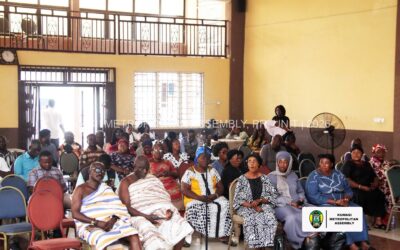
Some scenes from the capacity building training

The head of Finance, Transparency International- Ghana, Mr Benedict Doh, made a presentation on “Promoting transparency and accountability in Ghana’s investment regime: The role of journalists.”

He also made a brief presentation about the TI-Ghana project & purpose of gathering, while Mr Michael Otchere, the deputy director, Kumasi, GIPC, made a presentation on what GIPC does, the available opportunities for investments in various sectors by investors, why Ghana is the best destination for potential investors, etc.

Mr.Michael Octhere & Mr.Benedict Doh answering questions from participants

Mr Benedict Doh, in his presentation, said investment is a major driver of economic growth, employment creation, industrialisation, infrastructure development, and revenue mobilisation globally, with Ghana being no exception.

According to him, Ghana’s investment regime is governed by several laws, policies, and institutions, including GIPC, the company act, tax laws, mining and petroleum legislation, public-private partnership arrangements, and sector-specific regulations.

Besides, the country has entered into bilateral investment treaties and international treaties.

Mr Doh noted that while investment contributes significantly to economic development, concerns continue to emerge regarding transparency, accountability, etc.

The head of finance at IT-Ghana explained that based on these concerns, the media play a critical role in promoting transparency, accountability, and citizens’ participation in governance.

He said journalists have the responsibility to inform the public, scrutinise investment decisions, monitor the implementation of investments, and expose irregularities where necessary.

However, “despite the increasing importance of investments in Ghana’s economy, media reporting on investment-related issues remains limited in depth and technical accuracy.”

Adding that journalists often face challenges in understanding complex investment agreements, tax incentives, etc., hence capacity-building training.

Mr Benedict Doh stressed that despite notable initiatives aimed at addressing corruption and enhancing transparency and accountability, the country’s performance with regard to the Corruption Perception Index (CPI) is still very low – a score of 42% in 2024.

Mr Doh emphasised that improving the investment climate and addressing corruption are two key imperatives for attracting constructive capital.

On his part, Mr Michael Otchere, the deputy director of GIPC, Kumasi,clarified the notion that his outfit was only interested in only foreign investments.

According to him, GIPC is interested in both local and foreign investments. “Sometimes, people say GIPC is only interested in foreign investments, and that’s not true.”

Mr. Octhere said GIPC does investment promotion and facilitation, technology transfer agreements, business-to-business linkages, facilitating quotas and exemptions, aftercare, etc.

According to him, Ghana is the best destination to do business as a result of an enabling business environment, a prime location for global connectivity, a growing middle-income class & market access.

Besides,Ghana can also boost significant reserves of resources, etc.
The GIPC deputy director mentioned several sector opportunities for investments such as agriculture & agribusiness, energy & renewable infrastructure, infrastructure investment opportunities, manufacturing, the tourism sector, and the health sector, among other sectors.
He therefore urged both local and foreign investors to redirect their capital or investments into Ghana.

He however, expressed concern that one of their major changes is floating for foreigners by some Ghanaians and calls for all hands to be on deck to address the challenge.

Mr Octhere cautioned that it is an offence to float for foreigners to engage in activities reserved for Ghanaian citizens.

The participants were also taken through the GIPC Act 2013, Act 865, especially section 27, which talks about “ACTIVITIES RESERVED FOR GHANAIANS AND GHANAIAN-OWNED ENTERPRISES”.

Section 27 is reproduced below;
(1) A person who is not a citizen or an enterprise that is not wholly owned by a citizen shall not invest or participate in—a. the sale of goods or provision of services in a market, petty trading or hawking, or selling of goods in a stall at any place;

b. the operation of a taxi or car hire service in an enterprise that has a fleet of less than twenty-five vehicles;

c. the operation of a beauty salon or a barber shop;d. the printing of recharge scratch cards for the use of subscribers of telecommunication services;

e. the production of exercise books and other basic stationery;f. the retail of finished pharmaceutical products;

g. the production, supply, and retail of sachet water; andh. all aspects of the pool betting business and lotteries, except football pools.

(2) The minister, in consultation with the board, may by legislative instrument amend the list of enterprises reserved for citizens and enterprises wholly owned by citizens.


Popolar Stories

Transparency International-Ghana & GIPC train journalists on promoting transparency & accountability in Ghana’s investment regime


By:Isaac Amoah

As part of deliberate efforts to build the capacity of journalists on the investment regime, Transparency International- Ghana, in collaboration with the Ghana Investment Promotion Centre (GIPC), has organised a day’s capacity-building training for journalists in the Ashanti region.

The overall goal of the workshop was to strengthen the capacity of journalists to effectively report on Ghana’s investment regime in order to promote transparency, accountability, responsible governance, and informed public discourse.


tntnewspapergh.com


A group photograph

It also aimed to enhance journalists’ understanding of Ghana’s investment law, policies, and institutional framework, among others.

The capacity-building training that drew 40 editors and senior media professionals also forms part of Transparency International-Ghana’s ongoing efforts to address governance and regulatory gaps undermining investor confidence.


The training, which was on the theme “Promoting transparency and accountability in Ghana’s investment regime, The role of journalists” was held on Tuesday, 26th May, 2026, at True Vine Hotel, Ahodwo-Kumasi.

Some scenes from the capacity building training

The head of Finance, Transparency International- Ghana, Mr Benedict Doh, made a presentation on “Promoting transparency and accountability in Ghana’s investment regime: The role of journalists.”

He also made a brief presentation about the TI-Ghana project & purpose of gathering, while Mr Michael Otchere, the deputy director, Kumasi, GIPC, made a presentation on what GIPC does, the available opportunities for investments in various sectors by investors, why Ghana is the best destination for potential investors, etc.

Mr.Michael Octhere & Mr.Benedict Doh answering questions from participants

Mr Benedict Doh, in his presentation, said investment is a major driver of economic growth, employment creation, industrialisation, infrastructure development, and revenue mobilisation globally, with Ghana being no exception.

According to him, Ghana’s investment regime is governed by several laws, policies, and institutions, including GIPC, the company act, tax laws, mining and petroleum legislation, public-private partnership arrangements, and sector-specific regulations.

Besides, the country has entered into bilateral investment treaties and international treaties.

Mr Doh noted that while investment contributes significantly to economic development, concerns continue to emerge regarding transparency, accountability, etc.

The head of finance at IT-Ghana explained that based on these concerns, the media play a critical role in promoting transparency, accountability, and citizens’ participation in governance.

He said journalists have the responsibility to inform the public, scrutinise investment decisions, monitor the implementation of investments, and expose irregularities where necessary.

However, “despite the increasing importance of investments in Ghana’s economy, media reporting on investment-related issues remains limited in depth and technical accuracy.”

Adding that journalists often face challenges in understanding complex investment agreements, tax incentives, etc., hence capacity-building training.

Mr Benedict Doh stressed that despite notable initiatives aimed at addressing corruption and enhancing transparency and accountability, the country’s performance with regard to the Corruption Perception Index (CPI) is still very low – a score of 42% in 2024.

Mr Doh emphasised that improving the investment climate and addressing corruption are two key imperatives for attracting constructive capital.

On his part, Mr Michael Otchere, the deputy director of GIPC, Kumasi,clarified the notion that his outfit was only interested in only foreign investments.

According to him, GIPC is interested in both local and foreign investments. “Sometimes, people say GIPC is only interested in foreign investments, and that’s not true.”

Mr. Octhere said GIPC does investment promotion and facilitation, technology transfer agreements, business-to-business linkages, facilitating quotas and exemptions, aftercare, etc.

According to him, Ghana is the best destination to do business as a result of an enabling business environment, a prime location for global connectivity, a growing middle-income class & market access.

Besides,Ghana can also boost significant reserves of resources, etc.
The GIPC deputy director mentioned several sector opportunities for investments such as agriculture & agribusiness, energy & renewable infrastructure, infrastructure investment opportunities, manufacturing, the tourism sector, and the health sector, among other sectors.
He therefore urged both local and foreign investors to redirect their capital or investments into Ghana.

He however, expressed concern that one of their major changes is floating for foreigners by some Ghanaians and calls for all hands to be on deck to address the challenge.

Mr Octhere cautioned that it is an offence to float for foreigners to engage in activities reserved for Ghanaian citizens.

The participants were also taken through the GIPC Act 2013, Act 865, especially section 27, which talks about “ACTIVITIES RESERVED FOR GHANAIANS AND GHANAIAN-OWNED ENTERPRISES”.

Section 27 is reproduced below;
(1) A person who is not a citizen or an enterprise that is not wholly owned by a citizen shall not invest or participate in—a. the sale of goods or provision of services in a market, petty trading or hawking, or selling of goods in a stall at any place;

b. the operation of a taxi or car hire service in an enterprise that has a fleet of less than twenty-five vehicles;

c. the operation of a beauty salon or a barber shop;d. the printing of recharge scratch cards for the use of subscribers of telecommunication services;

e. the production of exercise books and other basic stationery;f. the retail of finished pharmaceutical products;

g. the production, supply, and retail of sachet water; andh. all aspects of the pool betting business and lotteries, except football pools.

(2) The minister, in consultation with the board, may by legislative instrument amend the list of enterprises reserved for citizens and enterprises wholly owned by citizens.




Related Stories
Popular Stories